Sony’s New TV Rivals Pro Monitors
Sony has unveiled a new TV technology that uses an advanced RGB LED backlight, achieving image quality that rivals professional mastering monitors. After 20 years of development, the company aims to set a new benchmark for consumer displays with stunning brightness and color accuracy.

Sony’s 20-Year Quest for Perfect Picture Quality
Sony has finally unveiled a new TV technology that brings stunning, professional-grade image quality right into your living room. After two decades of dedicated research and development, the company’s latest display is a massive leap forward, rivaling even the most expensive professional mastering monitors. This new TV uses a groundbreaking RGB LED backlight system, promising brighter colors and incredible detail that Sony believes will be very hard for competitors to match.
RGB LED: The Future of Display Brightness and Color
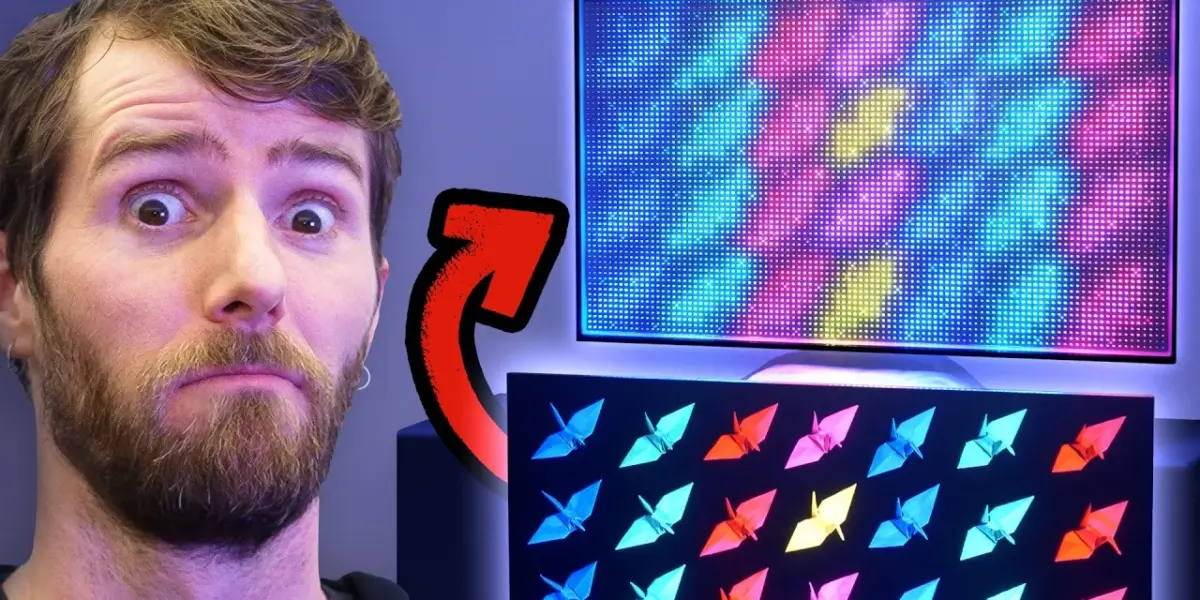
For years, most high-end TVs have used Mini-LED technology to improve brightness and contrast. These TVs use thousands of tiny LEDs to light up the screen, with some LEDs grouped into ‘dimming zones’ that can be dimmed or brightened to make dark scenes darker and bright scenes pop. However, traditional systems often use white LEDs, which can limit color accuracy and brightness. Sony’s new approach uses red, green, and blue (RGB) LEDs in its backlight. Instead of blasting white light and filtering out colors, this system directly controls the color and brightness of each zone. This allows for much purer colors and significantly higher brightness without sacrificing color quality.
The core idea behind RGB backlighting isn’t new, but previous attempts have faced major hurdles. A big problem was ‘color haloing’ – bright objects could be surrounded by distracting colored glows. Sony claims to have solved this through a combination of advanced engineering and smart processing. They’ve increased the number of dimming zones and specifically designed them to be square, unlike some competitors’ rectangular zones. This precise control helps prevent one color from bleeding into another, which is crucial for realistic image reproduction.
Under the Hood: Processing Power is Key
While the physical LEDs are important, Sony emphasizes that its new TV’s incredible performance comes down to sophisticated processing. The TV’s internal ‘brain’ constantly monitors the image, adjusting the brightness and color of each RGB LED zone in real-time. This dynamic adjustment is vital because different colored LEDs use different amounts of power and produce different levels of light. The system compensates on the fly to ensure colors remain accurate, even when pushing the display to its limits. Sony showed a demo of a simulated 4,000-nit sunrise, hinting at the extreme brightness capabilities of their upcoming flagship model.
This advanced processing is the secret sauce that allows Sony to overcome the traditional limitations of LED LCD technology. While some minor light bloom can still be detected off-axis compared to self-emissive displays like OLED, Sony states that in the ‘sweet spot’ – the primary viewing area – the image quality is nearly perfect. In many scenes, it was incredibly difficult to tell the difference between this new consumer TV and Sony’s own $30,000 BVM-HX3110 professional mastering monitor.
Sony’s Edge: A Legacy of Professional Tools
Sony’s journey with this technology began over 20 years ago with its Qualia 004 display, and the company has consistently worked with filmmakers and colorists in professional studios. This deep understanding of what creators need for accurate picture reproduction has directly influenced the development of their new consumer TVs. They are even using the same dimming algorithms found in their professional displays, ensuring that what you see on screen matches the creator’s intent.
During their presentation, Sony engineers demonstrated how some competitor TVs, even those claiming RGB backlights, sometimes reverted to a white-only mode. This undermined the benefits of RGB backlighting, even if it reduced color haloing. Sony’s system, however, appears to maintain its RGB operation consistently, offering the best of both worlds: extreme brightness, vibrant colors, and minimal artifacts.
Who Should Be Excited?
This new Sony TV is aimed squarely at the most demanding viewers and home theater enthusiasts who crave the absolute best picture quality. If you’re someone who appreciates subtle details in movies, demands accurate colors for photo editing, or simply wants the most immersive viewing experience possible, this technology is for you. While the price point is expected to be high, reflecting its cutting-edge performance, the ability to compete with professional-grade monitors suggests it will set a new benchmark for consumer displays. The company did not reveal specific pricing or release dates but indicated a spring launch for their new flagship models.
Specs & Key Features
- Display Technology: RGB LED backlight with advanced local dimming
- Color Volume: Significantly boosted due to RGB backlight
- Brightness: Capable of very high peak brightness (demo showed 4,000 nits equivalent)
- Processing: Advanced real-time backlight and panel compensation
- Dimming Zones: High density, square-shaped RGB LED clusters (approx. 1 cm spacing)
- Color Accuracy: Rivals professional mastering monitors ($30,000 BVM-HX3110 comparison)
- Viewing Angles: Reduced color shift compared to traditional LCDs
- Development History: Based on 20 years of R&D, starting with Qualia 004
Source: Sony Spent 20 Years Making This TV (YouTube)

Related Articles

Apple Studio Display XDR: Pros No More?
Apple's new Studio Display XDR redefines its premium monitor lineup with Mini-LED, 2,000 nits brightness, and a 120Hz refresh rate. Starting at $3,299, it replaces the Pro Display XDR and signals a strategic shift towards high-end consumers.


Kaleidescape’s 8TB SSD Server Redefines Home Cinema
Nilay Patel hails Kaleidescape's 8TB SSD server as a game-changer for home cinema, offering unparalleled bit rates and an incredible movie-watching experience. However, the $13,000 price tag places it firmly in the ultra-luxury market.


Google, Epic Settle Play Store Feud; Phone Hardware Gets Weird
Google and Epic Games have settled their major Play Store dispute, while MWC 2024 showcased phones with wild hardware like built-in lighters and gimbal cameras. A $13,000 Kaleid Escape streamer offers an unparalleled, uncompressed home theater experience.