Snyder: Trump’s ‘Genocide’ Talk Sullies US, Leads to Losing
Historian Timothy Snyder warns that Donald Trump's rhetoric about destroying civilizations, regardless of intent, carries grave consequences. He argues such language normalizes dehumanization and echoes tactics used in past genocides, ultimately sullying the nation and leading to strategic failures.

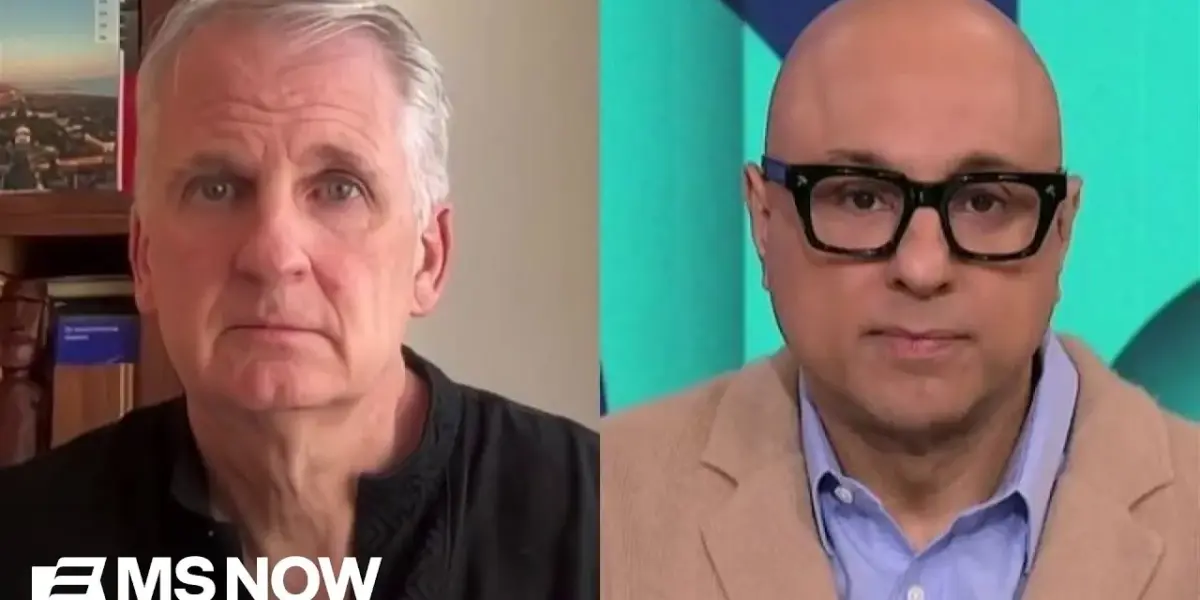
Historian Warns of Danger in Trump’s ‘Civilization Destruction’ Rhetoric
Professor Timothy Snyder, a renowned historian at the University of Toronto, is sounding the alarm about Donald Trump’s recent public statements, warning that such rhetoric, even if not acted upon, carries severe consequences. Snyder, an expert on tyranny and freedom, believes that when a leader speaks of destroying entire civilizations, it fundamentally changes the political landscape and makes horrific acts more possible.
Words Have Power, Even if Not Meant Literally
Snyder was deeply troubled by Trump’s remarks, which he saw as a significant shift. He explained that the immediate reaction often focuses on whether the speaker truly intends to follow through. However, Snyder argues that the very act of saying such things has consequences. “When the commander-in-chief, when the elected president of the United States says that our intention is to carry out the destruction of entire civilization, that already has consequences,” he stated.
This kind of language, Snyder noted, is an old tactic used by authoritarians throughout history. He cited examples like Rwanda and Hitler, and observes its use in places like Gaza and Ukraine to dehumanize others. “The concept of being able to say that the other is less than you are, less than human, begins the permission structure for their destruction,” Snyder explained.
‘Civilization’ as a Weapon
The historian also highlighted the dangerous use of the term “civilization.” While Trump spoke of destroying Persian civilization, Snyder pointed out that the specific target doesn’t matter. Once the idea of destroying another civilization is accepted, it can be applied anywhere. “You could say, well, immigrants are another civilization or African-Americans are another civilization or anyone is another civilization,” he said.
This rhetorical tool, Snyder explained, creates a hierarchy where one’s own civilization is seen as superior, granting a perceived right to destroy others. He connected this to centuries of world history that led to World War II and the creation of the Convention on Genocide. This convention, he stressed, marked a turning point, aiming to make the destruction of entire peoples unacceptable.
Distinguishing ‘Bluster’ from Danger
Many dismiss Trump’s statements as mere “bluster” or negotiating tactics, arguing “that’s just Trump being Trump.” Snyder acknowledges that Trump sometimes says things that should be ignored. However, he urges a different approach when the language touches upon genocide.
“The most important thing is to say, regardless of whether he meant it, regardless of what his intentions were, regardless of whether there was some practical effect, it doesn’t matter,” Snyder insisted. He believes that focusing on Trump’s intentions allows people to rationalize and absolve themselves of responsibility. “This is our president. This is our head of state. We elected him. And if we make excuses for those words, we’re not that we’re excusing him so much as we’re excusing ourselves,” he stated.
“We have to look at these words and say, I reject these words. Whensoever they came, wheresoever they are going, I reject these words. I reject these kinds of ideas.”
History’s Lessons on Atrocities
Snyder’s insights are drawn from his extensive study of atrocities, including Nazi Germany, and the collapse of democracies in Eastern Europe. He emphasizes two key historical lessons relevant to Trump’s rhetoric.
First, words themselves change people. If people passively absorb such language without challenge, they begin to normalize it. “We will passively normalize unless we challenge the words,” Snyder warned.
Second, he referenced the Nuremberg trials after World War II, where the principle of “just following orders” was rejected. This established that there are norms and laws beyond a chain of command. Snyder extended this, saying that soldiers and officers have a right, and perhaps a duty, to reject illegal orders. He noted that if they don’t, actions like destroying a bridge or a school could be seen not just as war crimes, but as part of a larger crime, potentially genocide itself.
The Role of Dissent and Checks on Power
The conversation touched upon the significance of dissent within the military and government. Snyder argued that the potential for soldiers and officers to be put in impossible positions arises when too much power accumulates in one person’s hands, without checks from Congress or the legal system. “It should be the case that the wars are declared that congress is behind them, that there’s some kind of a process,” he said.
History shows that without a legal basis and open conversation about norms, soldiers may eventually act on conscience, but often too late, as was the case in Nazi Germany. Snyder also criticized media characterizations that he felt downplayed the severity of Trump’s language, calling it “journalistic whitewashing” and “sanewashing.” He argued that the media has a responsibility to present things as they are, especially when dealing with potentially genocidal rhetoric.
Consequences of Willingness to Do Evil
Snyder concluded by addressing the perception of Trump’s effectiveness. He argued that the willingness to talk about or commit evil acts does not make one effective. “The fact that Mr. Trump was willing to do something or talk about doing something that was incredibly evil, that is, genocide, doesn’t mean that it was effective,” he stated.
He believes that Trump’s approach, in this instance, led to failure. “We managed to commit ourselves to the possibility of committing genocide, and then get completely crushed in the negotiations that followed after that,” Snyder observed. He urged people to see that such willingness is both malicious and deceitful. “So we sully ourselves, and at the same time, we lose the war,” he summarized.
Looking Ahead
Snyder’s analysis underscores the critical importance of language in politics and the historical precedents for dangerous rhetoric. As public discourse continues, the challenge remains for individuals and institutions, including the media, to confront and reject dehumanizing language, ensuring that historical lessons about genocide are not forgotten and that power is adequately checked to prevent such dangerous possibilities from taking root.
Source: Snyder on Trump’s genocidal words: ‘We sully ourselves– and we lose the war’ (YouTube)

Related Articles

Trump Vows to Clear Strait of Hormuz, Cites Oil Shipments to US
Former President Donald Trump announced the U.S. is clearing the Strait of Hormuz, citing a need to help allied nations and noting oil ships are heading to the U.S. This comes as peace talks involving Vice President JD Vance are underway in Pakistan.

Trump Attacks Allies, Then Begs Them for Help
Donald Trump is reportedly publicly attacking NATO and European allies while privately begging them for help with the Iran situation. This conflicting approach raises questions about trust and the effectiveness of international diplomacy. Allies are reportedly considering their own solutions rather than caving to demands.


Trump’s Crypto Fortune Fuels Economic Debate
A debate emerges over Donald Trump's significant cryptocurrency earnings versus rising gas prices for Americans. The discussion questions economic indicators like inflation and unemployment, while critiquing potential tax cuts for the wealthy and increased military spending's impact on national debt.