SNP Billions: Charity Funding Fuels Loyalty, Investigation Finds
An investigation by The Times and The Sunday Times reveals the Scottish National Party (SNP) allegedly uses billions in funding to secure loyalty from charities, potentially silencing criticism. Examples include an academic forced out of a charity role and a sexual harassment campaign that vanished due to political embarrassment. The reliance of Scottish charities on government funding, far exceeding that in England and Wales, raises concerns about their independence.

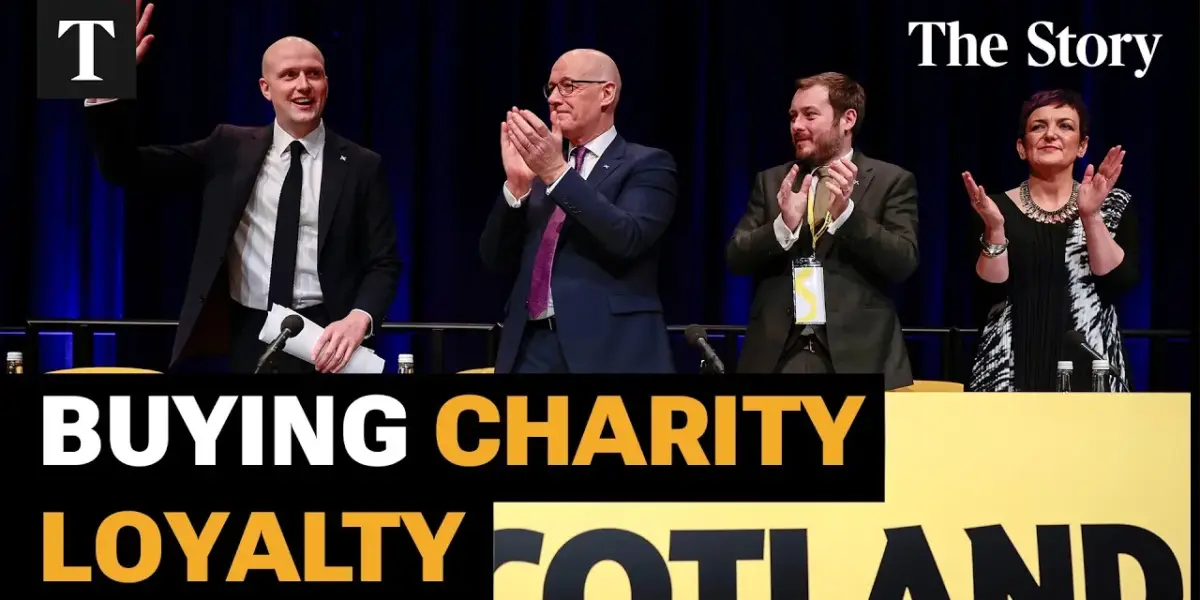
SNP Spends Billions, Allegedly Buying Charity Loyalty
An investigation by The Times and The Sunday Times reveals a concerning pattern: the Scottish National Party (SNP) government has allegedly used its significant funding of charities to secure their support and silence criticism. Millions of pounds in grants and contracts have gone to organizations, some of which are almost entirely government-funded, raising questions about their independence and ability to speak freely.
Academic Forced Out Over Views
The issues came to light when Dr. Sarah Pedison, a respected academic, was appointed chair of a women’s charity in Aberdeen in May 2021. Despite her decades of experience in women’s rights advocacy, her appointment quickly became controversial. The charity’s head office in Edinburgh contacted her deputy, expressing concerns about Pedison’s public views as a “gender-critical feminist.” A dossier was compiled, and the charity was warned that the Scottish government might withdraw funding if Pedison remained chair. Fearing for the charity’s financial stability, Pedison reluctantly stepped down.
“I just could not risk the the funding disappearing. I I just couldn’t do that to the charity and I I couldn’t risk me being sort of having to sit there at the head of that table and sort of say, ‘Well, actually, they’ve pulled the funding and it it might be because of me.’ It it just simply wasn’t something I was prepared to do.”
Dr. Sarah Pedison
Charities Muted by Funding Dependence
Daniel Sanderson, Scottish Political Editor at The Times and Sunday Times, explained that many charities and third-sector bodies in Scotland are hesitant to criticize government policy, especially during election periods. This reluctance stems from their heavy reliance on government funding. Unlike in England and Wales, where donations make up a significant portion of charity income, Scottish charities receive a much larger percentage from government grants and contracts.
Figures show that in England and Wales, about a third of charity funding comes from donations, with around 24% from public money for government services. In Scotland, however, only about 11% of total funding comes from donations, while a staggering 47% comes from government contracts and grants. Some individual charities, particularly those involved in sensitive policy areas, are funded by the government to the tune of 97%, leading to questions about whether they function as independent bodies or simply as extensions of the government.
Drug Deaths Policy: A Case Study
The investigation highlighted the issue of drug deaths in Scotland, where the country has the highest rate per capita in Europe. The SNP has favored a public health approach, advocating for supervised drug consumption rooms and decriminalization. When Douglas Ross, then leader of the Scottish Conservatives, proposed a plan to give those struggling with addiction a legal right to clinically appropriate treatment, many heavily funded charities expressed skepticism or outright opposition.
For example, the Scottish Drugs Forum, which receives about two-thirds of its income from the Scottish government, raised concerns about the plan’s affordability and preferred the term “patients” over “addicts.” Similarly, the Scottish Recovery Consortium, which gets over 99% of its funding from government grants, also voiced skepticism. These charities’ opposition, amplified by their government funding, helped to derail Ross’s proposal, which never progressed past its initial stages in the Scottish Parliament.
Sexual Harassment Campaign Vanishes
Another striking example involves a planned national sexual harassment campaign, announced by then-First Minister Nicola Sturgeon in 2018 with a £250,000 budget. Rape Crisis Scotland, a charity that receives around £5 million annually from the government, was brought in to lead the campaign. However, the campaign mysteriously disappeared. It was later revealed that the campaign was dropped because it would have been politically embarrassing for the SNP, given that Alex Salmond, the former SNP leader, was facing serious allegations at the time.
Despite the allocated funds being spent on campaign development, the initiative was shelved, and the money was repurposed. Rape Crisis Scotland did not publicly raise any concerns about the campaign’s cancellation. Former board members expressed shock that the organization went along with dropping a campaign vital to its mission, with the charity’s counterargument being that it was government money and they were merely assisting.
Gender ID Law and Fractured Support
The investigation also touched upon the controversial gender self-ID law. Rape Crisis Scotland was a vocal supporter of self-ID, stating that women had nothing to fear from biological men in spaces intended for survivors of sexual assault. However, a rift has emerged within the organization. In the past 18 months, several local Rape Crisis centers in Scotland have broken away from the national umbrella organization. These centers claim that funding is not keeping pace with demand and that local centers with views more aligned with the SNP are favored for grants.
While these breakaway centers have not yet felt direct funding cuts, they report a reluctance from the Scottish government to address their concerns about maintaining single-sex spaces. Discussions are ongoing for these groups to gain recognition similar to Rape Crisis Scotland, but no decisions have been made.
Access and Influence Denied to Critics
Beyond direct funding, the SNP allegedly uses its influence to grant access to policy-making bodies. Heavily funded groups, such as the LGBT organization Equality Network (which receives over 90% of its funding from the government), regularly sit on influential Scottish government boards and forums. In contrast, groups critical of the government, like For Women Scotland, which successfully challenged the gender recognition reforms in court, have struggled to gain access. For Women Scotland has been waiting over a year for a meeting with the First Minister, despite a promise of one.
Political Ramifications and Future Scrutiny
The investigation’s findings have emerged just before elections in Scotland. The Scottish Conservatives plan to propose a review of charity status for organizations heavily reliant on government money. They also want these charities to openly declare the amount of taxpayer money they receive and to disclose funding sources before giving evidence to parliamentary committees, similar to how MPs declare interests. Scottish Labour has also expressed concerns. Many believe this story is just the “tip of the iceberg,” suggesting that more revelations about the relationship between the SNP government and funded charities may follow.
Source: INVESTIGATION: How the SNP Spends Billions on Charity Loyalty (YouTube)

Related Articles

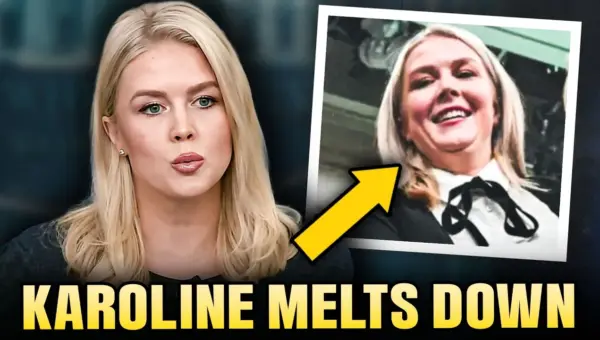
Vanity Over Voters: Officials Demand Photos Be Erased
White House spokesperson Karoline Leavitt reportedly demanded unflattering Thanksgiving photos be removed, highlighting a pattern of vanity within the administration. This focus on image contrasts sharply with the economic struggles faced by many Americans. The trend raises questions about leadership priorities and public trust.
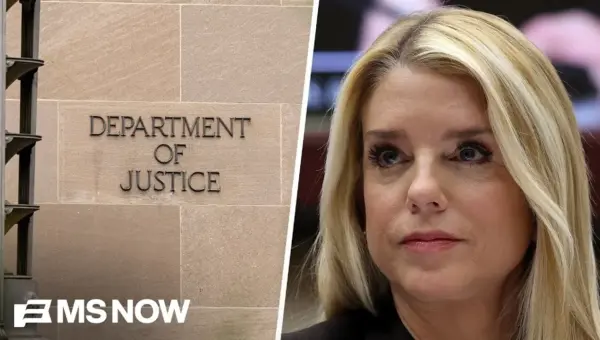
DOJ Faces Lawsuit Over Survivor Data Breach
The Department of Justice is facing a class action lawsuit for allegedly releasing personal data of over 100 survivors. Experts discuss the legal challenges and the broader need to rebuild trust and integrity within the DOJ.


US Protests Challenge Trump’s Power
Tens of thousands protested across the US and globally in 'No Kings' rallies, challenging President Trump's policies. Issues ranged from ICE to foreign wars, with calls for government accountability.