SNES Secrets: Unearthing 20 Shocking Facts
Discover the hidden histories and surprising design choices behind Nintendo's iconic Super Nintendo Entertainment System. From anti-beverage console designs to the origins of PlayStation and early cloud gaming experiments, the SNES is packed with more secrets than you think.

SNES Secrets: Unearthing 20 Shocking Facts About Nintendo’s 16-Bit Icon
The Super Nintendo Entertainment System (SNES) remains a titan in the pantheon of video game consoles. For many, it represents the pinnacle of 16-bit gaming, a period defined by vibrant graphics, groundbreaking gameplay, and unforgettable characters. But even for the most dedicated fans, Nintendo’s beloved machine holds a treasure trove of hidden histories and surprising design choices. From accidental design features that saved consoles from disaster to ambitious projects that laid the groundwork for future consoles, the SNES is more than just a plastic box of games; it’s a fascinating artifact of gaming’s evolution.
Console Design That Said ‘No Drinks Allowed’
One of the most enduring quirks of the SNES is its distinct design, a stark contrast to its predecessor, the NES. While the American NES sported a VCR-like aesthetic, a deliberate choice to appear less like a toy and more like a home appliance following the 1983 video game crash, this design had a critical flaw: a flat top that became an irresistible invitation for beverages. Nintendo learned its lesson. The SNES, with its top-loading cartridge slot, curved surfaces, and generally less accommodating shape, was intentionally designed to deter users from placing drinks on it, effectively making it ‘anti-beverage.’ It’s a small detail, but one that speaks volumes about Nintendo’s iterative design process and their desire to prevent another generation of consoles meeting an untimely, sticky end.
The Political Minefield of Video Game Violence
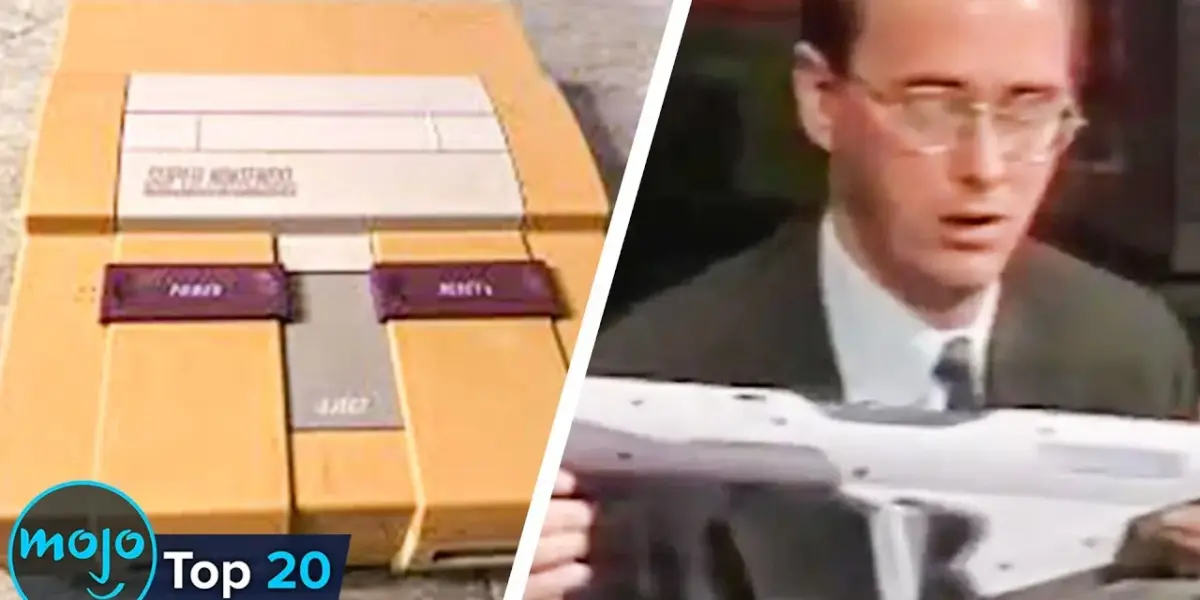
The early ’90s were a tumultuous time for video games, with concerns about violence reaching a fever pitch. Nintendo, having famously toned down the gore in Mortal Kombat by replacing blood with sweat-like red liquid, thought they were safe. However, they underestimated both Sega’s willingness to engage in petty rivalries and the scrutiny of Congress. During a televised hearing, a Sega VP strategically brought out the Super Scope, a bazooka-shaped light gun peripheral. Its overtly weapon-like appearance immediately drew the ire of Senator Joe Lieberman, who decried it as an ‘assault weapon,’ effectively shifting the focus onto Nintendo’s more aggressive hardware.
The Case of the Yellowing Console
Many SNES owners from the launch era will recall a peculiar phenomenon: their once pristine gray consoles slowly turning a distinct shade of yellowish-brown. This wasn’t due to excessive sun exposure or poor cleaning habits. Nintendo had accidentally used early units with an excess of flame-retardant chemicals containing bromine. Bromine is highly reactive and prone to oxidation, leading to the rapid discoloration. While later production runs corrected this chemical imbalance, many early adopters were left with consoles that bore the ‘nicotine chic’ patina of age, a testament to an unintended chemical mishap.
Operation Midnight Shipping: Battling the Yakuza
In an era when video game hardware was highly coveted, Nintendo harbored a genuine fear of its consoles being stolen. This concern extended to the SNES launch, with Nintendo specifically worried about the Yakuza, Japan’s notorious organized crime syndicate. This fear led to the creation of a covert operation codenamed ‘Operation Midnight Shipping.’ The plan was remarkably simple yet dramatic: deliver SNES consoles and launch titles like Super Mario World to retailers under the cover of darkness, hours before stores officially opened, aiming to get the precious cargo onto shelves before any hypothetical syndicates could mobilize.
Early Online Adventures with Xband
Long before Nintendo Switch Online or even the widespread adoption of the internet, the SNES dipped its toes into the online world with the Xband. This innovative peripheral, compatible with both SNES and Sega Genesis, connected players via phone lines, allowing them to compete against each other in games, download newsletters, and even send emails. Peaking at around 15,000 subscribers, Xband was a pioneering effort in online console gaming, offering a glimpse into the future of connected play, even if it ultimately shut down in early 1997.
Sega’s Aggression Forced Nintendo’s Hand
Nintendo initially felt confident in the longevity of the NES, believing its reign would continue indefinitely. However, Sega’s relentless and aggressive marketing campaign, which effectively positioned the Genesis as the cooler, more mature alternative, forced Nintendo’s hand. This competitive pressure compelled Nintendo to accelerate its plans for a successor, leading to the announcement of the Super Famicom (the Japanese SNES) in 1987, years before its eventual global release.
Earthbound’s Pirate-Proofing Prank
The SNES classic Earthbound is renowned for its quirky humor and unique gameplay, but it also featured one of the most memorable anti-piracy measures in gaming history. Instead of simply preventing pirated copies from running, Earthbound would actively punish players. It would drastically increase enemy encounter rates. If a pirate managed to overcome this challenge and reach the final boss, the game would deliberately crash, forcing a system reset. Upon rebooting, all save files would be erased, a harsh but effective lesson in respecting intellectual property.
Bundles Galore: More Than Just Super Mario World
While the Super Mario World bundle is the most iconic, the SNES was famously packaged with a wide variety of games. Early bundles included F-Zero, and later, The Legend of Zelda: A Link to the Past received its own dedicated bundle. Beyond these, Nintendo created numerous other packages featuring titles like Super Mario All-Stars, Donkey Kong Country, Super Mario Kart, Street Fighter II, Yoshi’s Island, Star Fox, Mario Paint, and Super Metroid, among others. This strategy aimed to showcase the console’s diverse library and appeal to a broad range of players.
SNES Cartridges Packed with Power
Nintendo’s ability to push the SNES hardware beyond its perceived limits was largely thanks to special enhancement chips integrated directly into game cartridges. Chips like the Super FX chip enabled groundbreaking 3D graphics in titles such as Star Fox, while others powered the unique visual styles of games like Yoshi’s Island. This innovative approach allowed Nintendo to develop more ambitious projects, with early concepts for Super Mario 64 and Star Fox 64 initially conceived for the SNES, and Rare’s Banjo-Kazooie evolving from an SNES 3D project.
Backwards Compatibility Almost Made the Cut
In a move that would have delighted retro enthusiasts, the SNES was initially planned to feature backwards compatibility with the entire NES library. This would have allowed players to seamlessly revisit their favorite 8-bit classics. However, Nintendo ultimately scrapped the idea, partly due to the added cost it would impose on the console’s retail price. This decision also reflected Nintendo’s evolving hardware strategy, which frequently shifted between cartridges and discs.
The Rarest SNES Cartridge: A Competition’s Legacy
During a promotional tour in the ’90s, Nintendo created a unique, ultra-rare cartridge for a Super Nintendo competition. This special cartridge contained timed demo segments of three different games, allowing contestants a limited time to achieve the highest score. Only about 33 of these cartridges were produced, and most were later destroyed. Today, only two are known to still exist, making them incredibly valuable collector’s items fetching astronomical prices.
The Ghost of Shiva in Ultimate Mortal Kombat 3
Ultimate Mortal Kombat 3 on the SNES faced significant space constraints. To fit the expanded roster and features, developers had to make cuts. Stages, voice clips, and even several characters were removed. Notably, the character Shiva was technically left in the game’s code, with her graphics simply removed. This led to a bizarre glitch in the 8-vs-8 endurance mode where players could randomly select Shiva, resulting in a chaotic visual mess of pixels appearing on screen, her moves and hitbox still functional but her appearance entirely absent.
Family Feud SNES: A Tool-Assisted Speedrun Marvel
Tool-assisted speedruns (TAS) often showcase incredible feats of glitch exploitation and optimized gameplay. However, the legendary TAS for the SNES version of Family Feud stands out for its sheer ingenuity. The game’s lenient answer-checking system, which only required the correct letters to be present in order within a string, allowed for absurdly fast input. This loophole enabled players to complete the game at an astonishing pace, highlighting a unique exploit within a beloved party game.
The Hidden Sequel to A Link to the Past
A true sequel to The Legend of Zelda: A Link to the Past exists, though most players never experienced it. Released via the SatellaView broadcast service in Japan, this game, set years after the original, involved Link hunting for ancient stone tablets. Unfortunately, it could only be played in one-hour segments during scheduled broadcast times. While a fan reconstruction exists, the original, timed, live-audio experience remains lost to time.
SatellaView: Cloud Gaming Before the Cloud
The SatellaView was a fascinating SNES add-on that allowed users to receive and decode satellite TV signals, essentially turning their consoles into receivers for timed, streaming game content. Players could tune into ‘game shows’ that were broadcast at specific times, and once the hourlong window closed, play ceased. Nintendo developed exclusive titles for this service, which remained operational from 1995 to 2000, proving Nintendo was experimenting with concepts akin to cloud gaming long before the necessary infrastructure was widely available.
The PlayStation’s SNES Origins
In a twist of fate that reshaped the gaming industry, the original PlayStation was conceived as a CD-ROM add-on for the SNES. Nintendo and Sony initially collaborated on this project. However, Nintendo famously backed out at the last minute due to concerns over profit-sharing from CD-based games, opting instead to partner with Philips. This decision led Sony to develop its own console independently, birthing the PlayStation and forever altering the competitive landscape.
Nintendo Super System: An Arcade Flop
While arcades were still a significant force in the late ’80s and early ’90s, Nintendo’s attempt to capture a piece of that market with the Nintendo Super System in 1991 was largely a failure. This arcade hardware, designed to bring SNES games to the coin-op scene, sold an estimated mere 1,200 units. Compared to the success of other arcade cabinets, it was a commercial disappointment, largely forgotten by the public.
Mario Kart’s F-Zero Ancestry
The beloved Mario Kart franchise owes its existence to F-Zero. Originally, Mario Kart began as an attempt to create a multiplayer version of F-Zero‘s high-speed racing. Artist Takaya Imamura noted that while F-Zero is expensive to produce, Mario Kart continues to be a massive moneymaker. The irony is that Mario Kart, a franchise that prints money, was born from Nintendo’s desire to adapt the less commercially successful but critically acclaimed F-Zero.
Captain Falcon’s SNES Mascot Ambitions
Before becoming the iconic racer of F-Zero, Captain Falcon was initially envisioned as the official mascot for the Super Nintendo Entertainment System. He was even designed with a gray color scheme to match the console. However, Nintendo ultimately decided that the SNES needed a more universally recognizable face, and Falcon was repurposed and redesigned for F-Zero, becoming the red-clad, hover-car-driving hero we know today.
Super Famicom Launch: Societal Disruption
The launch of the Super Famicom in Japan was so impactful that it caused a minor societal disruption. The sheer demand and the number of people lining up on a Wednesday to purchase the console and play Super Mario World led the Japanese government to intervene. Officials politely requested that all future console releases be scheduled for weekends to avoid impacting the weekday workforce, a tradition that largely continues to this day.
Source: Top 20 Things You Didn't Know About The Super Nintendo (YouTube)

Related Articles
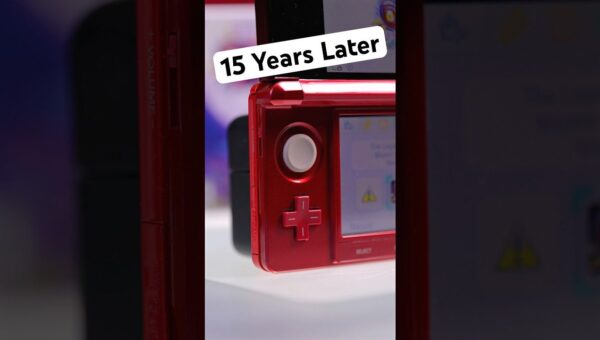
Nintendo 3DS: Still a Pocket Gem After 15 Years?
Fifteen years after its rocky launch, the Nintendo 3DS has proven its enduring value. With an unparalleled library of DS and 3DS games, unique hardware features, and a thriving homebrew scene, it remains a must-have for many gamers.

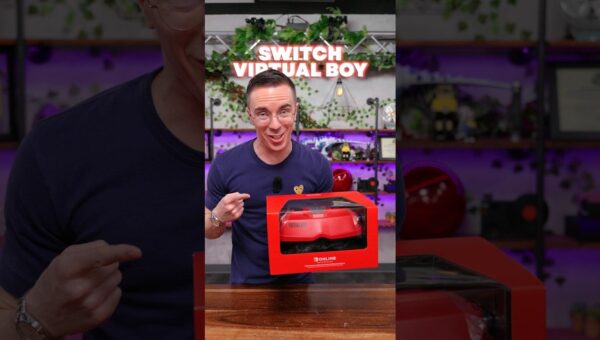
Virtual Boy Returns: A Nostalgic & Flawed Switch Experience
Nintendo's infamous Virtual Boy makes a surprising return as a Switch accessory, offering a nostalgic 3D experience. While visually impressive and less prone to headaches, its $100 price tag and questionable comfort make it a niche proposition.

Retro Gaming Retailer Under Scrutiny: Quality Concerns Emerge
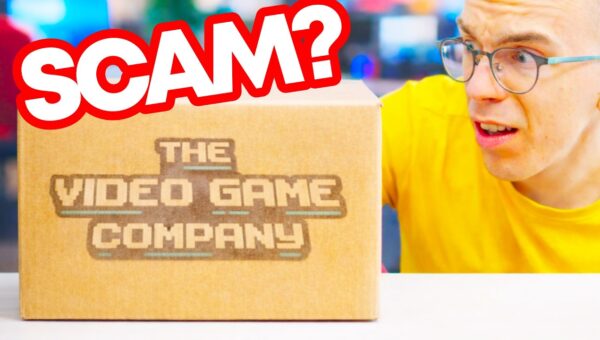
A recent investigation into "The Video Game Company" reveals significant quality control issues and poor customer service across multiple retro console purchases. From missing parts to locked devices, the retailer's promise of a 'nostalgic sanctuary' is tarnished by a string of disappointing experiences.