Smartphone Awards 2025: The Year’s Best Devices
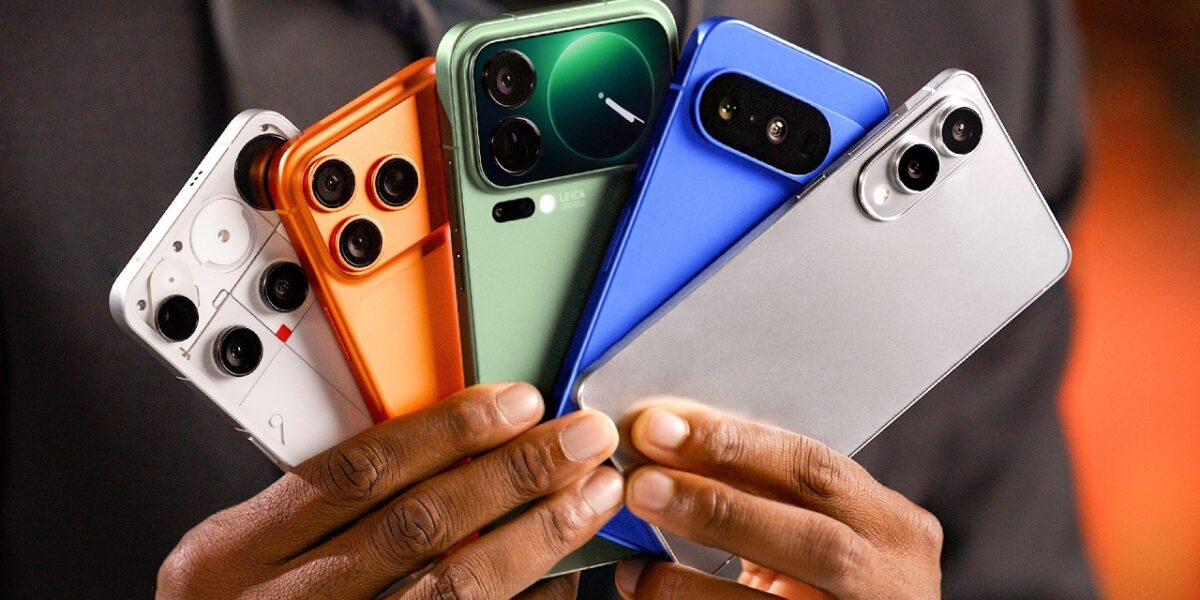
The Smartphone Awards 2025 have crowned the year's best devices. From the feature-packed Xiaomi 17 Pro Max to the innovative Samsung Galaxy Z Flip 7 and the battery champion OnePlus 15, 2025 proved to be a landmark year for mobile technology.

Smartphone Awards 2025: The Year’s Best Devices Revealed
In a world increasingly dominated by AI, smart glasses, and XR headsets, the smartphone remains the undisputed center of our personal computing lives. The year 2025 has seen an explosion of innovation, from groundbreaking foldable designs to powerhouse high-end devices and surprisingly capable budget options. Our annual Smartphone Awards celebrate the most outstanding devices that have shaped the year, with a coveted trophy for each category winner.
Best Big Phone: Xiaomi 17 Pro Max
The “big phone” category has evolved, with most smartphones now boasting substantial displays. However, the Xiaomi 17 Pro Max truly maximizes its expansive 6.9-inch footprint. Powered by the top-tier Snapdragon 8 Elite Gen 5, it features a colossal 7,500mAh silicon-carbon battery, ample RAM and storage, and a versatile triple 50-megapixel camera system. A standout feature is the nearly 3-inch, 1,000-nit, 120Hz secondary display on the back, which proves surprisingly useful for notifications, camera previews, and more. Xiaomi’s masterful integration of its large camera bump into the overall design also earns high praise.
Runner-up: Oppo Find X9 Pro. This 6.8-inch device impresses with a triple camera array, including a 200-megapixel telephoto, a massive 7,500mAh silicon-carbon battery, and a unique custom button.
Best Small Phone: Samsung Galaxy Z Flip 7
The quest for smaller phones has become a rarity, making devices that deliver on compactness even more noteworthy. While traditional slab phones struggle to shrink, the Samsung Galaxy Z Flip 7 redefines the small phone category. Unfolded, it offers a generous 6.9-inch display, but its true magic lies in its folded state. The 4.1-inch cover screen is more functional than ever, allowing for quick notification management and texting without the deep dive into endless scrolling. It strikes a perfect balance, offering pocketability and quick access to essential functions while keeping a full-sized smartphone experience readily available.
Honorable Mentions: OnePlus 13S (praised for its simple, strong, and slick design), iPhone 17 and 17 Pro (with their 6.3-inch displays), and the Xiaomi 17 Pro (smaller variant).
Best Camera: Oppo Find X9 Pro
Smartphone cameras continue to be a major battleground for innovation, with manufacturers dedicating significant resources to imaging capabilities. The Oppo Find X9 Pro emerges as the clear winner, boasting a quad-camera setup featuring a 50MP main, a 50MP ultrawide, and a remarkable 200MP telephoto lens. It consistently delivers sharp, dynamic photos with excellent color accuracy. The camera app is responsive, and the periscope zoom offers impressive reach. Additional features like stage lighting mode, a true color sensor for accurate hues, and the ability to shoot 50MP images (not binned 12MP) set it apart. Video capabilities are also strong, with 4K 120fps and Dolby Vision support. The optional Hasselblad telephoto attachment lens further enhances its photographic prowess.
Runner-up: iPhone 17 Pro. Continues to be the king of video, offering consistent, high-quality footage across various situations, with added Genlock support for professional workflows. Its larger main sensor and new 4x telephoto are also significant improvements.
Honorable Mention: Vivo X300 Pro. Impresses with its large sensors and detail, though some minor refinements in bokeh and blur effects were noted.
Best Value: CMF Phone 2 Pro
The value segment is fiercely competitive, with manufacturers striving to offer the most bang for your buck. The CMF Phone 2 Pro, priced at an aggressive $279, stands out for delivering a premium experience at a budget-friendly cost. It features a vibrant 6.8-inch, 120Hz display, a 5,000mAh battery offering good longevity, and a three-camera system, a rarity at this price point. Its well-optimized and smooth software is a highlight, complemented by a fun design, bright color options, and interesting attachable accessories. It genuinely feels like a phone twice its price.
Honorable Mentions: Motorola Moto G Play (under $200, offering a large screen, big battery, headphone jack, and decent cameras), Google Pixel 9a ($499, praised for its compact 6.3-inch display, 5,300mAh battery, great software, and cameras), and the base iPhone 17 (noted for finally offering ProMotion, an upgraded selfie camera, and a flagship chip at a more accessible price).
Best Battery: OnePlus 15
2025 marks a significant leap forward in smartphone battery technology, largely thanks to advancements in silicon-carbon battery chemistry. The OnePlus 15 is the undisputed champion, delivering an astonishing three full days of mixed usage on a single charge from its 7,300mAh battery. This device showcases the incredible potential of next-generation battery tech. Beyond its endurance, it also offers blazing-fast 120W wired and 50W wireless charging, setting a new benchmark for battery performance.
Runner-up: Xiaomi 17 Pro Max. Features a massive 7,500mAh battery and an impressive 22.5W reverse wireless charging capability.
Honorable Mention: Doogee S200 Ultra. For sheer capacity, this rugged device packs an enormous 11,000mAh silicon-carbon battery.
Best Design: iPhone Air
The iPhone Air is a bold and controversial design statement, pushing the boundaries of what a smartphone can be. While not a commercial success, its aesthetic and feel are undeniable. It achieves an almost impossibly thin and light profile, resembling a piece of jewelry and appealing to minimalists. Apple’s radical internal rearrangement, housing components in the upper section around the camera bump, is a feat of engineering. Despite compromises like a single camera and reduced battery life, the iPhone Air feels unlike any other device, making normal phones feel like tanks in comparison. Its sheer impressiveness and unique feel earn it this award.
Runner-up: Xiaomi 17 Pro Max. Commended for its functional and well-integrated rear display.
Honorable Mentions: Samsung Galaxy S25 Edge (for its brutalist, rectangular design) and Fairphone 6 (celebrated for its exceptional repairability and sustainability).
Best Foldable: Samsung Galaxy Z Fold 7
Foldable phones have matured significantly, with a focus on thinner designs that make them feel more like conventional smartphones when closed. The Samsung Galaxy Z Fold 7 takes the crown for its all-around excellence. While not the thinnest or most spec-heavy, it offers the most robust and usable daily experience. Its software is refined, battery life is commendable, and the 8-inch display is a joy to use. Crucially, the dramatically improved usability of the device when closed, thanks to its thinner form factor, makes it a compelling package.
Runner-up: Google Pixel 10 Pro Fold. Offers a great user experience akin to a standard Pixel when closed, though slightly thicker than the Z Fold 7.
Honorable Mention: Samsung Galaxy Z Flip 7. Recognized again for its highly functional cover screen and compact form factor.
Most Improved: iPhone 17
The iPhone 17 earns the Most Improved award for finally transforming the base model into a truly complete smartphone. Apple has equipped it with a flagship chip, a high-refresh-rate ProMotion display, doubled base storage, and a significantly upgraded selfie camera. It has evolved from a somewhat uninspired placeholder to the most compelling and easiest-to-recommend iPhone in the lineup, offering excellent value and performance.
Runner-up: OnePlus 15. Despite skipping a number, it delivered substantial upgrades in power, battery life, and design over its predecessor, even with slightly adjusted camera performance.
Honorable Mention: Samsung Galaxy Z Fold 7. Praised for its ultra-thin design while retaining the same battery capacity and significantly improving in-hand feel.
Bust of the Year: iPhone 16E
The iPhone 16E is a stark reminder of how not to approach an entry-level device. Aimed at basic users, Apple stripped down the base iPhone to an alarming degree. It features a binned A18 chip, a basic 60Hz display, a single rear camera, and lacks features like Wi-Fi 6E, ultrawideband, and MagSafe. The most egregious aspect is its starting price of $599, which balloons to $900 for higher storage models, making it neither a “cheap” nor a particularly appealing iPhone compared to older or even Pro models.
Runner-up: Nothing Phone 3. Disappointed fans with a quirky design and a significantly altered, less impressive rear display feature.
MVP (Phone of the Year): To Be Announced
The Most Valuable Player award, or Phone of the Year, is the most prestigious honor. This category celebrates the device that truly stands out across all aspects, offering an exceptional overall experience. While many contenders delivered outstanding performances this year, the final decision for the ultimate MVP will be revealed soon, acknowledging the device that best represents the pinnacle of smartphone technology in 2025.
Source: Smartphone Awards 2025! (YouTube)

Related Articles


Walmart’s $360 SuperBox: A Piracy Pandora’s Box?
The $360 SuperBox, sold on Walmart.com, promises unlimited streaming content but raises serious questions about legality, security, and ethics. This device offers a tempting bypass to subscription fees but comes with significant risks, including potential botnet involvement and network compromise.

Honor Magic V6: Thinnest Foldable With Massive Battery
Honor's new Magic V6 foldable pushes boundaries by integrating the largest battery in a foldable phone within its incredibly slim 8.75mm design. Featuring advanced silicon-carbon battery tech and IP68/IP69 ratings, it promises extended battery life and enhanced durability.

Galaxy Buds 4 Pro: Samsung’s New Earbuds Outshine AirPods
Samsung's new Galaxy Buds 4 Pro are a major contender in the premium wireless earbud market, rivaling and even surpassing the performance of Apple's AirPods Pro. With exceptional sound, advanced ANC, and a refined design, they are a top choice for Android users.