Smarter Scrubber: An American Manufacturing Renaissance?
An experiment to manufacture a grill scrubber in the USA reveals the immense challenges and critical importance of rebuilding domestic manufacturing capabilities, from sourcing components to the vital tool and die industry.

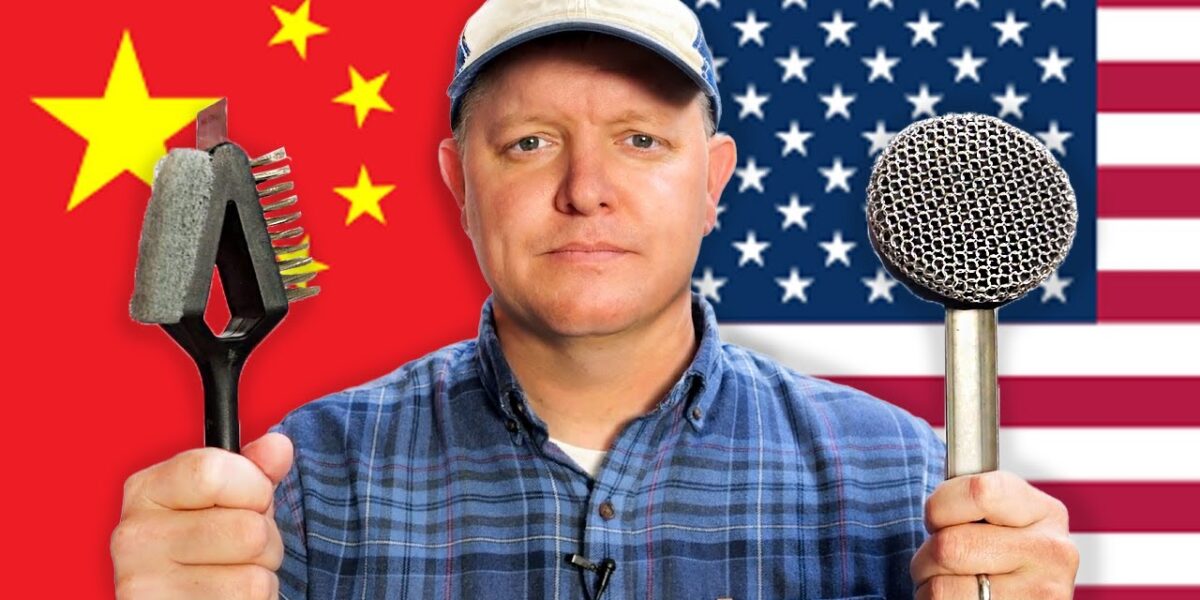
Smarter Scrubber: An American Manufacturing Renaissance?
In a world increasingly dominated by global supply chains and offshore production, a four-year experiment born from a desire to rekindle American manufacturing has culminated in the creation of the “Smarter Scrubber.” This endeavor, driven by engineer Destin Sandlin of Smarter Every Day, challenges the prevailing economic forces that push manufacturing overseas, aiming to prove that domestically produced goods can be competitive in the marketplace. The project is more than just a product launch; it’s a deep dive into the complexities of modern manufacturing, the erosion of skilled trades in the U.S., and the potential for a localized industrial renaissance.
The Genesis of an Experiment: From Auto Workers to Global Shifts
Sandlin’s personal connection to American manufacturing runs deep. His parents were both union auto workers in North Alabama, instilling in him a sense of pride in ‘making things.’ This upbringing in a community where manufacturing was the bedrock of the middle class stands in stark contrast to the economic shifts he witnessed. The advent of trade agreements like NAFTA and CAFTA, coupled with the relentless pursuit of lower labor costs, led to a significant decline in U.S. manufacturing capacity. Sandlin acknowledges the complexity of these global economic forces, rejecting simplistic narratives and highlighting that the transition from wooden boats to containerized shipping over 150 years is analogous to the intricate web of global trade that evolved after World War II, with the Bretton Woods Accords playing a pivotal role in ensuring open shipping lanes.
The nostalgic notion of returning to a past golden age, while appealing, is not a practical solution. Instead, Sandlin emphasizes the need for continued industrial production, not just in America but globally, to sustain modern society. His core concern is ensuring this production doesn’t come at the expense of human exploitation, guided by the principle of the Golden Rule.
The Pandemic Catalyst: A Wake-Up Call for Domestic Capacity
The COVID-19 pandemic served as a critical inflection point for Sandlin. The widespread shortages of essential items like N95 masks and face shields exposed the fragility of America’s manufacturing base. The reliance on international shipments, even for critical medical supplies, underscored a dangerous vulnerability. This realization spurred a local initiative in Alabama to 3D print masks and face shields, utilizing the skills of individuals like Chris Robeson, who possessed the expertise to create injection molds locally. This experience revealed how drastically American manufacturing capacity had been diminished, with the ‘knowledge chain’ for essential skills like tool and die making teetering on the brink of breaking.
The Smarter Scrubber: Solving a Grill-Cleaning Conundrum
The Smarter Scrubber itself is a testament to the challenges and triumphs of domestic manufacturing. The product, designed to solve the common problems associated with grill brushes, combines chain mail with a flexible backing and a sturdy handle. The collaboration with John Youngblood, owner of JJ George and a seasoned grill product entrepreneur, was crucial. Youngblood had firsthand experience with the perils of offshore manufacturing, particularly the rampant issue of product knock-offs on platforms like Amazon. Despite holding patents, he found it nearly impossible to combat counterfeit versions of his products, which were often of lower quality and sold at a fraction of the price, severely impacting his business. This shared frustration fueled their joint venture.
Navigating the Supply Chain: From Chain Mail to Bolts
The journey to produce the Smarter Scrubber highlighted specific hurdles in sourcing components domestically. The chain mail, essential for effective scrubbing, was initially only available from China. After extensive searching, they found a U.S. supplier capable of producing the desired octagonal pattern of rectangular grid chain mail, but at a high cost and limited quantity. To supplement this, they turned to an Indian supplier for additional stock. Similarly, sourcing stainless steel bolts made in the USA proved to be a significant challenge. While foreign bolts cost around nine cents each, American-made equivalents, even in bulk, were priced at 35-42 cents. This price disparity underscores the economic pressures facing domestic manufacturers.
The Heart of Manufacturing: The Tool and Die Crisis
Perhaps the most profound revelation of the experiment was the state of the tool and die industry in the United States. When Sandlin sought to have molds for the Smarter Scrubber produced, he encountered a stark reality: many U.S. facilities outsourced mold creation to China. This highlighted a critical loss of advanced manufacturing skills. As Tim Cook, CEO of Apple, noted in 2017, China’s advantage lies not in low labor costs but in its vast and deeply ingrained tooling expertise. Sandlin’s own experience, learning CNC machining with the help of friends and local experts, and collaborating with Chris Robeson to 3D print mold cavities for prototyping, demonstrated both the difficulty and the importance of these foundational skills.
The choice of materials also presented challenges. The initial design used Santoprene for the flexible backing, which proved insufficient for high grill temperatures. Switching to food-grade silicone required a new, specialized mold, leading them to a manufacturer in Virginia, as local options were unavailable. The handle design, involving sheet metal fabrication and integrated scraping features, added another layer of complexity to the manufacturing process.
Looking Ahead: Rebuilding Capacity and Empowering Communities
The Smarter Scrubber experiment, while focused on a specific product, carries broader implications. It underscores the critical need to rebuild and preserve the skilled trades and advanced manufacturing capabilities within the U.S. The project’s success hinges not just on selling a product but on demonstrating that domestic manufacturing is viable. Sandlin’s decision to bypass Amazon for direct sales is a strategic move to control the narrative and connect directly with consumers who value domestically produced goods. The experiment serves as a compelling case study, illustrating that while the path is challenging and often more expensive, investing in American manufacturing is crucial for economic self-reliance, stability, and ultimately, freedom. The lessons learned are not confined to America; they offer a model for any community seeking to strengthen its local production capabilities and ensure a more resilient future.
Source: I Tried To Make Something In America (The Smarter Scrubber Experiment) – Smarter Every Day 308 (YouTube)

Related Articles


Nearshoring: Companies Rethink Global Supply Chains
Companies are increasingly adopting nearshoring, moving production and services closer to home. This shift, driven by pandemic-induced supply chain disruptions and geopolitical tensions, prioritizes reliability and total cost over solely low-wage labor.


Tariffs Squeeze Automakers: Price Hikes and Feature Cuts Loom
Automakers face unsustainable tariff costs, forcing difficult decisions between raising prices, cutting features, or absorbing significant profit losses. Toyota, for example, incurred nearly $8 billion in tariff costs in its 2026 fiscal year, leading to a 25% drop in profits.

Disc Golf Discs: A Journey from Plastic to Flight
Explore the intricate manufacturing process behind disc golf discs at MVP Disc Sports. From raw plastic granules and advanced injection molding to robotic automation and artistic finishing, discover how these aerodynamic wonders are brought to life.