Skyscraper Saved: Engineers’ Secret Weld Job
Engineers secretly reinforced the Citicorp Center with nightly welding operations after discovering a critical design flaw that threatened its stability. The clandestine repairs averted a potential disaster, showcasing remarkable ingenuity under immense pressure.

Skyscraper Saved: Engineers’ Secret Weld Job
In a dramatic, clandestine operation that reads like a thriller novel, engineers and construction workers raced against time and nature to save one of New York City’s most iconic skyscrapers from potential collapse. The Citicorp Center, a marvel of modern architecture completed in 1977, faced an existential threat not from terrorism or a direct impact, but from a flaw in its innovative design that was only discovered after the building was already in use. The story of how this disaster was averted is a testament to human ingenuity, rapid problem-solving, and a remarkable degree of secrecy.
A Flaw in the Design
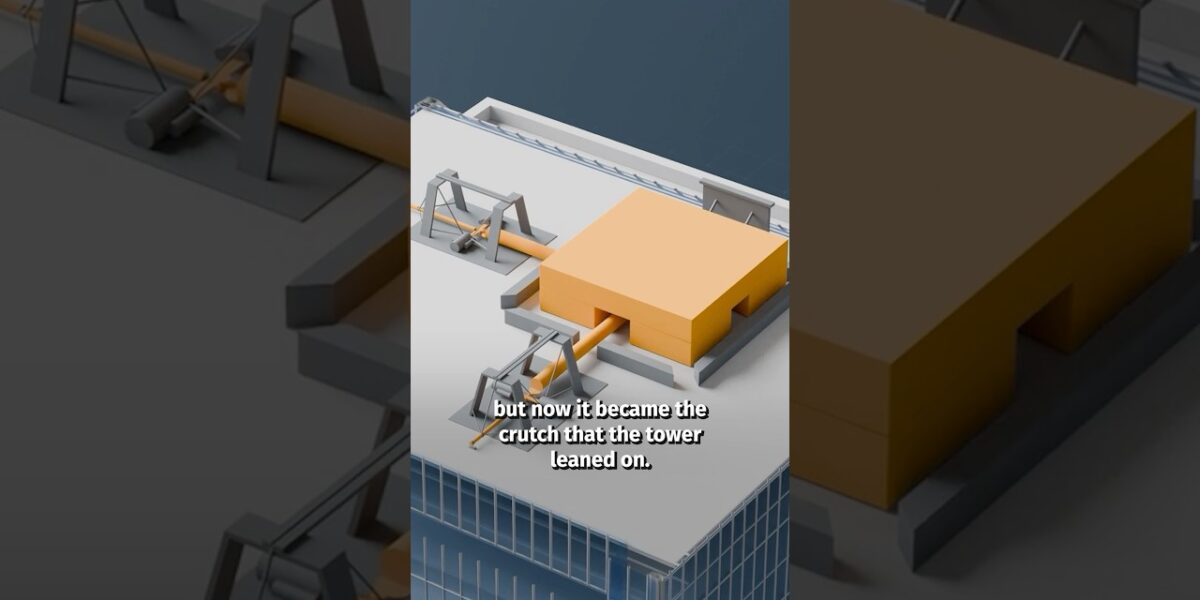
The Citicorp Center, now known as 601 Lexington Avenue, was designed by architect Hugh Stubbins Jr. and engineered by William LeMessurier. Its most striking feature was its unique design, which cantilevered 114 feet (34.7 meters) out over a plaza, supported by four colossal 11-story-high diagonal columns. This bold architectural choice was intended to create an open, inviting public space at the base of the tower. To further enhance stability, especially against wind loads, the building incorporated a sophisticated Tuned Mass Damper (TMD). This massive 400-ton steel block, suspended on oil and controlled by hydraulic systems, was designed to move in opposition to the building’s sway, counteracting wind-induced oscillations and ensuring occupant comfort. At the time, it was the largest TMD ever installed in a building.
The Alarming Discovery
The crisis began to unfold in 1978, less than a year after the building’s completion. A graduate student from Princeton University, Diane Hartley, who was researching wind loads on tall buildings, contacted LeMessurier’s firm with a troubling observation. She had calculated that the building’s design, specifically the way the wind was expected to hit the structure, was significantly underestimated in the original wind tunnel tests. The critical flaw lay in the connections of the shear-truss system, which were designed to handle wind loads from any direction. However, the calculations for the joints connecting the diagonal columns to the main structure had been based on the assumption that wind would hit the building perpendicularly. The student’s calculations indicated that if the building experienced winds from a 45-degree angle – a common occurrence – the joints would be subjected to nearly double the stress they were designed to withstand. This could lead to catastrophic failure, with the building potentially toppling.
A Race Against the Hurricane Season
LeMessurier, upon realizing the gravity of the situation, initiated an urgent internal review. The findings were chilling: the student was correct. The joints, particularly at the base of the shear-truss system, were critically vulnerable. The situation was exacerbated by a change in the construction method. Initially, the joints were designed to be welded. However, to save time and money during construction, the contractor opted for bolted joints at the critical junctions, with the understanding that they would be subsequently welded. This change, coupled with the underestimated wind loads, created a ticking time bomb. The looming threat of hurricane season, which typically begins in June in the region, added immense pressure. The repairs needed to be completed before the severe weather arrived.
The Secret Repair Operation
The scale of the problem was immense, involving over 200 critical joints that needed reinforcement. LeMessurier and his team devised a solution: welding two 2-inch (5 cm) thick, 6.5-foot (2 m) long steel plates onto each side of the chevron beams at the affected joints. This would effectively reinforce them to withstand the calculated wind loads. The challenge was how to execute these repairs without causing panic among the building’s occupants and the public, or disrupting the daily operations of the thousands of people working inside.
A clandestine operation was launched. Under the guise of routine maintenance, teams of welders worked under the cover of darkness. Each night, after the office workers had left, they would enter the building, carefully remove the sheetrock surrounding the chevron beam joints, and meticulously weld the steel plates into place. The work was painstaking and required immense skill. The joints were ranked by LeMessurier in order of criticality, with the highest priority being the ones on the lower floors. The teams had to complete the welding and then replace the sheetrock and clean up the work areas before the morning rush. It was a high-stakes, round-the-clock effort, akin to applying literal band-aids to a critical wound, but on a colossal scale.
Evacuation Plans and Public Safety
While the welding operation was underway, the team also had to consider the worst-case scenario. They collaborated with the Red Cross to develop a 10-block radius evacuation plan. This contingency planning involved assessing the number of people at risk within the building and understanding the potential domino effect if the tower were to fall. The engineers realized that if the building collapsed, it would likely strike adjacent structures, potentially triggering a chain reaction of destruction throughout the dense urban environment. The ultimate consequences were deemed incalculable and horrific. Despite the immense risk to potentially thousands of lives, the decision was made to withhold this information from the public and even the building’s tenants to prevent mass hysteria.
Monitoring and Resolution
To monitor the structural integrity of the building during the repairs and beyond, strain gauges were installed on critical structural members. These sophisticated sensors continuously measured the building’s stresses and strains, transmitting data to a command center located eight blocks away. This allowed engineers to keep a close watch on the structure’s performance in real-time. The emergency generators that had been acquired for the TMD were repurposed to ensure continuous power for the monitoring equipment and the essential systems of the building.
The welding repairs were completed just in time, narrowly avoiding the full force of the hurricane season. The quick thinking, innovative engineering, and unwavering dedication of LeMessurier and his team, coupled with the silent, diligent work of the construction crews, ultimately saved the Citicorp Center from a potentially devastating fate. The incident highlights the critical importance of rigorous design review, the potential for unforeseen consequences in complex engineering projects, and the remarkable ability of engineers to solve problems under extreme pressure.
Lessons Learned and the Future
The Citicorp Center incident serves as a powerful case study in structural engineering. It underscores the need for thorough analysis of all potential load conditions, including those that might seem improbable. It also demonstrates the ethical considerations faced by engineers, balancing the need for transparency with the imperative to avoid public panic during emergencies. The secret repair operation, while successful, raises questions about disclosure and public trust. Today, modern buildings undergo even more stringent reviews and simulations, incorporating advanced computational fluid dynamics and finite element analysis to predict structural behavior under a wider range of conditions. The story of the Citicorp Center’s near-disaster remains a compelling reminder of the invisible forces at play in our built environment and the brilliant minds that work to keep us safe within them.
Source: How They Prevented The Citicorp Disaster (YouTube)

Related Articles
NASA’s Asteroid Mission: From Mars Dream to Lunar Gateway
NASA's ambitious Asteroid Redirect Mission (ARM), designed as a stepping stone to Mars, aimed to capture a small asteroid boulder and tow it to lunar orbit for astronaut testing. Though cancelled, its advanced propulsion and robotic technologies live on in NASA's Lunar Gateway and future deep space exploration plans.
NASA’s Evolving SLS Rocket Hints at New Upper Stage
NASA's Artemis program may be adopting a new upper stage for its Space Launch System (SLS) rocket, potentially utilizing the commercially available Centaur V. An updated infographic reveals design changes and hints at evolving mission strategies, including advanced lunar lander operations.


SpaceX Starship V3 Nears First Flight Amidst Major Artemis Shakeup
SpaceX eyes March for Starship V3's maiden flight as new testing reveals design improvements. Meanwhile, NASA's Artemis program faces delays and strategic shifts, with Artemis III repurposed as a LEO test mission.