Sisters Return to Ukraine to Serve on the Front Lines
Sisters Victoria and Marina Honchruk left their lives abroad to serve Ukraine on the front lines. Victoria became an army medic after leaving her investment banking career, while Marina rose to become a combat trooper. Both sisters describe profound personal changes and a deep commitment to defending their homeland.

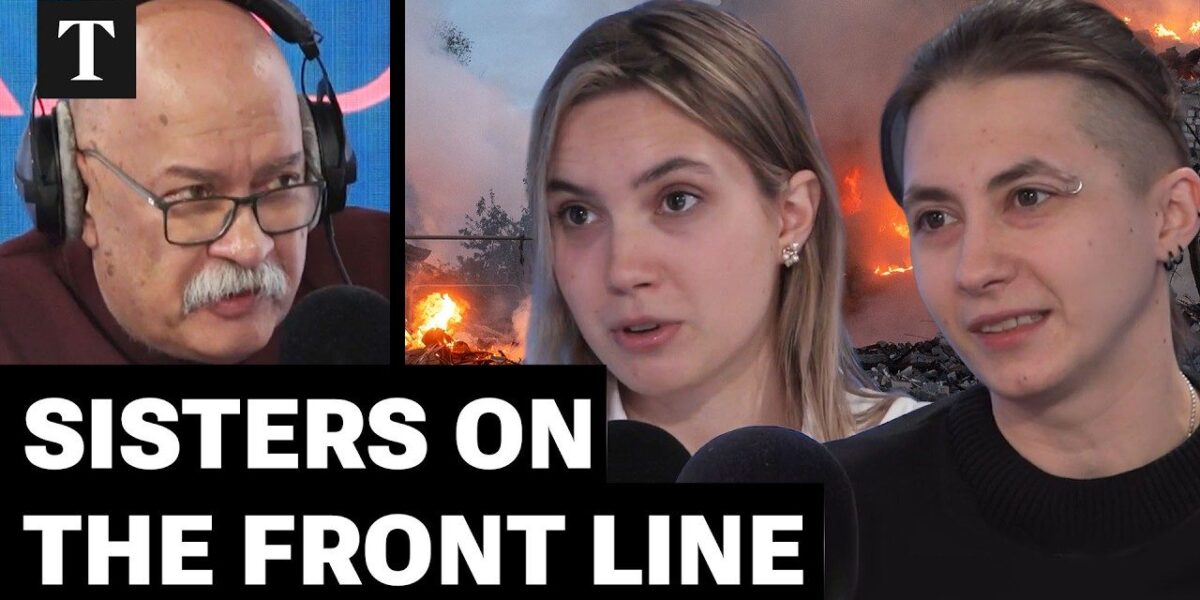
Sisters Answer the Call to Defend Ukraine
In the face of overwhelming aggression, sisters Victoria and Marina Honchruk made the profound decision to leave their lives abroad and return to their homeland, Ukraine, to actively participate in its defense. Victoria, a former investment banker in New York, and Marina, who was in Kyiv when the invasion began, share their harrowing yet resolute journeys from overseas observers to active participants on the front lines, embodying the spirit of Ukrainian resilience.
A Call From Afar, A Decision Made
Victoria Honchruk recounted the shock and disbelief that rippled through her as she learned of Russia’s full-scale invasion while working in California. “I was really confused at first because I really did not believe that this could happen that somebody could launch a full-scale invasion on a European country in 2022,” she stated. The realization that her home, family, culture, and freedom were no longer guaranteed spurred an immediate and unwavering resolve. “Looking back now, decision to go back to Ukraine was the easiest one to make for myself and for my integrity,” Victoria affirmed, despite having what she described as a “dream job” in investment banking at Morgan Stanley.
From Investment Banking to Battlefield Medic
Initially, Victoria dedicated her efforts to financial support and procuring necessary supplies for Ukraine. However, the desire to contribute more directly led her to leave her career behind. “When I realized that, okay, it’s time for me to work with my hands and actually be on the ground, I left my job,” she explained. Despite an initial fear of blood and needles, Victoria trained as an army medic, driven by a sense of duty. “I think I can be a medic if I need to be and that’s what my country needs me to do,” she stated, believing the conflict to be a war with broader implications for Europe.
Marina’s Path: From Kyiv to the Front Lines
Marina Honchruk’s experience differed significantly. She was in Kyiv when the invasion commenced. “For me, after the revolution of dignity, there was a true vision that Russia won’t stop,” Marina shared. Unlike her sister, she felt no option but to fight. “There weren’t for me any options to like run away if some big war started or stand aside. That was the clear vision for me that if the big war start, I will fight in some way,” she declared.
The First Female Assault Trooper
Marina’s path led her to become what is believed to be the first female assault trooper in the Ukrainian military. She began as a medic in a medical evacuation unit but ultimately transitioned to infantry roles. “Then the commanders said that we have to head to assault. So they I had another option because I’m a soldier actually,” Marina explained. She found herself part of an assault group, continuing her work as a medic within its ranks. When asked about the fear associated with combat, she reflected, “I had very great group of people with me. That was my friends who unfortunately were killed by Russia by this day. And for me, it was just a funny party with my friends despite all this artillery fire.” She emphasized that humor and camaraderie were crucial coping mechanisms on the battlefield.
A Sister’s Worry, A Shared Bond
The emotional toll of their parallel journeys was immense, particularly for Victoria, who worried constantly about Marina’s safety on the front lines. “I was constantly worried where she is and how her experiences, how her assaults were,” Victoria admitted. A sense of relief and peace came when Victoria began working with Marina’s battalion. “For me, it was so much better because I could hear her voice in the radio chatter. I knew exactly where she was and how things were there,” she said.
The Harsh Realities of War
Victoria described the escalating severity of injuries she encountered as a medic. “As the battle grew more fierce, well, the injuries grew more awful, the amputations, limbs being torn off, you saw people die on tables in front of you,” she recounted, acknowledging the immense psychological burden. She explained her coping mechanism: “I tried to dissociate myself from the injuries and to definitely help me just my hands are doing whatever is needed to be done and my brain is catching up later.” Professionalism and suppressing panic were paramount when facing patients in pain and extreme danger.
Treating the Enemy with Humanity
The sisters also spoke about the ethical complexities of war, including the treatment of enemy combatants. Victoria recounted treating Russian soldiers, emphasizing the need to uphold Ukrainian values even in conflict. “We have to treat them the way we treat everyone. We know the Russians are very cruel with our prisoners of war, but we cannot be like that,” she stated.
Marina shared her observations of captured Russian soldiers, describing them not as professional fighters but as “old poor men who are treated by Russia like just a fire meat.” She expressed pity for them, noting their apparent lack of motivation beyond financial gain or avoiding imprisonment. “They are too like they don’t like like a danger or something like that,” she commented on their demeanor upon surrender.
Personal Transformation Through Conflict
When asked about the war’s impact on their personal lives, both sisters acknowledged profound changes. Marina stated, “I guess I have become more less emotional. Actually, I wasn’t too emotional in civilian life and now I’m less emotional, more tough, I guess, and more stress resistant.” Victoria echoed this sentiment, adding a newfound appreciation for life’s simple pleasures. “I gained more resilience for sure. I became less emotional too. Um, that also made me appreciate little things about life a lot more,” she said, reflecting on how the experience made her value the beauty of everyday life, even in cities like London, which she had previously overlooked.
Looking Ahead
The sisters’ stories are a testament to the courage and sacrifice of ordinary Ukrainians thrust into extraordinary circumstances. As the conflict continues, their experiences highlight the deep personal costs of war and the enduring strength of the human spirit in the face of adversity. The world watches, inspired by their resolve, as they continue to fight for their nation’s freedom and sovereignty.
Source: I Went Back To Ukraine To Help My Sister And My Country (YouTube)

Related Articles

Trump’s Putin Stance: US Strategy and Global Implications
Analysis suggests Donald Trump's approach to the Ukraine war involves pressuring Kyiv, but US involvement is crucial for resolution. China's influence and the 'MAGA' agenda's geopolitical implications are key factors.


Melania Trump’s Quiet Diplomacy on Ukraine War
Former First Lady Melania Trump has emerged as an influential, though unofficial, voice on the Ukraine war, reportedly shaping her husband's perceptions and engaging directly on humanitarian issues like the deportation of Ukrainian children. Her advocacy, possibly influenced by her European background, has drawn international attention and sparked unique reactions, including widespread social media support from Ukrainians.

Iran’s Regime Under Siege: Attacks Cripple Leadership, Impact Russia
Iran's regime is reportedly facing critical blows from targeted attacks, crippling its leadership and severing a vital military supply line to Russia. This dual pressure is significantly impacting Russia's war efforts in Ukraine, while internal dissent grows within Iran.