Simple Spreadsheet Slashes Spending, Saves Thousands
A simple, self-made spreadsheet is reportedly saving individuals thousands of dollars annually by fostering real-time awareness of spending habits. The creator emphasizes immediate logging and visual feedback as key to curbing discretionary expenses like dining out and impulse shopping.

The Power of Awareness: A Spreadsheet-Driven Approach to Cutting Expenses
In a world saturated with complex budgeting apps and financial advice, one creator has found a surprisingly effective, low-tech solution to curb spending: a meticulously tracked spreadsheet. This simple tool, born out of a personal struggle with discretionary spending, has reportedly saved the creator thousands of dollars annually by fostering a critical sense of awareness around purchasing habits.
The Relatable Pitfall: Eating Out and Impulse Buys
The core of the problem, as detailed by the creator, often stems from seemingly small, habitual expenditures that accumulate rapidly. For many working from home, the temptation to step out for a meal or a quick purchase can be a significant drain on finances. The creator highlights eating out as a particularly insidious budget category. “These there’s small purchases. They don’t feel expensive at first, but they add up,” the creator explains. This isn’t necessarily a reflection of financial inability to afford these purchases, but rather a consequence of seeking an escape or a break from routine.
“It’s not a skill issue. Uh, and it’s also not necessarily a money issue. It’s a get me the hell out of this house and away from these kids… before my head explodes issue.”
Traditional budgeting methods, often involving intricate apps that require linking numerous financial accounts, are frequently criticized for being overly complicated and off-putting. The creator likens traditional budgeting to dieting, suggesting that strict rules and reliance on willpower are often unsustainable in the long run. The breakthrough came not from more discipline, but from simple, intentional tracking.
The Spreadsheet Solution: Awareness Through Tracking
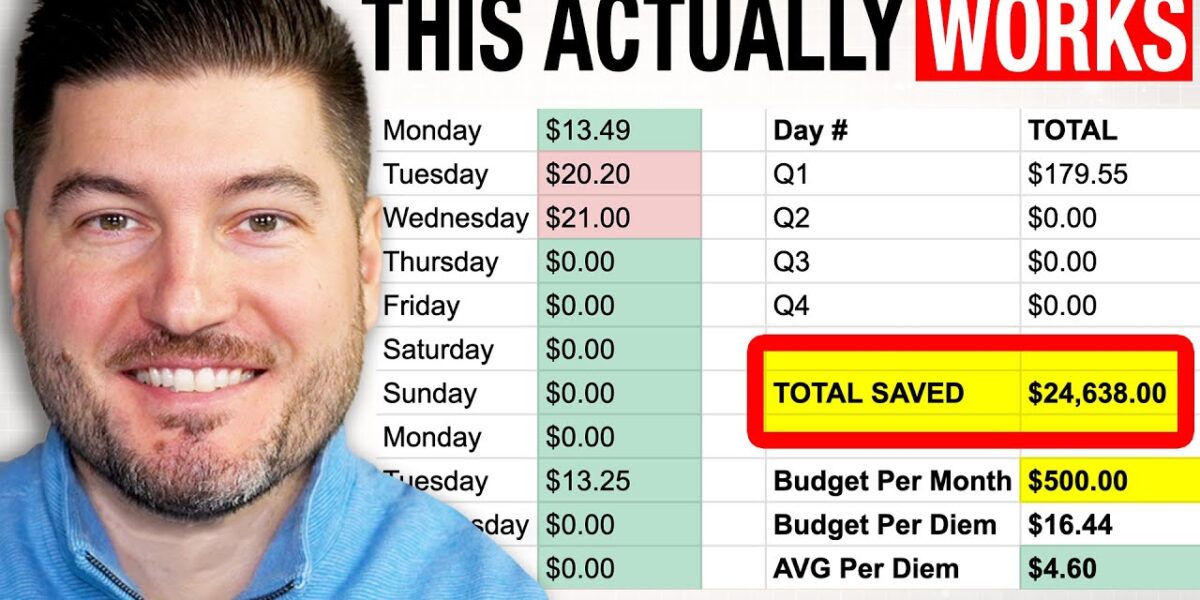
The creator’s solution is a Google Sheet designed for extreme simplicity. The core principle is to log every single purchase immediately after it occurs. This immediate logging creates a direct feedback loop, forcing the individual to confront their spending in real-time. The creator recounts a moment of realization at a restaurant when, upon opening the spreadsheet to log a planned $10-$15 lunch, the thought of entering the data made them reconsider and opt to go home and eat instead.
This heightened awareness is the key. By documenting each transaction, the individual is prompted to question the necessity and value of the purchase. The spreadsheet includes a daily budget, color-coded to indicate whether spending is within limits (green) or exceeding them (red). The creator’s own daily average spend on eating out, after implementing this system, was as low as $4.85, resulting in a monthly spend of approximately $147, a stark contrast to previous, unquantified expenditures.
Key Features of the Spreadsheet:
- Simplicity: Designed for quick entry via mobile, taking only seconds per transaction.
- Real-time Feedback: Immediate logging creates instant awareness of spending habits.
- Visual Cues: Color-coding (green for under budget, red for over budget) provides at-a-glance progress.
- Budget Customization: Users set their own monthly budget, which the spreadsheet breaks down into daily and quarterly targets.
- Quarterly Breakdown: Budgets are often viewed quarterly to account for fluctuations like holidays and birthdays.
Beyond Eating Out: Tackling Other Spending Vices
The creator emphasizes that this system is not limited to food expenses. It can be adapted to address any problematic spending category, such as online shopping (specifically mentioning Amazon and retail therapy), or even vices like cigarettes or vaping. A separate tab can be used to track these specific areas. The principle remains the same: set a budget, track every purchase, and let the immediate data influence future decisions.
The creator shares an example of setting a $500 monthly budget for general shopping. While acknowledging that one could technically spend nearly the entire budget on the last day of the quarter, the act of tracking makes such large, impulsive purchases less likely. This deliberate approach, even if within budget, is presented as superior to aimless spending.
Market Impact and Investor Takeaways
While the article focuses on personal finance, the underlying principle of data-driven decision-making has broad market implications. The creator’s methodology mirrors the importance of diligent analysis in investment. Just as tracking every dollar spent provides clarity on personal finances, rigorous data analysis is crucial for informed investment decisions.
What Investors Should Know:
- The Power of Data: In both personal finance and investing, what gets measured gets managed. Consistent tracking and analysis are key to achieving financial goals.
- Behavioral Finance: The spreadsheet leverages behavioral economics by creating immediate friction and awareness around spending, similar to how understanding market psychology can help investors avoid emotional decisions.
- Simplicity Can Be Effective: Complex financial tools are not always superior. Simple, consistent methods can yield significant results, whether in budgeting or investment tracking.
- Discretionary Spending Trends: A widespread adoption of such budgeting tools could signal a broader consumer shift towards more conscious spending, potentially impacting sectors reliant on discretionary purchases like dining and retail.
Long-Term Implications
The long-term benefit of this tracking method lies in its ability to retrain spending habits. By consistently confronting spending decisions, individuals develop a more mindful approach. The creator notes that this system doesn’t feel restrictive because it’s based on awareness, not deprivation. It’s about making smarter choices, akin to choosing a healthier meal option that still satisfies a craving.
The creator’s personal journey has led to significant annual savings, projected at over $1,700 per year based on their current average daily spend of $4.85 on eating out alone. When combined with reduced shopping expenses, the total savings are estimated to be in the thousands annually. This emphasizes the compounding effect of small, consistent changes in spending behavior.
While the tool itself is presented as a simple spreadsheet, its effectiveness hinges on the user’s commitment to logging every transaction. It’s a testament to the idea that understanding where money goes is the first and most critical step toward controlling it. This approach can foster a more disciplined financial future, leading to greater savings and potentially improved investment opportunities down the line.
Source: The Only Budgeting Spreadsheet You’ll Ever Need (Seriously) (YouTube)

Related Articles


$100K Salary Illusion: Why You’re Not Richer
A $100,000 salary, once a symbol of financial achievement, now often leaves individuals feeling surprisingly strained. This article explores how inflation, taxes, psychological spending pressures, and a misunderstanding of income versus wealth contribute to this modern financial paradox, offering strategies to build a sustainable margin.


Mastering Wealth: The 5 Levels of Financial Progression
Building wealth follows a structured path, starting with the fundamental principle of living on less than you make. Experts identify five levels of financial progression, emphasizing discipline and strategic saving as keys to long-term security.


Standard Deduction Dominates: Simplify Your Taxes
A vast majority of taxpayers, 91%, are opting for the standard deduction, highlighting a trend towards tax simplicity. Recent legislative changes have increased the standard deduction threshold, making it the most advantageous choice for most individuals, especially those early in their financial careers.