Shump’s Jeep Choice: NBA Stars’ Lavish Spending Habits Exposed
Former NBA champion Iman Shumpert reveals his unconventional approach to wealth, opting for a Jeep over luxury cars and challenging the lavish spending habits of his peers. He discusses the hidden financial pitfalls for athletes, including child support and family obligations.

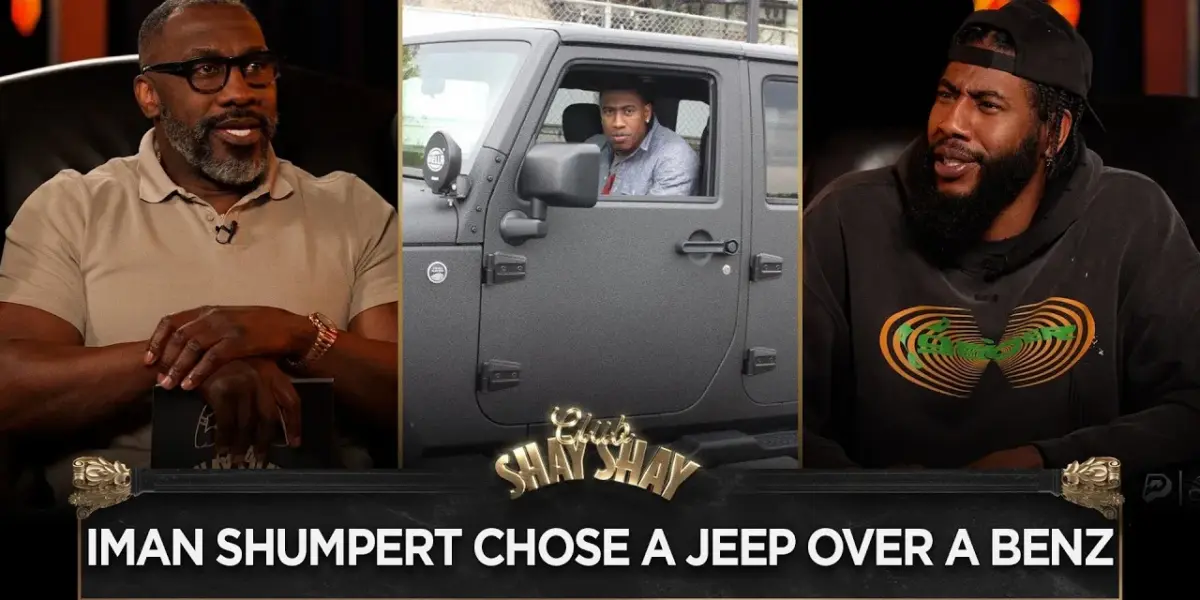
Shump’s Jeep Choice: NBA Stars’ Lavish Spending Habits Exposed
In the glitzy world of the NBA, where fortunes are made and lifestyles are instantly transformed, former NBA champion Iman Shumpert recently shed light on a stark contrast in how players handle their newfound wealth. While many of his drafted peers were quick to embrace extravagant purchases, Shumpert opted for a more grounded approach, famously choosing a Jeep over a luxury Mercedes-Benz, a decision that even drew bemusement from fellow stars like Carmelo Anthony.
From Overdraft to Six Figures: A Financial Awakening
Shumpert’s journey from financial scarcity to NBA riches was a rapid one. He vividly recalls the days of being “from overdraft and $20 in your account” to suddenly seeing “six figures period.” This dramatic shift, however, brought with it a unique set of challenges and observations about his fellow athletes.
“But then I noticed like all my teammates, everybody lifestyle was changing. All my the people I got drafted with, they all just like it’s like they couldn’t wait to be rich.”
This sentiment highlights a common theme: the immediate desire to flaunt wealth. Shumpert, however, felt out of his depth, admitting, “I don’t even know how to be rich.” While others gravitated towards the most eye-catching vehicles, Shumpert’s choice was a gunmetal Jeep with rhino skin, a practical yet distinctive ride.
The Jeep vs. The Benz: A Matter of Priorities
Carmelo Anthony, a contemporary and acquaintance, reportedly questioned Shumpert’s choice. “They like like Melo used to be mad at me like something, come up here with this goddamn Jeep, bro. Like, like I’m embarrassing him or something,” Shumpert recounted. Anthony’s perspective was that a Jeep was for a “day off,” not for daily use, suggesting Shumpert could afford a more prestigious vehicle like a Mercedes-Benz. Shumpert’s response was simple: “Gee, I barely even drive.”
This anecdote underscores Shumpert’s aversion to excess. He wasn’t driven by the need to project a certain image. His approach to shopping mirrored this philosophy. While teammates flocked to high-end stores like Neiman Marcus and Saks Fifth Avenue, often emerging with identical outfits, Shumpert observed, “three of y’all came in looking like twins. Y’all weird to see. All y’all did was buy EVERYTHING OFF THE MANNEQUIN.” He famously dubbed them “Mannequin boys.”
The Financial Realities Beyond the Paycheck
The conversation delved deeper into the complex financial landscape of professional athletes, revealing the hidden costs that can erode even the largest paychecks. Shumpert broke down the mathematics, using a hypothetical $100 million contract as an example:
- Taxes could take away $50 million.
- Agents and financial advisors might claim 2-3%, totaling around $2.5 million.
- Supporting family could easily amount to $15 million.
“If you can’t survive on $35 million jump after you done, you got a bigger issue,” Shumpert stated, emphasizing that even a larger sum wouldn’t solve underlying financial mismanagement. He pointed out that the perception of wealth often doesn’t align with the reality after deductions and obligations.
The Hidden Costs: Child Support and Legal Battles
A significant factor often overlooked, according to Shumpert, is the financial strain of child support. He described “court system kids” where monthly payments can drain an account, especially when the athlete is actively playing and earning. The true impact, however, is felt when the income stream diminishes.
“The moment you stop, you going to start feeling it.”
Shumpert elaborated on the substantial monthly costs, mentioning $20,000 to $30,000 as not insignificant, especially when factoring in private school tuition ($15,000-$25,000 per month). Furthermore, the financial fallout from relationship breakdowns can be astronomical, including legal fees for both parties.
The Pitfalls of Generosity: Houses for Family
While supporting family is a noble cause, Shumpert cautioned against overly extravagant gifts, like purchasing a $3 million house for parents. He highlighted the significant upkeep costs associated with such properties, including cleaning services and lawn care, which become a burden when the athlete’s playing career ends.
“Bro, when you done, like I said, when you making that kind of money, you don’t miss it. But when money is going out and ain’t none coming in, just keep pouring this out and don’t put nothing back in there and see how fast it go. You’re going to be pissed,” he warned.
Private Jets and Airport Realities
The allure of private jets and the associated image were also discussed. Shumpert acknowledged the temptation for players to flaunt these luxuries on social media. However, he admitted that his own perspective shifted: “Now, if I ever get a private jet, y’all better take pictures, videos, do cartwheels… You better use the [expletive] out there cuz I don’t do private jet all the time.”
Interestingly, Shumpert expressed a preference for commercial travel, finding comfort in the anonymity of regular airports. He described his routine: arriving 45 minutes early, dropping his bag, and blending in with a hoodie and a straight face to avoid excessive interaction. He finds the process manageable and prefers it to the perceived hassle of private travel.
What Money Truly Buys: Silence and Control
When asked about the most significant thing he’s learned about money, Shumpert’s answer was surprisingly profound: “My favorite thing that money do is make somebody shut the [expletive] up.” He clarified that this wasn’t about silencing critics with cash, but rather about resolving issues that cause annoyance. He recounted an instance where sending money to a friend complaining about a problem immediately resolved the situation, allowing them to continue enjoying their activity.
He challenged the common adage, “money ain’t everything,” arguing that in reality, almost every aspect of life requires it. “Can’t live in your house without money. Can’t eat. Can’t take care of nobody. So you damn sure can’t be a man. You a boy at this point, you ain’t got no money.” From transportation to education, money is undeniably a fundamental necessity. Shumpert concluded that money’s true power lies in its ability to provide solutions and, in a sense, is indeed “everything.”
Join Club Shay Shay
The conversation, hosted on Club Shay Shay, highlights the candid discussions about the realities of NBA finances. To catch more insights like these, fans are encouraged to subscribe to the channel.
Source: Iman Shumpert Chose A Jeep Over A Mercedes-Benz In The NBA I CLUB SHAY SHAY (YouTube)

Related Articles

Shump on Public Dating: ‘I Ain’t Going To Take Your Girl’
Iman Shumpert discusses his views on public dating, platonic friendships between men and women, and navigating relationships in the spotlight. He emphasizes authenticity and the importance of personal boundaries.


Shumpert Defends Cam Newton’s ‘No Platonic Friends’ Stance
Iman Shumpert discusses Cam Newton's controversial take on platonic friendships, sharing his own experiences and defending Newton's perspective. The conversation also explores themes of love, fatherhood, and navigating past relationships.


Shumpert OK With Male BFFs, But Dad Issues Are A Dealbreaker
Iman Shumpert on CLUB SHAY SHAY reveals he's fine with a partner having male best friends, but unresolved 'daddy issues' are a relationship dealbreaker. He emphasizes the importance of emotional maturity and a processed past.