Shumpert’s Raw Emotion: ‘Happiest Hurt’ of Losing His Dad
Iman Shumpert shares his raw emotions about losing his father, describing the 'happiest hurt' of remembering his guidance and the lasting impact of his absence. He also discusses the crucial role of black fathers and the unique perspective they provide.

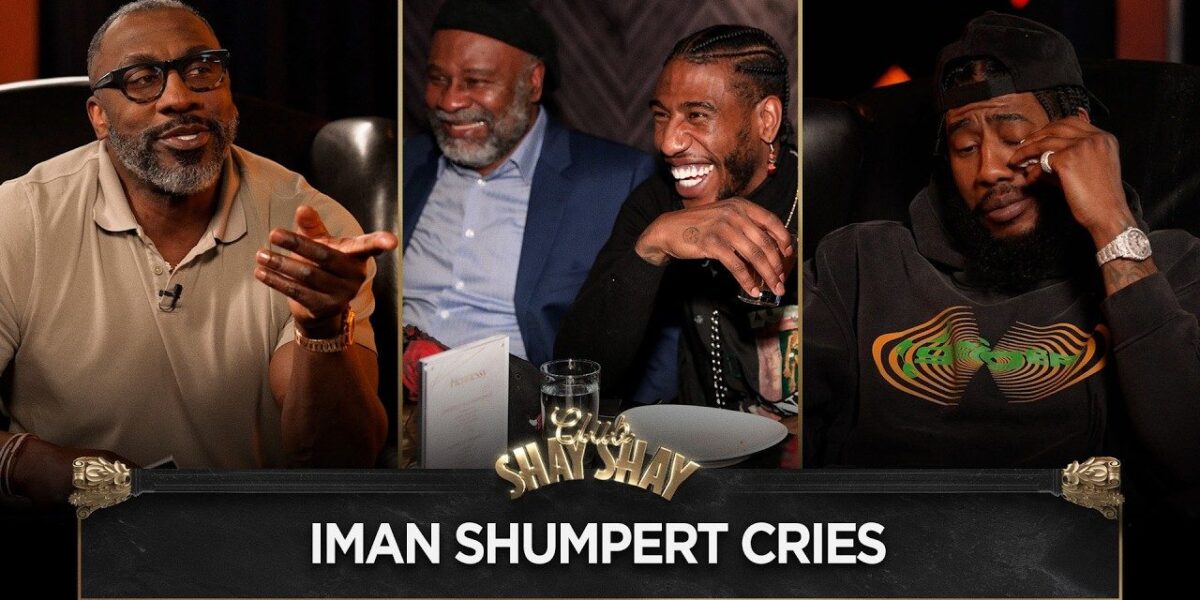
Iman Shumpert Reflects on Profound Grief and Enduring Legacy of His Father
In a deeply emotional conversation on Club Shay Shay, former NBA champion Iman Shumpert opened up about the profound loss of his father, sharing the “happiest hurt” that comes with cherishing the memory of a man who shaped him into who he is today.
A Void Unfilled, A Presence Still Felt
The raw vulnerability displayed by Shumpert painted a vivid picture of the enduring impact of his father’s absence. “It’s such a hard thing when you got somebody there and you get so used to it,” Shumpert confessed, his voice thick with emotion. “It ain’t that I underappreciated him because I talk to my dad every day. You know what I’m saying? I didn’t underappreciate him. But it’s like when you when it’s good around… especially when they just get snatched up like that, ain’t nobody really ready for it.”
The void left by his father’s passing is palpable, yet his presence continues to resonate in Shumpert’s daily life. “I could hear him like I know… I know what he taught me,” he explained. “It’s to the point where it’s like waking up and going to leave out my room before I brush my teeth. I can hear like, ‘You didn’t even brush your teeth. Like how you going be in everybody face? You ain’t even brush your teeth, dude.'” These everyday reminders, while tinged with sadness, also serve as a testament to the strong foundation his father laid.
“It’s like the happiest hurt that you could have cuz it’s like I’m so… I know a lot of people didn’t have a father and I’m the I’m just I leaned on mine.”
The Last Conversation: A Father’s Pride and a Son’s Unknowing Farewell
Shumpert recounted his final conversation with his father, a moment now etched in his memory. His father, who always dressed impeccably for work, commented on Shumpert’s sharp appearance in a suit. “Man, you look good in them… them suits, man. Like, I like that you taking jobs now that you wearing that suit,” his father said. He then urged Shumpert and his brother to finish filming their podcast and not to come home, as he needed to go to the hospital and would be “right back.”
The heartbreaking reality was that Shumpert’s father was far sicker than he let on. “He never shared that,” Shumpert admitted. “I mean I knew he had to go in the hospital. I thought he just had some like, you know, people get older. Being there a couple of days and he’d be right back out.” This lack of full disclosure, while understandable, added another layer of pain to the loss.
Mourning, Memory, and the Mirror Ball Trophy
When asked what he would say to his father if he were sitting in the chair today, Shumpert struggled to articulate his feelings, acknowledging the profound difficulty of the situation. “I wouldn’t be able to talk, bro. Like, you don’t get… we don’t get good men in the world.” He expressed a desire to simply hug his father and sit in his lap like a child, a poignant image of a son yearning for the comfort of his parent.
In a surprising revelation, Shumpert shared that his mother was prouder of him winning the mirror ball trophy on ‘Dancing with the Stars’ than his NBA championship. “That mirror ball is in her house right now. She love that damn truck,” he said, highlighting a different kind of accomplishment that resonated deeply with his mother.
The Enduring Importance of Black Fathers
The conversation also delved into the critical role of black fathers in the household. Shumpert drew a powerful analogy, comparing a good father to a “really good defensive back” in football. “They won’t even try you. All the [expletive] that your dad do for you, you not going to see it… He your your dad got to be Derel Revas out there. Like why you throwing the ball over here? It’s bad news you throw it over here.”
He emphasized that black fathers provide a unique and essential perspective, navigating the complexities of the world for their children. “It would be for especially for a black boy. How can I take advice from somebody who tried to keep me down? Like you tried to push me down. Now y’all saying, ‘Okay, well that’s over with.’ So now I’mma teach you this, this, and this, but I I still kind of got to take it with a grain of salt. Until my black father say, ‘No, that that that you know what I mean? We just cipher.'”
Shumpert concluded by reinforcing the idea that black men represent a “safe space” and a source of strength, countering negative stereotypes. “When I see five men on the corner, this a safe ass corner to me. You know what I’m saying? Like it’s safe. If my uncles and my dad is standing outside this store, every kid that walk past is safe. So that’s how I view black men.” The interview serves as a poignant reminder of the indelible mark fathers leave on their children and the profound impact of their absence.
Source: Iman Shumpert Breaks Down Crying Remembering Dad I CLUB SHAY SHAY (YouTube)

Related Articles

Shump & OBJ: The Brutal Truth About Athlete Wealth
Iman Shumpert and Odell Beckham Jr. discuss the harsh financial realities faced by professional athletes, revealing how massive fortunes can disappear due to taxes, family obligations, and extravagant spending. They highlight the importance of financial discipline and the often-overlooked costs of supporting family and dealing with child support.

Kyrie Wanted to Beat LeBron, Not Team Up
Iman Shumpert reveals Kyrie Irving's departure from Cleveland was driven by a desire to beat LeBron James, not team up with him. Shumpert likens Irving's competitive spirit to Kobe Bryant's, emphasizing his need to conquer the best to be considered the best.

LeBron’s NBA Mind: The “ChatGPT” of Basketball
Iman Shumpert likens LeBron James to the "ChatGPT of the NBA" due to his unparalleled basketball IQ. Shumpert details how James's ability to dissect opponents and strategize, even overriding coaches, stems from a career older than most players' children. His deep understanding of the game allows him to adapt and predict outcomes with uncanny accuracy.