Shrinkflation and Greedflation: Why Your Goods Cost More
Consumers are increasingly facing smaller products at higher prices due to shrinkflation and greedflation. This article explores the tactics companies use, their impact on consumers, and potential regulatory and consumer-led solutions.


Shrinkflation and Greedflation: Why Your Goods Cost More
Consumers are increasingly noticing a disheartening trend: products are getting smaller, but the prices are staying the same or even increasing. This phenomenon, commonly known as shrinkflation, is a strategy where companies reduce the quantity of a product while maintaining its price. However, a deeper dive reveals that this practice, alongside ‘greedflation’ and ‘skimpflation,’ is becoming a significant concern for consumers globally.
The Rise of Shrinkflation
Shrinkflation is not a new concept; it has been observed for decades. The traditional definition involves keeping prices constant while lowering the amount of product inside the packaging. Examples are abundant: a box of tissues might contain fewer sheets, a roll of toilet paper might have fewer plies or smaller sheets, and snack bags often contain more air than product. The effectiveness of shrinkflation lies in a psychological principle called the ‘just noticeable difference.’ This principle suggests that consumers will only perceive a change if it crosses a certain threshold, often around 13% for weight in small items like snack bags. This allows companies to make subtle reductions that consumers may not immediately notice, especially when spread across millions of units.
During and after the COVID-19 pandemic, shrinkflation appeared to accelerate. Many companies cited supply chain disruptions, rising raw material costs, and increased wages as reasons for these changes. For instance, a Frito-Lay representative stated in March 2022 that inflation necessitated reducing the amount of chips in a bag to maintain the same price. Economists also pointed to unprecedented government stimulus measures and pent-up consumer demand as factors contributing to inflation. However, the extent of product reduction in some cases seemed to outpace the rate of inflation, leading to accusations that companies were using the economic climate as a cover for profit increases.
Beyond Shrinkflation: Greedflation and Skimpflation
As the initial wave of pandemic-related inflation subsided, prices continued to rise, and product sizes continued to shrink. This has led to the emergence of the term ‘greedflation.’ This concept suggests that some companies, particularly those closer to the end of the supply chain, have used the post-pandemic economic environment as an opportunity to increase profit margins beyond what is justifiable by rising costs. Studies, such as one by the Groundwork Collaborative, have indicated that in the US, corporate profits accounted for a significant portion of inflation in 2023, far exceeding the proportion seen in the decades prior to the pandemic. For example, while input costs for producers might have risen by 1%, consumer prices increased by a larger percentage, with the excess attributed to increased corporate profits.
This trend is not confined to the US. Reports from the UK, Australia, and Canada show similar patterns of increased corporate profit margins alongside rising consumer prices and shrinking product volumes. In the UK, pre-tax profit margins for many firms were significantly above pre-pandemic levels. In Australia, large corporate profit increases were found to account for more than half of the inflation above the central bank’s target, leading to an estimated $100 billion in excess profits.
Another related practice is ‘skimpflation,’ where manufacturers reduce the quality of ingredients or materials used in a product to cut costs, rather than reducing the quantity. A classic example is the shift from using raw sugar to high-fructose corn syrup in products like Coca-Cola, a change that occurred gradually over several years in the 1980s. Consumers often notice that products taste or feel cheaper over time, and skimpflation is a primary reason for this decline in perceived quality.
Why This Matters: The Consumer Impact
The combined effects of shrinkflation, greedflation, and skimpflation place a significant burden on consumers. They are effectively paying more for less, and in many cases, for lower quality. This erosion of value can be particularly damaging for lower-income households, who spend a larger proportion of their income on essential goods. The feeling of being systematically misled or taken advantage of can also lead to consumer distrust and dissatisfaction.
While companies argue that these practices are necessary for survival in a challenging economic landscape, the data suggests that for many, it has become a strategy to maximize profits at the expense of consumer value. The lack of transparency in packaging and pricing can make it difficult for consumers to make informed purchasing decisions.
Regulatory Responses and Consumer Awareness
As consumer frustration grows, some governments and regulatory bodies are beginning to take action. Australia, for instance, is reviewing unit pricing in supermarkets to help consumers better compare value and is considering measures against misleading labels and package sizes. South Korea has implemented fines for companies that fail to label product size reductions for at least three months. In the US, legislative attempts like the ‘Shrinkflation Prevention Act’ have been proposed to address these practices, though they have faced challenges in passing.
Ultimately, consumer awareness is a critical tool in combating these trends. Organizations like the Consumer Federation of America offer tips such as comparing prices per serving, utilizing loyalty programs, and stocking up on sale items. By understanding the mechanisms of shrinkflation, greedflation, and skimpflation, and by actively seeking value, consumers can exert pressure on companies to maintain fair pricing and product quality. The hope is that as consumers become more vigilant and vocal, and as regulatory oversight increases, companies will be incentivized to prioritize long-term brand loyalty over short-term profit maximization through deceptive practices.
Source: How Scamming Consumers Became Normalised (YouTube)

Related Articles


Russia’s Hidden Debt Crisis: A Silent Drain on Citizens
Russia is reportedly accumulating significant debt through complex financial schemes, which critics argue are subtly draining resources from its citizens. The government's reliance on borrowing, coupled with inflation and rising interest rates, is placing a growing burden on ordinary Russians.

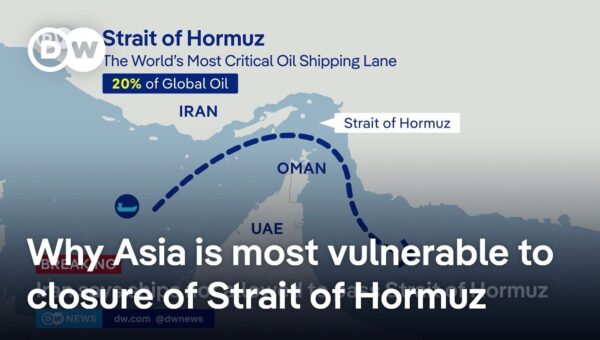
Iran Strait of Hormuz Blockade Threatens Global Oil Prices
Iran's Revolutionary Guard has issued warnings against ships passing through the Strait of Hormuz, a critical global oil chokepoint. This potential blockade threatens to disrupt 20% of the world's crude oil flow, potentially spiking energy prices and fueling global inflation. Experts warn of significant market reactions and widespread economic consequences.


Geopolitical Shockwaves: Iran Tensions Spike Oil, Rattling Markets
Geopolitical tensions following U.S. military action in Iran have sent oil prices soaring and rattled global markets. Investors are closely watching the impact on inflation, interest rates, and the U.S. dollar.