Shadows of a New Arms Race: US Intelligence Alarms Over China’s Covert Nuclear Expansion
New U.S. intelligence reports allege China is covertly developing a 'new generation' of advanced nuclear weapons, including low-yield tactical nukes, evidenced by a secret 2020 explosive test at Lop Nur. This dramatic shift in Beijing's nuclear strategy, potentially aimed at deterring U.S. intervention in a Taiwan conflict, signals a dangerous escalation and could trigger a new global arms race, raising profound concerns for international stability.

Shadows of a New Arms Race: US Intelligence Alarms Over China’s Covert Nuclear Expansion
WASHINGTON D.C. – A recent intelligence assessment has sent ripples of concern through global security circles, suggesting that China is aggressively pursuing a radical transformation of its nuclear arsenal, potentially aiming for capabilities that could redefine the global strategic landscape. The revelations, stemming from an exclusive report citing U.S. intelligence agencies, point to a covert explosive test in June 2020 at China’s Lop Nur facility and an overarching ambition to develop a new generation of nuclear weapons, including low-yield tactical variants. This alleged push towards a ‘never-before-developed’ nuclear arsenal has raised alarms in Washington, fueling a debate over Beijing’s evolving nuclear strategy and its implications for international stability, particularly concerning flashpoints like Taiwan.
The Bombshell Report: Unveiling China’s Covert Nuclear Ambitions
The genesis of these profound concerns lies in a detailed intelligence assessment, first brought to public attention through a bombshell report. According to the assessment, U.S. intelligence agencies believe China is not merely expanding its nuclear stockpile but is engaged in a concerted effort to develop a completely new category of nuclear weapons. This endeavor, described as a push to transform its nuclear arsenal into the world’s most technologically advanced, is seen as a direct challenge to the nuclear parity long held by the United States and Russia.
Central to these revelations is the allegation of a covert explosive test conducted by China in June 2020 at its Lop Nur facility in the country’s northwest. This test, according to sources familiar with the U.S. intelligence assessment, was undertaken despite a self-imposed moratorium on such activities that China has maintained since 1996. While the 2020 test itself was publicly disclosed by the U.S. State Department weeks prior to these newer intelligence leaks, its underlying purpose had remained obscured. The subsequent review of evidence, however, has led officials to conclude that the test was directly motivated by China’s pursuit of these next-generation nuclear capabilities.
The Lop Nur test site holds significant historical weight, having been China’s primary nuclear weapons testing ground since its first nuclear detonation in 1964. A return to explosive testing, even a covert one, after decades of self-restraint, would signal a dramatic shift in Beijing’s approach to nuclear development. Such a move would not only be a technical milestone for China but also a profound political statement, potentially undermining global non-proliferation efforts and the spirit of treaties like the Comprehensive Nuclear-Test-Ban Treaty (CTBT), which China has signed but not ratified.
A New Generation of Nuclear Weapons: Redefining Deterrence
The intelligence assessment paints a picture of China striving for nuclear weapons that could surpass the capabilities currently possessed by the world’s two dominant nuclear powers, the United States and Russia. The implications of this ambition are far-reaching. The pursuit of a ‘completely new nuclear arsenal’ suggests a multi-faceted approach, likely encompassing several key areas of advanced nuclear technology:
- Multiple Independently Targetable Reentry Vehicles (MIRVs): While not explicitly stated in the initial report, the mention of ‘additional weapon systems capable of delivering multiple miniaturized nuclear warheads from a single missile’ strongly indicates a focus on MIRV technology. MIRVs allow a single ballistic missile to carry several warheads, each capable of striking a different target. This significantly enhances a country’s first-strike capability and complicates missile defense, as it multiplies the number of targets an adversary must intercept.
- Low-Yield Tactical Nuclear Weapons: The report specifically highlights China’s apparent development of ‘low yield tactical nukes, something the country has never previously produced.’ Tactical nuclear weapons are designed for use on the battlefield against military targets, as opposed to strategic nuclear weapons aimed at cities or large-scale infrastructure. Their development by China is particularly alarming because it could lower the threshold for nuclear use in a regional conflict. The concept of ‘limited nuclear war’ with tactical nukes is fraught with danger, as any nuclear exchange carries an inherent risk of rapid and uncontrollable escalation.
- Advanced Delivery Systems: While the report focuses on the warheads, the effectiveness of any new nuclear weapon hinges on its delivery system. China has been known to invest heavily in advanced missile technology, including road-mobile intercontinental ballistic missiles (ICBMs) and, increasingly, hypersonic glide vehicles. Hypersonic weapons, capable of maneuvering at speeds exceeding Mach 5, pose a significant challenge to existing missile defense systems, making them highly destabilizing.
- Enhanced Accuracy and Survivability: ‘More powerful and more sophisticated’ nukes could also imply advancements in guidance systems for increased accuracy, as well as hardening techniques for warheads to withstand anti-ballistic missile defenses. Furthermore, improvements in solid-fuel missile technology allow for quicker launch times and greater survivability, as these missiles can be moved and launched from various locations, making them harder to target.
These developments suggest a potential shift in China’s long-standing nuclear doctrine of ‘minimum deterrence,’ which historically emphasized maintaining a smaller, but credible, nuclear force sufficient to deter a first strike. A move towards a larger, more technologically advanced arsenal with tactical options could indicate a desire for ‘full-spectrum deterrence’ or even a limited war-fighting capability, fundamentally altering the strategic balance in Asia and globally.
The Taiwan Calculus: A Nuclear Dimension to Regional Conflict
Perhaps one of the most concerning aspects of the intelligence assessment is the direct link drawn between China’s new nuclear ambitions and the potential for conflict over Taiwan. The report states that low-yield tactical nukes ‘could be deployed against targets closer at home, including in scenarios where Beijing responds to potential US defense of Taiwan.’
Taiwan remains the most volatile flashpoint in U.S.-China relations. Beijing views Taiwan as an integral part of its territory, to be reunified with the mainland, by force if necessary. The United States, while acknowledging the ‘One China’ policy, is committed under the Taiwan Relations Act to provide Taiwan with the means to defend itself and has maintained a policy of ‘strategic ambiguity’ regarding direct military intervention in a cross-strait conflict. However, recent statements from U.S. officials have at times leaned towards ‘strategic clarity,’ signaling a potential shift.
The development of tactical nuclear weapons by China introduces a terrifying new dimension to this already fraught scenario. A Chinese leadership contemplating an invasion of Taiwan might see low-yield nuclear weapons as a means to deter U.S. intervention, targeting U.S. naval assets, airbases in the region, or even ground forces without necessarily triggering a full-scale strategic nuclear exchange. This raises the specter of a ‘limited nuclear war’ in the Pacific, a concept that analysts warn is inherently unstable and incredibly risky, as the escalation ladder in any nuclear conflict is notoriously difficult to control.
From a U.S. perspective, China’s development of such capabilities necessitates a re-evaluation of its own deterrence posture and response options. The idea that U.S. ships or forces could be targeted with tactical nuclear weapons in defense of an ally presents an unprecedented challenge and demands a robust counter-strategy to maintain credible deterrence.
China’s Existing Nuclear Arsenal: A Growing Threat
Even before these latest revelations, China’s nuclear arsenal was undergoing significant modernization and expansion. The intelligence community has for some time been observing China’s rapid build-up of silo fields and mobile missile launchers, indicating a move away from its historical smaller nuclear force.
The transcript specifically mentions several key Chinese missile systems that already pose a significant threat to the United States and its allies:
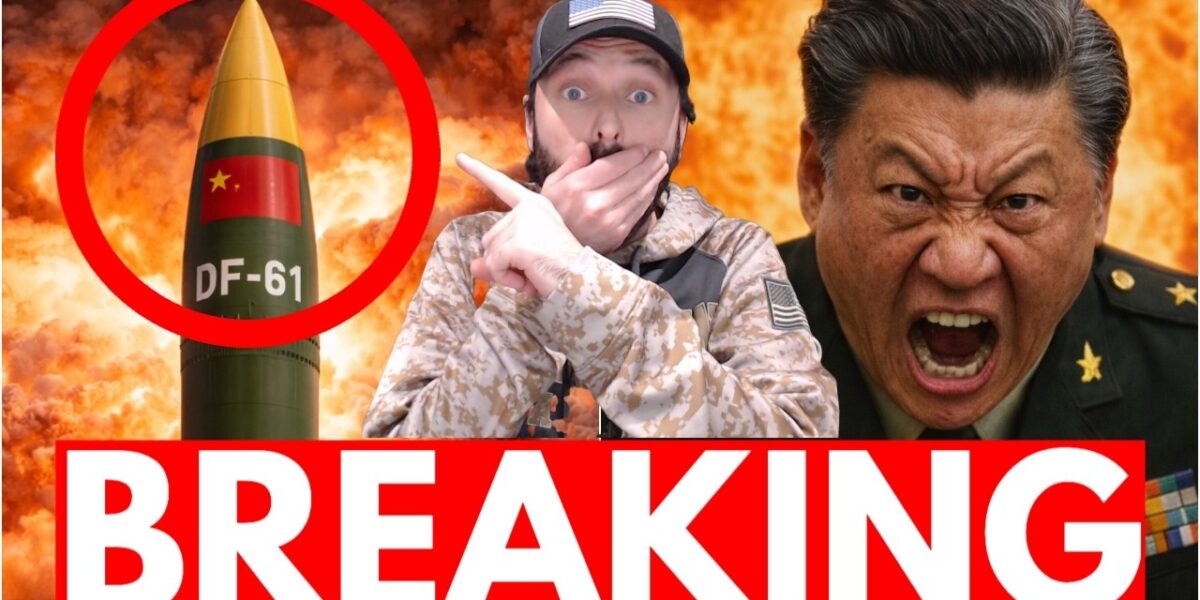
- DF-61 (Dongfeng-61): While less commonly cited than the DF-41, the mention of a ‘DF-61’ capable of hitting ‘anywhere in the United States of America’ underscores China’s growing intercontinental ballistic missile capabilities. China’s ICBMs are increasingly road-mobile, making them harder to detect and target, thus enhancing their survivability and second-strike capability.
- DF-51 (Dongfeng-51): Introduced into service around 2019, this missile, described as similar to the DF-61, further illustrates China’s commitment to developing long-range capabilities that place the entire U.S. mainland within strike range. The continuous deployment of new ICBM models reflects a strategy of diversifying its land-based nuclear deterrent.
- DF-31 (Dongfeng-31): An older model, first introduced in 2006, the DF-31 also possesses intercontinental range. Its continued presence in the arsenal highlights China’s layered approach to nuclear deterrence, maintaining both newer and older, but still highly capable, systems.
- JL-2 (Julang-2): This submarine-launched ballistic missile (SLBM), operational since 2015, is a critical component of China’s nascent sea-based nuclear deterrent. Launched from Jin-class nuclear ballistic missile submarines (SSBNs), the JL-2 allows China to project its nuclear capability from beneath the waves, adding a vital leg to its nuclear triad. Depending on the submarine’s patrol area, the JL-2 can target significant portions of the United States, providing a robust second-strike capability and complicating adversary defense planning.
The combination of these land-based ICBMs and sea-based SLBMs demonstrates China’s progression towards a fully capable nuclear triad (land, sea, and air-based delivery systems), a hallmark of major nuclear powers. This expansion, coupled with the alleged pursuit of next-generation weapons, signals a strategic shift that demands serious attention from global security analysts and policymakers.
Escalating Tensions: Airspace Encounters and Geopolitical Flashpoints
The revelation of China’s advanced nuclear ambitions comes amidst a backdrop of increasingly frequent and assertive military posturing by Beijing, particularly in contested regions. The transcript highlights a recent incident on February 6th, where U.S. and Chinese fighter jets briefly faced off above international waters near the Korean Peninsula. While U.S. F-16s were conducting drills, Chinese planes were scrambled as they neared the region, even though the U.S. aircraft did not enter China’s Air Defense Identification Zone (ADIZ).
Such encounters, though not direct combat, are indicative of heightened tensions and the potential for miscalculation. They are part of a broader pattern of Chinese assertiveness in the Indo-Pacific, including:
- South China Sea: China’s militarization of artificial islands and its expansive territorial claims continue to generate friction with littoral states and the U.S., which conducts freedom of navigation operations (FONOPs) in the region.
- East China Sea: Disputes over the Senkaku/Diaoyu Islands with Japan frequently lead to encounters between Chinese and Japanese coast guard vessels and aircraft, often involving the U.S. as a treaty ally of Japan.
- Taiwan Strait: China regularly conducts military exercises and sends aircraft and naval vessels across the median line of the Taiwan Strait, actions seen by Taipei and Washington as provocative.
These military maneuvers, combined with China’s rapid conventional military modernization – including its navy, air force, and cyber capabilities – suggest a nation increasingly willing to project power and challenge the existing regional and global order. The nuclear revelations only amplify the strategic significance of these conventional military developments, as they underscore a comprehensive and integrated approach to national security and power projection.
The US Response and the Future of Nuclear Deterrence
The U.S. intelligence assessment presents a stark challenge to Washington’s strategic planners. The immediate implication is a likely acceleration of the arms race. As the transcript states, if China is indeed building nukes ‘more advanced than our own,’ the United States ‘will have no choice but to rapidly expand our own arsenal, build new weapons of our own, build more advanced weapons of our own.’
This sentiment reflects the core tenets of nuclear deterrence: maintaining a credible and superior retaliatory capability to dissuade any adversary from contemplating a first strike. For the United States, this would likely involve:
- Modernizing the Nuclear Triad: The U.S. is already undertaking a multi-decade, multi-trillion-dollar effort to modernize all three legs of its nuclear triad – land-based ICBMs (Sentinel program), submarine-launched ballistic missiles (Columbia-class submarines), and strategic bombers (B-21 Raider). China’s advancements could necessitate an acceleration or expansion of these programs.
- Investing in Advanced Technologies: This includes continued research and development into missile defense systems, anti-hypersonic capabilities, and potentially its own next-generation nuclear warhead designs.
- Revisiting Nuclear Posture: The U.S. Nuclear Posture Review (NPR) is periodically updated to assess the nation’s nuclear needs. China’s alleged shift could trigger a re-evaluation of U.S. nuclear doctrine, including the role of low-yield tactical nuclear weapons in its own arsenal.
- Diplomatic Engagement and Arms Control: While an arms race seems likely, there will also be calls for renewed efforts in arms control and strategic stability dialogues with both China and Russia. However, China has historically been reluctant to engage in bilateral arms control negotiations, citing its smaller arsenal compared to the U.S. and Russia.
The prospect of a new, unchecked nuclear arms race between three major powers – the U.S., China, and Russia – is a grave concern for global security. It carries the risk of increased instability, higher chances of miscalculation, and a drain on resources that could be used for other pressing global challenges.
Historical Context and Expert Analysis
The current situation echoes the Cold War era’s nuclear arms race between the United States and the Soviet Union. However, the dynamics are different. The Cold War was largely a bipolar confrontation, whereas the current landscape is increasingly multipolar, with China’s rise as a peer competitor adding significant complexity. The development of tactical nuclear weapons by China also brings back debates from the 1950s and 60s about the usability of nuclear weapons and the concept of ‘flexible response,’ where nuclear weapons might be used in a limited capacity.
Many experts have long warned about the dangers of a nuclear build-up without transparency or robust arms control mechanisms. The opacity surrounding China’s nuclear program, including the alleged covert test and the lack of publicly available information on its arsenal size and doctrine, exacerbates these concerns. This secrecy makes it difficult for other nations to accurately assess China’s intentions and plan their own strategic responses, contributing to a cycle of suspicion and potential overreaction.
The debate within the intelligence community and beyond, as mentioned in the report, over whether there has been a ‘shift in Beijing’s thinking on nuclear strategy’ is crucial. If China has indeed moved away from its minimum deterrence posture, it signifies a fundamental change in its approach to global power and security, one that will have profound and lasting consequences for international relations.
Conclusion: A Code Red Moment for Global Security
The intelligence revelations regarding China’s alleged covert nuclear test and its pursuit of a new generation of advanced nuclear weapons mark a critical juncture in global security. The ambition to develop capabilities that even the leading nuclear powers do not possess, coupled with the explicit link to potential conflicts over Taiwan, represents a ‘code red moment’ for international stability.
The implications are clear: the world is potentially entering a new, more dangerous phase of nuclear proliferation and strategic competition. The United States and its allies face the daunting task of responding to this evolving threat, balancing the need for a robust deterrence posture with the imperative to prevent an uncontrolled arms race. The path forward will require a delicate combination of military modernization, diplomatic engagement, and unwavering vigilance to navigate the treacherous waters of a rapidly changing nuclear landscape and ensure that the shadows of a new arms race do not engulf the world in an unprecedented catastrophe.
Source: China’s SECRET Nuclear Weapon EXPOSED – U.S. On HIGH ALERT (YouTube)

Related Articles


Mexico Cartel Violence Erupts After US-Aided Leader’s Death
A targeted operation against a top cartel leader, supported by US intelligence, has triggered a violent surge in Mexico. The killing of the CJNG leader has led to subordinate factions unleashing chaos, raising questions about US drug policy and the complex geopolitical landscape.
The End of Nuclear Treaties: World Enters Dangerous New Arms Race Era
The expiration of the New START treaty between the US and Russia in February 2024 has ended five decades of nuclear arms control, with no replacement agreement in sight. China's rapid nuclear buildup, coupled with the collapse of verification mechanisms, has prompted experts to warn of a dangerous new arms race.


Trump: Iran Strikes Ahead of Schedule, Expects ‘Great Deal for World’
Three U.S. service members have been killed amid escalating conflict with Iran, President Trump confirmed. He stated that strikes are ahead of schedule, with senior Iranian leaders killed, and expressed optimism for a "great deal for the world" despite ongoing talks with Iranian officials.