Serial Killers’ Dumbest Mistakes Exposed!
From leaving digital breadcrumbs on Expedia to shoplifting a can of salmon, notorious serial killers have been caught due to surprisingly simple and often foolish mistakes. This article delves into the most egregious blunders that led to their capture.

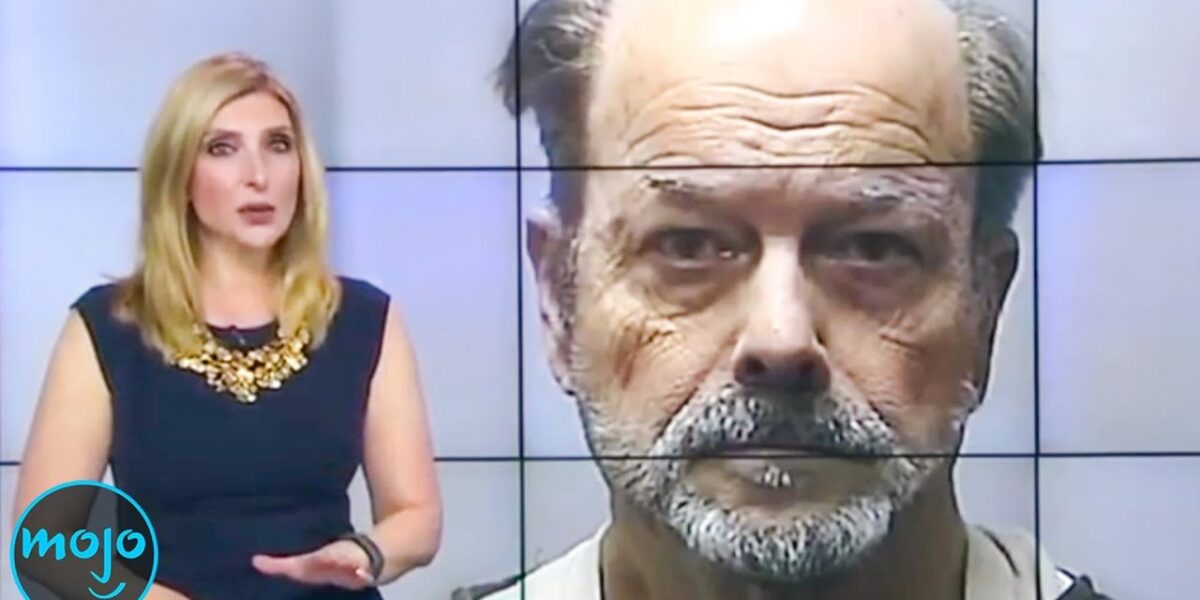
From Digital Blunders to Petty Theft: How Cluelessness Undid Notorious Killers
They stalked the shadows, leaving trails of terror and despair. Yet, for all their cunning and cruelty, many of history’s most infamous serial killers were ultimately brought down not by brilliant detective work, but by their own astonishingly simple, even mundane, mistakes. A new deep dive into the cases of notorious murderers reveals a pattern of critical blunders, from digital footprints left on travel websites to shoplifting a can of salmon, that provided the crucial breadcrumbs leading to their downfall.
The Digital Trail of a Taunting Killer
Consider the case of Mory Travis, a serial killer who terrorized St. Louis in the early 2000s. Desperate to taunt authorities, Travis mailed an anonymous letter containing a map to a victim’s location. His fatal flaw? He’d downloaded the map directly from Expedia.com, unaware that the digital file contained unique identifiers. The FBI, alerted by Expedia, was able to trace the IP address of the user who accessed that specific map, leading investigators directly to Travis’s doorstep and uncovering a house of horrors. His attempt at psychological warfare backfired spectacularly, thanks to a simple computer printout.
A Splash in the River and Fibers in the Car
The infamous Atlanta child murders, a series of disappearances and killings of nearly 30 children and young adults between 1979 and 1981, gripped the nation in fear. Investigators theorized the killer was disposing of bodies in local rivers. Their stakeout paid off when an officer heard a loud splash beneath the James Jackson Parkway bridge. Moments later, Wayne Williams was spotted driving away from the scene. While not immediately arrested, the body of Nathaniel Kedar surfaced downstream days later. The timing was damning, and the subsequent forensic analysis found fibers from Williams’ car and home matched at least two victims, including Kedar, cementing his conviction.
Shoplifting Salmon: The Petty Crime That Unmasked a Monster
Perhaps one of the most ironic downfalls belongs to Charles Ing, who, alongside Leonard Lake, committed horrific crimes in California. Ing’s kleptomania, a trait that plagued him since childhood, ultimately led to his capture. After fleeing to Canada in 1985, Ing entered a Calgary department store and attempted to shoplift a tin of salmon. When confronted by security, a scuffle ensued, and Ing shot the guard. The escalating charges led to his arrest. While in custody, authorities ran his fingerprints and discovered he was on the FBI’s most wanted list. Ing had escaped international borders after murdering at least 11 people, only to be undone by his inability to pay for a cheap can of fish.
A Chessboard of Victims and a Fatal Note
Dubbed the “Chessboard Killer,” Alexander Pichushkin is considered one of Russia’s most dangerous serial killers, motivated by a chilling desire to fill every square on a 64-square chessboard with a victim. He meticulously targeted isolated individuals around Moscow’s Bitsa Park. However, his final victim, Marina Moscalova, a colleague, took a precaution Pichushkin didn’t anticipate. She left a note for her son stating she was meeting Pichushkin and even included his phone number. When her body was discovered, the note led police directly to him. Confronted with this and surveillance footage, his defense crumbled.
CCTV Catches the Crossbow Cannibal
Some killers are shockingly arrogant. Steven Griffiths, the self-styled “crossbow cannibal,” murdered three women in England in 2009 and 2010. His downfall came when he brought victim Suzanne Blameers back to his apartment complex, seemingly forgetting or disregarding the building’s monitored CCTV system. The cameras clearly recorded Griffiths attacking Blameyers in the hallway and dragging her body into his flat. Even more brazenly, footage later showed him raising a drink to the lens in a mocking toast. The building’s caretaker discovered the footage the next morning and alerted the police, leading to Griffiths’ immediate arrest.
Reporting His Own Crimes: A Journalist’s Fatal Flaw
Vlado Taneski, a Macedonian crime reporter, took the pursuit of scoops to a terrifying extreme. He wrote incredibly detailed articles about the murders of elderly women in Kichevo, his stories so vivid that police became suspicious. Taneski included specific details never released to the public, such as the exact type of wire used to bind the victims. When questioned, he had no plausible explanation. Investigators also noted a pattern: all victims were cleaning ladies, the same profession as Taneski’s mother, with whom he had a strained relationship. DNA tests eventually linked him to the crimes, his own reporting betraying him.
A Betrayed Accomplice and a Fake Death
H.H. Holmes, infamous for his alleged Chicago “murder castle,” was a cunning con artist. His downfall stemmed from a botched insurance scam involving his associate, Benjamin Pitezel. Holmes planned to fake Pitezel’s death for an insurance payout but ended up murdering him instead. The fatal mistake came when Holmes tried to cheat another accomplice, Marian Hedgepath, who had helped arrange the plan. Holmes promised Hedgepath $500 but never paid. Enraged, Hedgepath wrote a letter to the police from prison, exposing the scam and Holmes’s involvement in Pitezel’s death. This tip led Pinkerton agents directly to Holmes.
Hazard Lights and a Mobile Killing Chamber
Robert Ben Rhoades, the “truck stop killer,” used his 18-wheeler as a mobile killing chamber, suspected of murdering over 50 people across the country. His reign of terror ended due to a minor traffic infraction. In 1990, an Arizona state trooper noticed Rhoades’ semi-truck parked on the highway shoulder with its hazard lights flashing. Believing the driver was in distress, the trooper pulled over to assist. Upon opening the cab, he discovered a handcuffed woman screaming for help, effectively stumbling upon Rhoades in the act.
A Pattern of Poor Decisions
These cases, spanning decades and continents, highlight a recurring theme: serial killers, despite their alleged brilliance, are often undone by remarkably simple oversights. Whether it’s a digital footprint, a moment of greed, arrogance, or a simple lapse in judgment, these mistakes provided law enforcement with the critical leads needed to dismantle their deadly operations and bring them to justice.
Source: 30 Mistakes That Got Serial Killers Caught (YouTube)

Related Articles


US on High Alert for Iran Retaliation After Strikes
U.S. law enforcement is on high alert following recent strikes in Iran, with increased security measures in place at sensitive locations. While no specific plots are currently tracked, officials warn of potential retaliation targeting major cities, citing a history of Iran-backed threats.


Silent Warnings: When Ordinary People Foresee Disaster
Explore the chilling accounts of ordinary individuals whose warnings about impending crimes were tragically ignored. From financial fraud to mass violence, these stories highlight the critical importance of heeding early signs.

Cryptic Note, Impossible Fall: The Unsolved Death of Rey Rivera
Rey Rivera's death is shrouded in mystery, marked by a cryptic note, an impossible fall from a building, and a police investigation that hit insurmountable obstacles. The case remains officially unsolved, leaving more questions than answers.