Senator Vows to Fight Voter ID Bill Amid Shutdown
Senator Rick Scott is fighting to pass a voter identification bill, arguing it's crucial to prevent election fraud. He believes requiring IDs is a common-sense measure, comparing it to everyday requirements like buying alcohol or flying. The bill faces opposition from Senate Democrats amid a partial government shutdown.


Senator Vows to Fight Voter ID Bill Amid Shutdown
Senator Rick Scott is taking a strong stance on election security, vowing to push for a voter identification bill despite ongoing government funding debates and a partial government shutdown. The senator argues that requiring identification to vote is a common-sense measure to prevent fraud and ensure the integrity of American elections.
The push for voter ID legislation comes as a partial government shutdown continues, with funding for the Department of Homeland Security (DHS) still undecided. The proposed “Save America Act,” which includes provisions for voter identification, is currently stalled in the Senate. Democrats have criticized the effort, calling it political theater and arguing that it aims to suppress votes rather than prevent fraud.
Scott’s Argument for Voter ID
Senator Scott believes that requiring a simple identification to vote is essential for achieving the American Dream. He stated, “I want every American, regardless of their zip code, regardless of their background, regardless of their state, to achieve the American Dream. Without simple identification, they cannot do that.” He sees the opposition from Senate Democrats as a clear indication that they want to allow for election fraud.
“The only place that they do not want this is the Senate Democrats. At the House, there is only one answer: they want fraud. We want to make it easy to vote and hard to cheat.”
Scott drew parallels to everyday situations where identification is required. “If somebody wants to buy six packs of beer, you have to buy an ID. Go to the doctor, an ID. Buy a lottery ticket, get out an airplane. All these things require an ID,” he explained. “If they don’t want IDs, they want fraud.”
Election Security and National Defense
The senator also linked election security to national defense, emphasizing the importance of a strong military. He expressed support for President Trump’s agenda, particularly in countering the Iranian regime and preventing them from acquiring nuclear weapons or ballistic missiles. Scott, a former Navy officer, stressed the need to provide the military with the resources they require to fulfill their mission.
“The most important thing our federal government can do is defend our freedom. And we have to give our men and women the resources that they need to fulfill their mission,” Scott stated. He believes that a core function of the federal government should be ensuring the strongest military in the world to protect American freedom.
Path Forward for Voter ID Bill
Facing Democratic opposition and the current legislative gridlock, Senator Scott is determined to find a way to pass the voter ID bill. He acknowledged the challenges but expressed optimism about securing enough votes. “We’re going to figure out how to get this done,” he said. “Day after day, the country is united on this issue. Republicans, Democrats, we want election security.”
Scott suggested that they might need to gather 60 votes to overcome potential procedural hurdles or explore options like addressing the filibuster to ensure the bill’s passage. He sees election security as a crucial step, similar to securing the border, and believes the necessary resources and legislation must be provided.
Market Impact and Investor Outlook
While the direct economic impact of the voter ID debate is not immediately quantifiable, the ongoing government shutdown and legislative battles can create market uncertainty. Investors often react negatively to prolonged political instability, which can affect consumer confidence and business investment. The focus on election integrity, however, could be seen by some as a positive step towards greater predictability in the long term.
The broader economic picture remains a concern, with discussions around $200 billion in new spending. Senator Scott’s emphasis on fiscal responsibility and national security, alongside election integrity, highlights key areas of focus for the Republican party. Investors will be watching how these legislative debates resolve, as they can influence fiscal policy, government spending, and the overall business environment. The outcome of the DHS funding and the potential passage of the Save America Act could signal the direction of future legislative priorities and their impact on various sectors.
What Investors Should Know
- Government Shutdown Risk: Prolonged government shutdowns can introduce volatility into the markets due to uncertainty about government operations and policy.
- Election Security Debate: The push for voter ID laws is a significant political issue that could have implications for future election outcomes and regulatory environments.
- Fiscal Policy Uncertainty: Discussions around new spending and budget priorities can impact investor sentiment regarding inflation and national debt.
- National Security Focus: Senator Scott’s emphasis on military strength and foreign policy may signal continued focus on defense spending and international relations, which can affect defense stocks and related industries.
Source: ‘STOP THE FRAUD’: GOP senator vows to FIGHT for voter ID bill (YouTube)

Related Articles
House Funds DHS Short-Term, Senate Stalemate Looms
The House has passed a short-term bill to fund the Department of Homeland Security, but the Senate is expected to reject it. This temporary measure highlights ongoing political divisions and the challenges in reaching long-term budget agreements in the U.S. Congress.

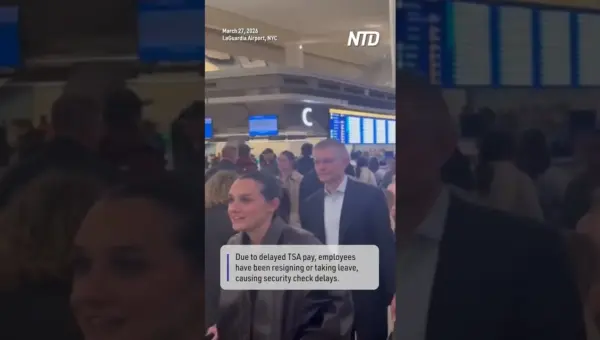
TSA Staff Cuts Create Airport Chaos for Travelers
Recent TSA agent shortages, fueled by a government shutdown and delayed pay, have caused significant delays and long security lines at major airports. This situation highlights the critical role of TSA staff and the impact of funding issues on essential services.

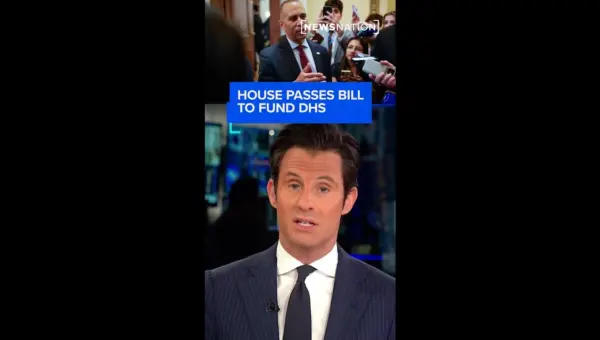
Congress Stalemate Threatens Border Security Funding
The U.S. House passed a temporary funding bill for the Department of Homeland Security, but Senate Democrats are expected to block it. This recurring stalemate highlights deep divisions over border policy and funding, potentially impacting national security and international perceptions of U.S. stability.