Senator Vance Accused of Hypocrisy on Election Interference Claims
Senator J.D. Vance faces accusations of hypocrisy for condemning foreign election interference while allegedly engaging in similar actions abroad. Critics point to his statements downplaying Russian interference and his meetings with controversial foreign leaders as contradictory.

Senator Vance Accused of Hypocrisy on Election Interference Claims
A recent discussion highlights accusations of hypocrisy leveled against Senator J.D. Vance regarding foreign influence in elections. The core of the argument suggests that while Vance decries certain foreign actions as election interference, his own actions and statements are being viewed by critics as a form of interference.
What is Election Interference?
The conversation around election interference often brings up past events. For example, in 2016, many American news outlets reported on the Russian government’s purchase of around $500,000 in Facebook advertisements. This was widely seen as a significant scandal involving foreign meddling.
However, the perspective presented suggests a double standard. When the Vice President of the United States praises Viktor Orbán, the leader of Hungary, as a helpful statesman, some interpret this as a form of foreign influence. Conversely, when the European Union threatens to withhold billions of dollars from Hungary because of its border policies, this is apparently not considered foreign influence by some.
Vance’s Stance and Actions Under Scrutiny
The criticism intensifies when focusing on Senator Vance’s recent activities. He is accused of traveling abroad during a time of international conflict and economic hardship. His visit reportedly included meeting with Viktor Orbán, a leader who has been in power for 16 years and is described by critics as an authoritarian figure who suppresses media and has held pro-Russia stances for decades.
During this trip, Vance is said to have spoken with Volodymyr Zelenskyy, the president of Ukraine, who is currently facing invasion by Russia. Critics find it particularly galling that Vance would engage with Zelenskyy while also appearing to downplay the extensive intelligence operations Russia conducted during the 2016 election and in subsequent elections.
Downplaying Russian Interference?
A key point of contention is Vance’s alleged effort to minimize the scope of Russian interference. The argument is that he intentionally downplays the impact, suggesting it was limited to roughly $500,000 in Facebook ads. This is seen as an attempt to reduce the perceived threat and impact of Russian actions aimed at damaging specific campaigns, like Hillary Clinton’s in 2016.
The analysis suggests that Russia’s strategy goes beyond directly supporting one candidate. A significant tactic involves sowing division and doubt within the American electoral system. The goal is to erode public trust, making citizens question the integrity of elections and potentially discouraging them from voting altogether. This broader aim of destabilizing democratic processes is what critics feel Vance is overlooking or deliberately minimizing.
The Accusation of Interference
The central accusation of hypocrisy arises from Vance being in a foreign country, allegedly engaging in actions that critics deem interference, while simultaneously downplaying foreign interference in U.S. elections. The discrepancy between his rhetoric and his actions is highlighted as a significant concern.
The argument is that Vance is downplaying the extent to which Russia hacks into our elections while he is in another country interfering with their elections. The question posed is, “Make it make sense.”
Why This Matters
This situation raises important questions about accountability and consistency in political discourse. When politicians accuse others of undermining democratic processes, their own actions and statements come under intense scrutiny. The perception of hypocrisy can damage public trust not only in the individual politician but also in the institutions they represent.
Understanding the full scope of foreign influence is crucial for safeguarding democratic elections. This involves recognizing various tactics, from direct funding of advertisements to sophisticated cyber operations and the spread of disinformation. A balanced approach requires acknowledging all forms of interference, regardless of the perceived source or political alignment.
Implications and Future Outlook
The accusations against Vance point to a broader trend of political figures using strong language about election integrity while potentially engaging in actions that could be viewed similarly by opponents. This can lead to a cycle of escalating accusations and counter-accusations, making constructive dialogue about election security more difficult.
Moving forward, there will likely be continued debate about what constitutes legitimate political engagement versus undue foreign influence. Clearer definitions and consistent application of standards will be necessary. The public’s ability to discern credible information from politically motivated narratives will be more important than ever in protecting the democratic process.
Historical Context
Concerns about foreign meddling in elections are not new. Throughout history, foreign powers have sought to influence the outcomes of elections in other countries. The methods have evolved with technology, from propaganda pamphlets in earlier eras to sophisticated digital campaigns today. The 2016 U.S. election brought these concerns to the forefront of public consciousness with detailed reports of Russian operations.
The current debate reflects an ongoing tension between national sovereignty and international political engagement. Different countries and political factions will always have varying opinions on what constitutes acceptable interaction and what crosses the line into interference. Senator Vance’s situation highlights how these differing interpretations can become a point of significant political contention.
Source: JD Vance Accuses “Election Interference”… While Doing Election Interference #politics #fyp #new (YouTube)

Related Articles


Hungary Rejects Orban’s Rule: A Democratic Uprising
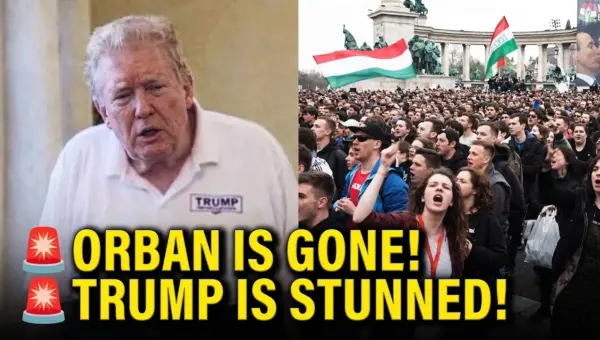
Hungary has ousted Prime Minister Viktor Orban after 16 years in power, with the opposition Taisa party securing a decisive victory and potentially a supermajority. Record voter turnout signaled a strong public desire for democratic change and a pro-European future.

Hungary Rejects Orban’s Authoritarianism, Embraces Europe
Hungary has ousted Viktor Orban after 16 years in power, with Peter Magyar's Taisa party winning a decisive victory. The election saw record turnout and a clear rejection of Orban's authoritarian policies. This outcome signals a significant shift towards pro-European and democratic values, impacting both Hungary and the wider European Union.

Acting AG Admits Trump Abused Power, Fuels Prosecution Case
Acting Attorney General Todd Blanch's recent remarks suggest Donald Trump may have used the Justice Department to target political enemies. This admission raises serious questions about presidential abuse of power and could have significant legal implications.