Senator Slams Jeffries’ Iran Stance, Cites Nuclear Threat
Senator Rick Scott sharply criticized House Democratic Leader Hakeem Jeffries over his stance on Iran, calling him an "idiot" for seeking to limit the President's authority. Scott highlighted the threat of Iran developing nuclear weapons. The discussion also covered President Trump's stance on NATO and the ongoing DHS funding shutdown.

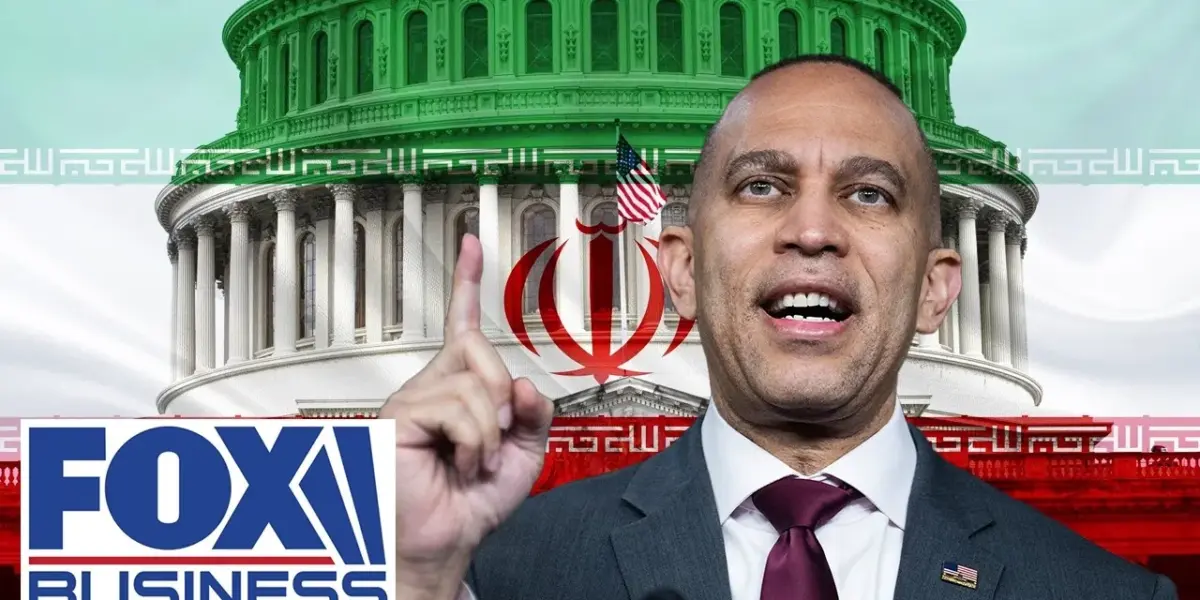
Senator Rick Scott Criticizes House Democratic Leader Hakeem Jeffries on Iran Policy
Florida Senator Rick Scott, a member of the Senate Armed Services Committee, delivered a sharp critique of House Democratic Leader Hakeem Jeffries’ stance on Iran. Scott called Jeffries an “idiot” for advocating to limit the President’s authority regarding potential military action against Iran. The senator emphasized the perceived threat of Iran developing nuclear weapons and its past actions against Americans.
“A country wants to develop a nuclear weapon to kill Americans have been killing men’s. He wants to limit the President’s authority? I want this President to do everything he can to protect my family, your family, all of us,” Scott stated. He believes that any measure passed by the House to limit military action would be “dead on arrival” in the Senate, suggesting a significant bipartisan divide on the issue.
Iran War Powers Resolution Faces Opposition
House Republicans are blocking Democratic efforts to limit American military action in Iran. House Democratic Leader Hakeem Jeffries has indicated that Democrats are in talks with Republicans to secure enough votes for an Iran War Powers Resolution. He expressed confidence in securing the necessary support from a “handful of Republicans” to pass the resolution upon their return from recess.
Jeffries specifically mentioned Republican Congressmen Mike Lawler and Nicole Malliotakis as potential allies. However, outreach to both lawmakers for comment had not yielded a response at the time of the report. Senator Scott dismissed the idea of allowing a nation that has threatened the U.S. to acquire nuclear weapons, stating, “There is not a Republican I know that thinks it’s smart for this country to allow somebody that says they’re going to kill us, to have a nuclear weapon.”
NATO and U.S. Defense Spending Under Scrutiny
The conversation also touched upon President Trump’s recent remarks regarding NATO and U.S. defense spending. President Trump has reportedly threatened to withdraw the U.S. from NATO if member countries do not increase their defense contributions. Senator Scott echoed this sentiment, suggesting that European allies have become too reliant on the U.S. for security.
“Europe would be speaking German if it wasn’t for American servicemembers, and what we did to save butts in World War II,” Scott remarked. He argued that it is “foolish” for European allies not to support U.S. actions aimed at making them safer, particularly concerning Iran. Scott believes NATO must evolve, stating, “Either they are going to step up and be a partner, and be an ally, or why are we involved?” He pointed out the U.S. has invested heavily in European defense infrastructure over the years.
Homeland Security Funding and Immigration Debate
The ongoing Department of Homeland Security (DHS) shutdown, now in its 56th day, was another key topic. Senate Republican Whip John Barrasso and Senator Lindsey Graham were scheduled to meet with President Trump to discuss funding, immigration, and enforcement measures to end the shutdown.
Senator Scott criticized the failure to fully fund DHS programs earlier, calling it a “mistake.” He expressed concern that Democrats do not prioritize homeland security. Scott suggested two potential paths forward: using reconciliation, which requires only Republican votes and could secure funding for 10 years, or finding common ground to pass legislation. He accused Democrats of aiming to “destroy the Trump administration and the Trump economy,” and not caring about American citizens.
Reconciliation Process and Legislative Timeline
The discussion also covered the reconciliation process, a legislative tool that allows certain bills to pass with a simple majority in the Senate, bypassing potential filibusters. White House economic director Kevin Hassett had previously suggested a bill could be ready by June. Some believe two reconciliation bills might be introduced, one in the spring and another in the fall.
Senator Scott emphasized the need for swift action, stating, “We’ve got to get this done quickly. It shouldn’t take until June to get done.” He believes that if lawmakers worked diligently, the process could be expedited. Scott reiterated the urgency of funding Homeland Security, noting, “Thank God the President is… paying right now come to senses. Democrats don’t care about the public, they don’t care about public safety.” He urged lawmakers to return to Washington and work daily until the reconciliation process is complete, suggesting it could be finalized before June.
Upcoming Legislative Priorities
Beyond the immediate concerns of DHS funding and Iran policy, Senator Scott mentioned the upcoming reauthorization of the Foreign Intelligence Surveillance Act (FISA) as another legislative priority for the following week.
Market Impact
The political rhetoric surrounding Iran and NATO reflects ongoing tensions that could influence geopolitical stability and international relations. Uncertainty regarding U.S. foreign policy and defense commitments can create volatility in global markets, particularly in sectors related to defense and energy. The prolonged DHS shutdown and the debate over immigration funding highlight domestic political divisions, which can impact economic confidence and government operations. The push for reconciliation on fiscal matters signals a potential shift in legislative strategy, aiming to overcome partisan gridlock but also potentially increasing fiscal deficits if not managed carefully.
What Investors Should Know
Investors should monitor developments in U.S. foreign policy, especially concerning Iran and NATO, as these could affect international trade and security. The ongoing domestic political debates, particularly around government funding and immigration, could lead to short-term market fluctuations. The potential use of reconciliation for budget legislation may signal a more aggressive fiscal approach by the Republican party. Understanding these political undercurrents is crucial for assessing potential risks and opportunities in various asset classes.
Source: 'JEFFRIES IS AN IDIOT': GOP sen delivers BRUTAL takedown over remarks (YouTube)

Related Articles

Iran’s Hormuz Threat: A Known Tactic, Not New
Recent conflict did not teach Iran a new tactic by threatening to close the Strait of Hormuz. Experts and Iranian planners have long understood this strategic leverage. The effectiveness of the recent shutdown was tied to global perceptions of the preceding conflict's instigator, not a newfound Iranian capability.

Middle East Tensions Rise Amid Ceasefire Violations
Middle East tensions are escalating as Iran is accused of violating a ceasefire, leading to rising oil prices and renewed strikes between Israel and Hezbollah. Meanwhile, Vice President J.D. Vance is preparing for crucial peace talks in Pakistan. In other news, First Lady Melania Trump has broken her silence to deny rumors linking her to Jeffrey Epstein.


House Republicans Block Iran War Powers Vote
House Republicans blocked a Democratic effort to limit U.S. military action in Iran, intensifying political debate. Meanwhile, discussions on funding for the Department of Homeland Security are ongoing, with reconciliation being explored as a legislative path forward amidst geopolitical tensions with Iran.