Senator Ossoff Grills Tulsi Over Iran Threat Claims
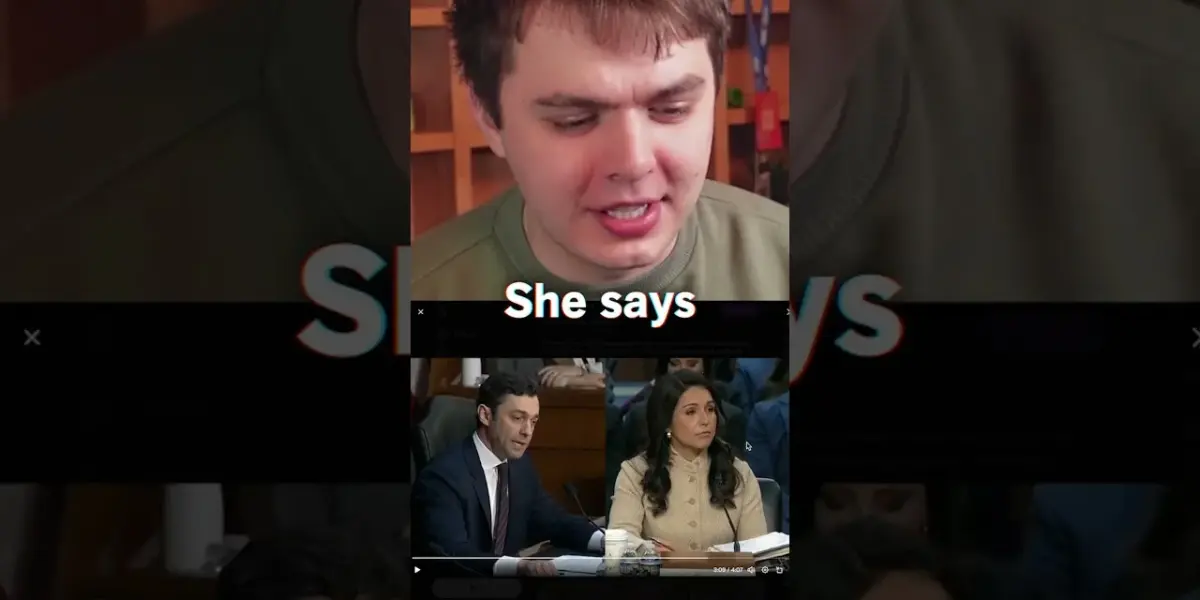
Senator Jon Ossoff questioned Representative Tulsi Gabbard on Iran's nuclear threat assessment during a recent hearing. The exchange revealed a debate over whether intelligence findings should be directly tied to White House claims, raising questions about transparency and political influence.

Senator Ossoff Grills Tulsi Over Iran Threat Claims
A recent exchange between Senator Jon Ossoff and Representative Tulsi Gabbard during a worldwide threats hearing has sparked considerable debate. The core of the disagreement centers on the assessment of threats posed by Iran, particularly regarding its nuclear program.
The Intelligence Community’s Role
Senator Ossoff pressed Gabbard on whether the intelligence community (IC) assessed an “imminent nuclear threat” from Iran. This question came after the White House had claimed such a threat existed on March 1st. Ossoff emphasized that Gabbard’s role at the hearing was to present the IC’s objective assessment of threats to the United States.
Gabbard, however, seemed to deflect the direct question. She stated that the president is the sole authority in determining what constitutes an imminent threat. Ossoff countered this, arguing that it is precisely the responsibility of intelligence officials to provide such assessments. He highlighted that Gabbard herself had mentioned in her opening testimony that she was there to represent the IC’s assessment of threats.
“It is precisely your responsibility to determine what constitutes a threat to the United States,” Ossoff stated, emphasizing the gravity of the intelligence community’s role.
Evasion or Clarification?
Ossoff accused Gabbard of evading the question. He suggested that a candid response would contradict the White House’s public statements. He also implied that Gabbard was contradicting her own earlier testimony and even statements made moments before. This, he argued, should be a cause for concern for all Americans, especially given the administration’s history of perceived contradictions since the start of a recent conflict.
Gabbard’s response, as presented in the transcript, focused on the president’s ultimate authority. She indicated that the intelligence community provides inputs for threat assessments, but the final determination rests with the president. Ossoff viewed this as an abdication of the IC’s duty to provide timely, objective, and independent assessments, free from political influence.
Historical Context: Threats and Politics
Assessing foreign threats, especially nuclear ones, has always been a complex interplay between intelligence gathering and political decision-making. Historically, intelligence agencies work to provide the clearest possible picture of potential dangers. However, the final decision on how to act, or even how to frame a threat publicly, often involves the executive branch.
This dynamic can lead to tension. Intelligence professionals are trained to be objective, while political leaders must consider a wider range of factors, including public perception and diplomatic relations. The case of Iran’s nuclear program has been a particularly sensitive issue for many years, with different administrations and intelligence assessments offering varying perspectives on the immediacy and nature of the threat.
Why This Matters
This exchange highlights a crucial tension in democratic governance: the balance between objective intelligence and political pronouncements. When the public is told there is an “imminent threat,” especially a nuclear one, it carries immense weight. It can justify significant policy decisions, military actions, or international pressure.
If the intelligence community’s assessment differs from the political narrative, it raises serious questions about transparency and accountability. Senator Ossoff’s questioning aimed to ensure that the public receives an unvarnished view of potential dangers, rather than a politically convenient one. The public deserves to know if intelligence assessments are being accurately represented.
Implications and Future Outlook
The implications of such exchanges are far-reaching. They affect public trust in both intelligence agencies and political leadership. They can influence foreign policy decisions and international relations. If intelligence is perceived as being politicized, it can weaken a nation’s standing and its ability to respond effectively to genuine threats.
Moving forward, it will be important to observe how intelligence assessments are communicated to the public and policymakers. Greater clarity on the process and the distinction between raw intelligence, expert assessment, and political interpretation could help prevent future misunderstandings. The need for an independent and objective intelligence community remains paramount for national security.
Source: Ossoff EXPOSES Tulsi in Brutal Exchange #politics #fyp #new (YouTube)

Related Articles

House Republicans Reject Senate Deal, Sparking Government Funding Clash
House Republicans have rejected a Senate bill to end the government shutdown, citing insufficient border security measures. Congressman Randy Fine called the Senate deal a "disgrace" and highlighted the ongoing fight for full government funding. President Trump's executive order to pay TSA agents offers temporary relief, but the core disagreement over border security continues to paralyze Washington.

Voter ID: Common Sense or Suppression?
A growing debate surrounds voter ID laws, with proponents calling them a common-sense measure against fraud and opponents fearing voter suppression. Many countries and U.S. states already require ID to vote.


MAGA Voters Divided Over Potential Iran War
The potential for a US war with Iran has sparked debate at CPAC, revealing a divided MAGA base. While some support military action, many express concerns over prolonged conflicts and rising economic costs, particularly higher gas prices.