Senator Mullin: Iran’s Leader ‘Had to Be Removed’ to Halt Nuclear Program
Senator Markwayne Mullin argues that removing Iran's supreme leader was essential to halt its nuclear program, differentiating the action from past interventions. He cited decades of Iranian aggression and ongoing attempts to rebuild its nuclear capabilities as justification for the move.

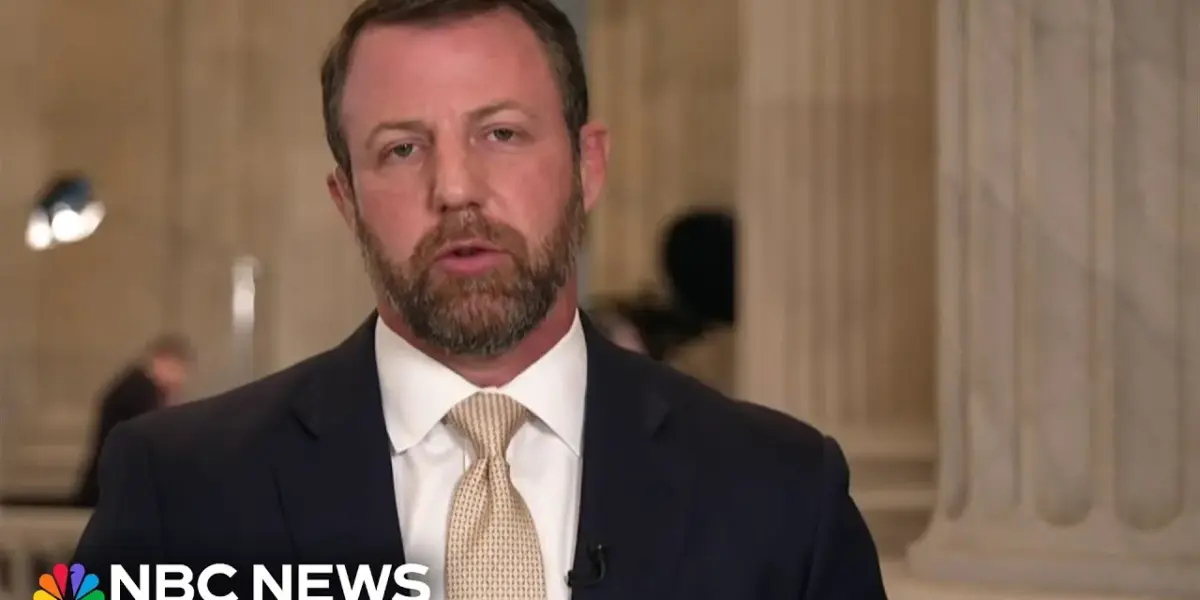
Senator Mullin Argues Regime Change Was Necessary to Neutralize Iran’s Nuclear Ambitions
Washington D.C. – U.S. Senator Markwayne Mullin, a member of the Senate Armed Services Committee, asserted this week that the removal of Iran’s supreme leader and key elements of its leadership was a necessary step to prevent the nation from acquiring nuclear weapons and to safeguard American interests. Speaking in a recent interview, Mullin drew a clear distinction between the current situation and past U.S. foreign policy decisions, particularly regarding Syria, arguing that Iran has posed a consistent and direct threat to the United States for decades.
Distinguishing Iran from Past Interventions
Mullin addressed concerns from constituents who question further U.S. involvement in the Middle East, especially in light of former President Trump’s “America First” platform. He contrasted the current actions against Iran with his previous opposition to military action in Syria during the Obama administration. “I did not feel it was a direct threat to the United States,” Mullin stated, referring to the Syrian situation. He explained that the destabilization efforts in the region during the Arab Spring, which included Syria, were different from the long-standing aggression exhibited by Iran.
“There is no question Iran has been attacking us for 47 years,” Mullin emphasized. He cited the 1979 hostage crisis as an early act of aggression and pointed to ongoing attacks on U.S. ships, bases, and personnel, often carried out through proxy organizations. Mullin unequivocally labeled Iran as the “number one sponsor of terror around the world,” differentiating it sharply from the complexities of the Syrian conflict.
Imminent Threat and Diplomatic Failures
When questioned about the necessity of the recent strikes, Mullin confirmed that an imminent threat was a key factor. He revealed that the administration had offered Iranian leadership multiple opportunities for diplomacy, even during a recent 12-day conflict. “We even know where you’re at. We’re choosing not to take you out because we want diplomacy to work,” Mullin recounted the administration’s stance. He clarified that the objective was not regime change for its own sake, but rather to ensure the safety of American citizens and military personnel, both at home and abroad.
The senator highlighted the escalating threat posed by Iran’s missile program, which he stated was capable of reaching all U.S. bases in the region and even nuclear sites in Europe. Furthermore, he expressed grave concern over Iran’s aspirations to develop missiles capable of delivering nuclear warheads to U.S. shores. Mullin invoked the post-9/11 mantra of “never again,” drawing a parallel to the proactive stance taken against Osama bin Laden, arguing that the current administration is adopting a similar proactive approach to a persistent threat.
Rebuilding the Nuclear Program: A Persistent Threat
Addressing the apparent contradiction between claims of the nuclear program’s obliteration and the need for further action, Mullin explained that while the program was “100% obliterated” at one point, satellite imagery indicated Iran’s attempts to rebuild it. “We had warned them not to build it back,” he said, comparing the situation to healing a shattered limb. “You can obliterate your leg and you can put rods in it and you can you can walk again. You can rebuild a lot of stuff once something is completely destroyed.”
Mullin also pointed to Iran’s actions, such as mining the Strait of Hormuz and continuing to strike at U.S. assets, as evidence of their continued threat, even without a nuclear weapon. He reiterated that Iran’s nuclear ambitions were a long-standing goal, dating back to 1979, and that as long as the current leadership remained in power, they would not abandon this pursuit.
“The fact is that he had to be removed and a lot of his leadership had to be removed. We’re hoping that the Iranian people now, not us, but the Iranian people will choose to get their country back.”
– Senator Markwayne Mullin
Empowering the Iranian People
Mullin expressed hope that the removal of key leadership figures would empower the Iranian people to reclaim their country. He painted a picture of pre-1979 Iran as a more Westernized society with greater representation for women in public office and professional fields than in the United States at the time. “There’s nothing more than we would love to have a good relationship with the Iranian people moving forward. But this is their time. This is their time to be able to get their country back,” he stated, emphasizing that the choice of future leadership rests with the Iranian populace.
Boots on the Ground and Congressional Authority
Regarding the possibility of deploying U.S. troops on the ground in Iran, Mullin urged against limiting the president’s options. “I don’t think the president should be limiting his ability for whatever he needs to keep us safe,” he stated. Mullin affirmed that the president has kept Congress informed, fulfilling his obligations under Article II of the Constitution to protect national security interests. He criticized Democrats who questioned the legality of the president’s actions, recalling their support for similar actions under the Obama administration.
Mullin acknowledged the constitutional framework for the use of military force, noting the 60-to-90-day window for the president to inform Congress and potentially seek further authorization. However, he stressed that the decision regarding boots on the ground would depend on the specific mission and purpose, suggesting that such deployments could be seen as a stabilizing force depending on the context. He maintained that the president currently operates within the established legal parameters, with significant leeway in matters of national security.
Looking Ahead
The focus now shifts to Iran’s response and the potential for further escalation or de-escalation in the region. U.S. policymakers will continue to monitor Iran’s nuclear and missile programs, while the administration’s strategy regarding any potential deployment of ground troops will be closely scrutinized. The long-term implications for regional stability and the prospect of a changed Iran, driven by its own people, remain key areas to watch.
Source: Iran’s supreme leader ‘had to be removed’ to stop the nuclear program: Sen. Markwayne Mullin (YouTube)

Related Articles


US Strikes Iran: Six Americans Dead, ‘Bigger Wave’ Looms
The U.S. has launched significant strikes against Iran, resulting in six American deaths and escalating fears of further conflict. Officials cite preemptive action and the elimination of threats as key rationales, while global markets brace for oil disruptions. The situation remains volatile as a 'bigger wave' of attacks looms.

Lebanon Flees Homes as IDF Airstrikes Hit Beirut
Thousands of Lebanese civilians are fleeing their homes in Beirut after Israeli airstrikes targeted the capital. Families are stranded on streets amid freezing temperatures, facing an uncertain and potentially dangerous future as the conflict intensifies.


Iran War Escalates: US Casualties Mount Amidst Regional Chaos
The conflict with Iran is intensifying, marked by rising U.S. casualties and the closure of the Strait of Hormuz. This escalation carries significant economic repercussions and raises concerns about a wider regional war and even global conflict.