Senator Kennedy Defends US Strikes, Cites Iran’s Nuclear Threat
Senator John Kennedy defended U.S. strikes on Iran as a necessary action to prevent a larger war, citing Iran's missile production and nuclear ambitions. He also discussed domestic challenges, advocating for budget reconciliation to fund agencies like DHS amid potential government shutdowns.

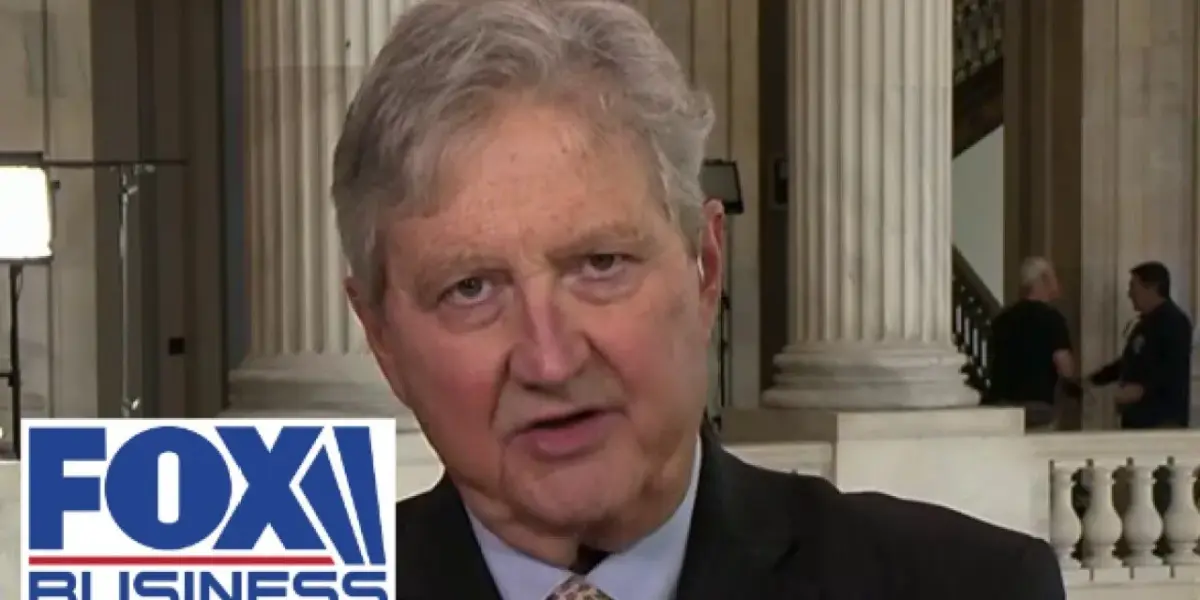
Senator Kennedy Defends US Strikes, Cites Iran’s Nuclear Threat
U.S. Senator John Kennedy of Louisiana stated that American military actions against Iran were a necessary response to an imminent threat. He explained that the strikes were not an act of aggression but a move to prevent a larger conflict. According to Kennedy, Iran had declared its intention to produce 600 missiles per month and stockpile them. Furthermore, Iran warned that if its nuclear program resumed, it would target the entire Middle East, as well as cities like London and Paris.
President Biden’s administration launched strikes aimed at crippling Iran’s missile and drone manufacturing capabilities. The objective was also to destroy as many of Iran’s missiles and drones as possible, along with targeting the infrastructure of its Revolutionary Guard, Navy, and Air Force. Senator Kennedy emphasized that these actions were largely successful and expressed hope that Iran would not be able to rebuild these capabilities quickly.
He acknowledged that some critics believe further military action might be needed if Iran restarts its nuclear program. Kennedy suggested that in such a scenario, the U.S. might have to return to Iran. He also pointed out that Iran, not the U.S., was responsible for shutting down the Strait of Hormuz, a critical shipping lane.
Concerns Over Government Shutdown and Funding
Beyond foreign policy, Senator Kennedy discussed domestic issues, particularly the ongoing debate about government funding and the potential for a shutdown. He expressed concern that Democrats might try to shut down the government in January. Kennedy advocated for using a budget process called reconciliation to pass essential funding bills.
Reconciliation is a special legislative process in the U.S. Senate that allows certain budget and spending bills to pass with a simple majority vote, bypassing the need for 60 votes to overcome a filibuster. Kennedy believes this is the only way to secure funding for the Department of Homeland Security (DHS) and other critical agencies.
He highlighted the challenges in securing votes for agencies like Immigration and Customs Enforcement (ICE). Kennedy stated that the Democratic Party’s stance against supporting ICE makes it difficult to pass funding bills through normal channels. He believes that the “loony wing” of the Democratic Party, which advocates for defunding ICE and the police, is causing these funding impasses.
The Senator mentioned the SAVE Act as another piece of legislation he hopes to pass using reconciliation. He acknowledged that some colleagues doubt the feasibility of using reconciliation for these purposes, but he remains determined to try. Kennedy described himself as an “optimistic, paranoid, optimistic, but also a realist” regarding these legislative battles.
Criticism of Democratic Stance on ICE
Senator Kennedy strongly criticized the Democratic Party’s position on ICE. He shared a clip of Hakeem Jeffries, the House Minority Leader, expressing concern about deploying ICE agents at airports, suggesting they might harm travelers. Kennedy contrasted this with footage showing ICE agents assisting people at airports.
He argued that the Democrats’ opposition to ICE is politically motivated and driven by a fear of backlash from their party’s more progressive wing. Kennedy believes that Democrats are unwilling to compromise on issues related to border security and immigration enforcement, even if it means shutting down essential government services.
“The only way I know to go around them is true reconciliation,” Kennedy stated, referring to his strategy for passing funding bills. He expressed frustration with the political dynamics, saying, “I don’t understand the Democrat Party… Fruits and nuts is all I can figure for.” He believes most Americans see the “loony wing” of the Democratic Party as being out of touch.
Potential Impact of Shutdowns
Kennedy warned about the dangerous consequences of government shutdowns, especially during times of international tension. He noted that agencies like the Transportation Security Administration (TSA), Coast Guard, and FEMA could face disruptions. He specifically called out the shutdown of cybersecurity measures as extremely dangerous, particularly in a wartime context.
The Senator concluded by emphasizing the need for a realistic approach to governance. He stated, “I see the world as it is, not as I wanted to be.” This pragmatic outlook informs his strategy for navigating complex legislative challenges and ensuring that critical government functions remain operational.
Market Impact
While the transcript focuses on political actions and rhetoric, potential government shutdowns and international military actions can introduce market volatility. Uncertainty surrounding geopolitical events, such as U.S. strikes on Iran, can lead to fluctuations in oil prices and broader market sentiment. Domestically, a government shutdown can disrupt economic activity and create uncertainty, potentially impacting consumer confidence and business investment. Investors often react to these events by seeking safer assets or adjusting their portfolios based on perceived risks.
What Investors Should Know
Investors should monitor geopolitical developments closely, as they can significantly influence global markets, particularly energy prices. Additionally, ongoing political debates in Washington regarding government funding and budget processes can create short-term uncertainty. Understanding the implications of legislative tools like reconciliation is important for grasping how key government functions are funded. While this discussion is political, the underlying issues of international stability and domestic governance have direct ties to economic conditions that affect investment decisions.
Source: We had ‘NO CHOICE’: GOP senator defends US strikes on Iran (YouTube)

Related Articles
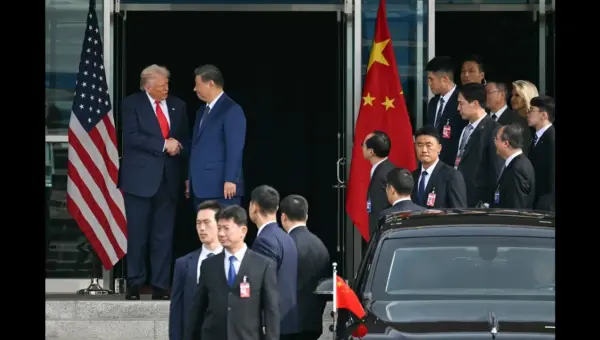
Trump’s “Walk Away” Tactic Signals Tougher Stance on China
Retired Air Force Brigadier General David Stillwell believes President Trump's strategy of being willing to walk away from negotiations puts pressure on China. This tactic, combined with US global actions and strengthened alliances, signals a more assertive American foreign policy.
House Rejects Senate Bill, Citing Border Security Funding Gaps
House Republicans are rejecting a Senate funding bill, arguing it lacks essential appropriations for ICE and CBP, threatening anti-trafficking efforts and border security. They plan to pass a short-term measure to force renewed negotiations.

China Fights Back: Tariffs Loom Ahead of Trump Visit
China is retaliating against US trade investigations that could lead to higher tariffs. This escalating trade tension occurs just before a planned visit by President Trump. The dispute involves accusations of unfair practices and impacts global supply chains.