Senator Johnson Slams DHS Funding Deal, Blames Democrats
Senator Ron Johnson sharply criticized a proposed DHS funding deal, blaming Democrats for the situation and highlighting concerns over ICE funding and TSA worker pay. He argued that the plan unfairly targets essential personnel and is a consequence of the administration's border policies. Johnson also discussed the broader dysfunction within the Senate and the need for filibuster reform.

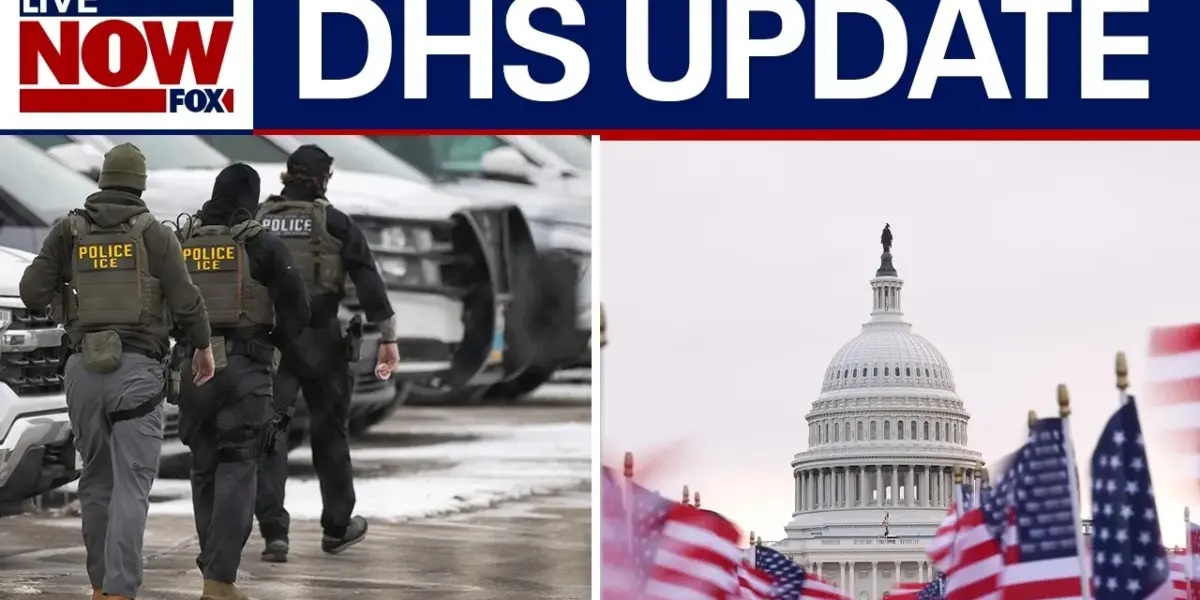
Senator Johnson Criticizes DHS Funding Plan, Cites Democratic Policies
Senator Ron Johnson of Wisconsin has voiced strong opposition to a proposed funding deal for the Department of Homeland Security (DHS), arguing that it unfairly targets essential workers and is a direct result of Democratic policies on border security. The deal, reportedly in the works, aims to fund agencies like the TSA and FEMA but would not fully cover certain Immigration and Customs Enforcement (ICE) operations, though it would allocate funds for ICE investigations.
Concerns Over ICE Funding and Worker Pay
Johnson stated that he could support the plan only if it were combined with a separate reconciliation package to fully fund ICE. He expressed dismay that Democrats allegedly blocked a “shutdown fairness act” during a previous shutdown, a move he believes put the government in this difficult position. “It’s really sad,” Johnson remarked, highlighting the plight of TSA agents who are often not highly paid and may be living paycheck to paycheck. He criticized the Democratic party, which claims to represent working people, for allegedly holding these workers hostage in their effort to “defund ICE” and address what he described as the “mess” created by “open borders.”
Critique of Media and Democratic Messaging
The Senator accused Democrats of lying and mischaracterizing the situation, adding that he found it “galling” that the mainstream media largely supports their narrative. He reiterated his understanding that a separate reconciliation process might be used to cover the remaining ICE operations and costs. When asked why reconciliation is the best path forward, Johnson expressed uncertainty about passing many elements of the “Save America Act” through this method. He praised Senator Mike Lee for highlighting what he called the hypocrisy of Democrats regarding the bill, which Johnson believes has widespread public support, citing measures like voter ID and proof of citizenship.
Debate Over Election Integrity and Senate Rules
Johnson pointed out that even Democrats on the Senate floor have acknowledged support for voter ID, but questioned the enforcement and the imposition of national standards on states. He stressed the importance of floor debate to expose these issues. Regarding reconciliation for ICE funding, he emphasized the need to ensure all necessary operations are covered, stating, “I’m not saying this is a done deal.” He repeated his desire for TSA agents and other DHS employees to be paid, placing the blame squarely on Democrats. “If you’re upset in a long line at the airport, don’t blame Republicans. Blame Democrats,” he asserted.
Senator Rick Scott’s Opposition and Reconciliation Process
The interview also touched upon the stance of Senator Rick Scott, who reportedly declared he would vote no on the DHS funding package unless it guaranteed pay for all ICE agents and DHS personnel responsible for border security. Scott’s statement suggested that the current bill text, as he interpreted it, did not provide this assurance. Johnson acknowledged these concerns, explaining that the Senate parliamentarian has a say in these matters and that proposals must be reviewed. He suggested that Scott’s position, and his own, is not an outright rejection but a demand for proof that ICE agents will be fully funded before agreeing to a partial measure.
The Filibuster and Senate Dysfunction
The discussion extended to the House Freedom Caucus’s statement, which criticized Senate Republicans for not forcing a talking filibuster for the “Save America Act” and expressed skepticism about passing it via reconciliation due to potential unlimited amendments. Johnson agreed that ending the filibuster might be the only way to pass the full “Save America Act.” He described the Senate as “horribly broken” and “completely dysfunctional,” predicting that Democrats would eliminate the filibuster if they were in power. He argued that Democrats have shown a willingness to be unreasonable and that a dramatic change is needed in the Senate’s approach. Johnson believes that certain elements of the “Save America Act” are crucial to counter what he sees as the Democratic party’s agenda to create a “one-party nation” through policies like open borders, increased congressional representation, and relaxed election controls.
Debate on Filibuster Reform and Senate History
When questioned about the lack of Republican votes to end the filibuster, Johnson recalled a similar situation regarding President Trump’s nominees, where Democratic obstructionism ultimately led to a rule change. He traced the history of the filibuster, noting that it was originally intended for use only at the end of legislative processes, not to prevent bills from reaching the floor. He attributed the current dysfunction in part to figures like Harry Reid and Chuck Schumer, stating, “The Senate is ruined.” He emphasized that “something’s got to give” and that changes are necessary, though the specifics of what the Republican conference might agree upon remain unclear.
Funding for Iran Conflict and National Debt
Finally, the conversation shifted to a potential $200 billion request from the White House and Pentagon for efforts related to the Iran conflict. Johnson expressed the need to scrutinize the details of such a request, especially given the national debt. He suggested that this funding, like other significant expenditures, might need to be pursued through reconciliation. He also proposed finding offsets for such spending by addressing an estimated $700 billion to $1 trillion in annual fraud within existing programs. He pointed to examples of fraud in states like California and Minnesota as evidence. Johnson believes that savings can be found by returning to pre-pandemic spending levels, citing a comparison between 2019 spending adjusted for inflation and population growth, and the significant increase in mandatory spending since 2019.
Source: Ron Johnson doesn't hold back on DHS funding, ICE, airports (YouTube)

Related Articles


House Funds DHS Short-Term, Senate Stalemate Looms
The House has passed a short-term bill to fund the Department of Homeland Security, but the Senate is expected to reject it. This temporary measure highlights ongoing political divisions and the challenges in reaching long-term budget agreements in the U.S. Congress.

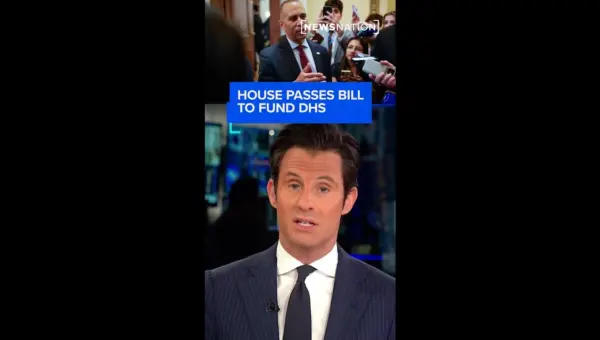
Congress Stalemate Threatens Border Security Funding
The U.S. House passed a temporary funding bill for the Department of Homeland Security, but Senate Democrats are expected to block it. This recurring stalemate highlights deep divisions over border policy and funding, potentially impacting national security and international perceptions of U.S. stability.
House Funds DHS, But Senate Deal Unlikely Amid Shutdown
The House of Representatives has passed a bill to fund the Department of Homeland Security, but the measure is unlikely to pass the Senate. TSA workers, who have faced missed paychecks and disruptions, may receive some pay soon due to a presidential order, but the broader shutdown continues.