Senator Coons Blasts Trump Admin’s ‘Stunning’ Lack of Iran War Planning
Senator Chris Coons of Delaware has sharply criticized the Trump administration's Iran strategy, calling the lack of planning "stunning." He questioned the unclear objectives and vague rationale behind military actions, and highlighted the administration's unpreparedness for post-conflict scenarios, leaving Americans stranded abroad amidst escalating tensions.

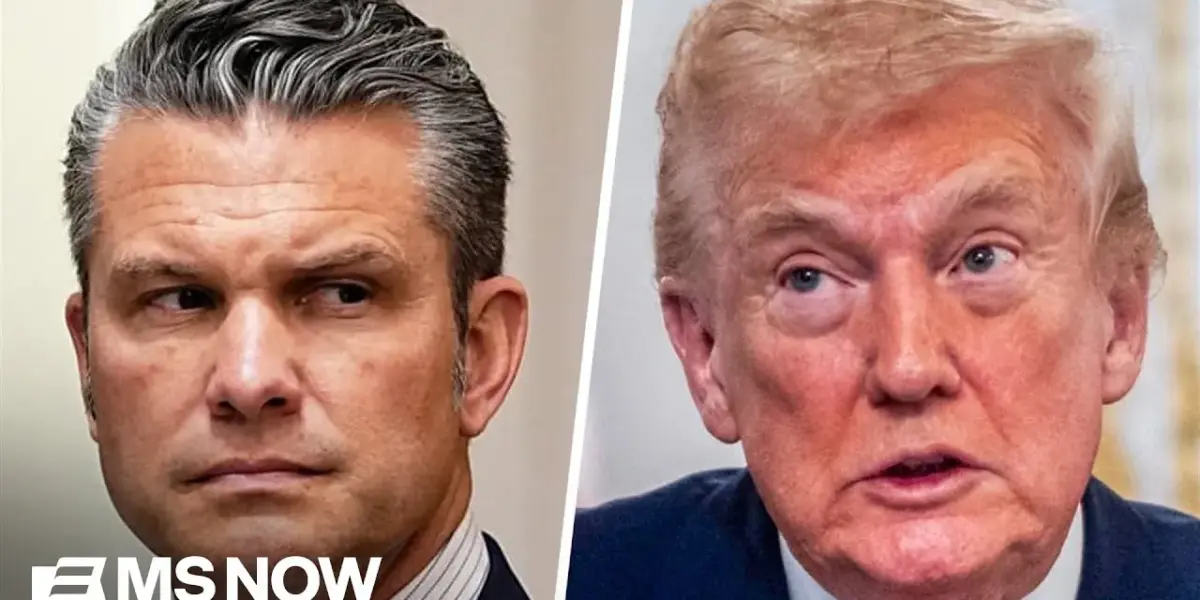
Senator Coons Criticizes Trump Administration’s Iran Strategy
WASHINGTON D.C. – Senator Chris Coons of Delaware, a member of the Senate Judiciary and Foreign Relations Committees, has sharply criticized the Trump administration’s handling of the escalating tensions with Iran, citing a “stunning” lack of planning and clear objectives for the military actions undertaken. Speaking in the wake of President Trump’s public statements on the military’s success against Iranian capabilities, Senator Coons questioned the core goals and long-term strategy behind the engagement, emphasizing that such critical decisions in a democracy require transparency and a well-defined plan.
Unclear Objectives and Vague Rationale
President Trump recently asserted that Iran’s military infrastructure, including its navy and air force, has been significantly degraded. “They have no navy, it’s been knocked out. They have no air force that’s been knocked out. They have no air detection that’s been knocked out. Their radar has been knocked out. And just about everything’s been knocked out,” the President stated. He further added that Iran is “very much beaten militarily.”
However, Senator Coons expressed deep concern over the lack of clarity surrounding the administration’s objectives. “My core question is what is the goal of this war,” Coons stated. “President Trump took us to war in Iran without clearly conveying to the American people or to Congress that represents them, what’s the goal? What’s the duration? What are the aims? What are the means?”
The Senator highlighted conflicting statements from administration officials regarding the potential scope of the conflict. “When we heard in the last 24 hours, Secretary Hegseth say he would not rule out sending boots on the ground. And when President Trump has variously said this could last a few days, a few weeks or as long as it takes,” Coons noted. He also pointed to President Trump’s shifting stated goals, ranging from eliminating Iran’s nuclear program to regime change or sinking their navy, underscoring a perceived absence of a coherent strategy.
The “Day After” Dilemma: No Plan for Post-Conflict Iran
The conversation also turned to the critical question of what follows any military engagement. German Chancellor Merkel’s reported intention to discuss the “day after” with President Trump prompted Coons to elaborate on the administration’s apparent unpreparedness.
“There are clearly no plans by this administration.”
Coons recalled President Trump’s remarks about having identified potential successors for the Iranian government only to have them killed, as well as his calls for Iranian citizens to rise up against their government. He also referenced the President’s openness to a deal with the regime, drawing a parallel to the situation in Venezuela. “The biggest thing I think that is likely to come out of this is chaos,” Coons predicted. He argued that a “repressive, well-armed machine of the Iranian regime that has long supported terrorism and proxies in the region” is unlikely to be overthrown by disorganized, unarmed protesters.
Undermining Tools for Civil Society Support
The Senator lamented the administration’s apparent dismantling of programs designed to support civil society and democratic movements within Iran. “If only the United States government had had a large group of seasoned and experienced people who had relevant background in helping to support civil society and resistance movements. Oh, wait, Chris, we did. It was USAID,” Coons stated. He explained that USAID’s programs, which helped train and equip young leaders to challenge authoritarian regimes, were significantly curtailed or canceled in the previous year.
“So the Iranian people are not hearing broadcasts in their language principally Farsi every day from Voice of America. We did not have a clear plan for how to work with the Iranian diaspora and how to work with groups within Iran who might be willing or ready to take on the Iranian regime. The lack of planning here is just stunning,” Coons concluded on this point.
Americans Stranded Amidst Escalation
A significant concern raised during the discussion was the safety and evacuation of American citizens in countries affected by the conflict. The State Department had advised Americans to leave 12 countries, yet travel in the Middle East was severely disrupted, with flights in and out of the region significantly impacted. Israel, in particular, stated it could not assist American citizens.
Senator Coons shared an anecdote about a constituent whose 30 students were stranded in Dubai. “Imagine the anxiety, the concern of Americans, the civilians who work for us or who live on military bases, the spouses of our armed forces, our diplomats and their families, the folks who work in our embassies, all of them being told get out of these countries when we often don’t have ambassadors, when several of those embassies are closed and when we did not plan for this,” he said.
He attributed the disruption to a predictable consequence of escalating conflict. “It was entirely predictable that when we launched a full-scale war against Iran, that they would counter by attacking civilian infrastructure and in particular airports with drones. That’s one of the technologies that the Iranians are the best at,” Coons explained, referencing Iran’s drone capabilities used in Ukraine.
The Senator argued that the administration should have anticipated the need to maintain embassy operations and facilitate civilian evacuations, especially given the potential for airport closures due to Iranian drone attacks.
Domestic Security Concerns Linked to Foreign Policy
The conversation also touched upon the potential threat to the United States homeland, drawing a connection between foreign military actions and domestic security. During a hearing, Republican Senator Lindsey Graham had urged increased funding for the Department of Homeland Security (DHS), linking the “mothership of terrorism, Iran” to potential attacks on U.S. soil.
“I hope [Iran] will sink pretty soon. Do you think the threat level against the United States is up or down when it comes to radical Islamic terrorists? It’s up. It’s up? Yep. So you mean they actually may want to come here and hit us because we hit them? I don’t think you have to be, you know, a general to figure that out,” Graham stated during the exchange.
Senator Coons acknowledged Graham’s remarks but shifted the focus to domestic resource allocation. He stated that while he was present for Graham’s comments, the core issue for Democrats regarding DHS funding was the conduct and accountability of Immigration and Customs Enforcement (ICE) agents.
“What we’re asking for is simple and reasonable, that ICE agents follow the same sorts of rules as state and local law enforcement,” Coons explained. He advocated for well-trained, well-equipped, and community-respected law enforcement, emphasizing the need for an ICE that is “accountable, that is humane, that is conducting itself in a constitutional and appropriate way.”
Coons concluded this part of the discussion by asserting that the administration’s decision to redirect thousands of agents from counterterrorism and national security to domestic immigration enforcement is a primary factor increasing risk to the nation.
Looking Ahead: A Call for Strategic Clarity
As tensions with Iran remain high and the implications of the administration’s actions continue to unfold, Senator Coons’s remarks highlight a critical need for strategic clarity and robust planning. The “stunning” lack of a cohesive strategy, coupled with the disruption to American citizens abroad and the potential impact on domestic security, raises significant questions about the long-term consequences of the current U.S. foreign policy approach towards Iran. The coming weeks will be crucial in determining whether the administration can articulate a clear path forward or if the current trajectory will lead to further instability.
Source: 'Lack of planning is just stunning': Dem Sen. on Trump's messaging on Iran (YouTube)

Related Articles
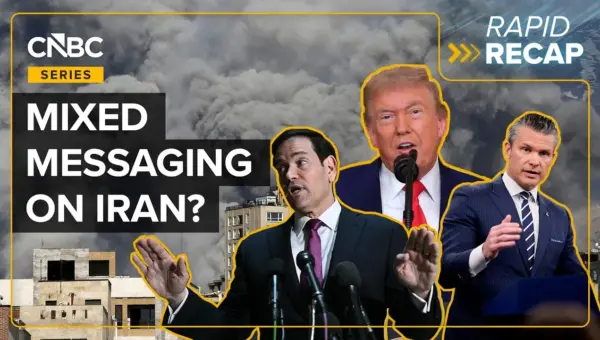
Iran Tensions Flare: US Vows “Annihilation” Amid Nuclear Fears
The Trump administration has adopted an aggressive tone towards Iran, vowing military action and highlighting concerns over the nation's nuclear ambitions. Officials cited "imminent threats" and Iran's development of missiles and drones as justifications for a preemptive stance.
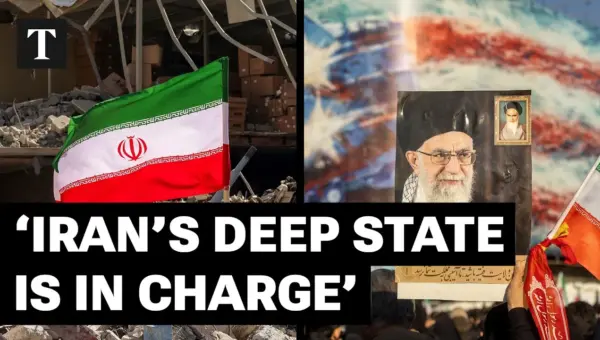
Iran’s ‘Deep State’ Operates Behind Veil, Expert Reveals
An expert on Iranian military affairs reveals a powerful 'deep state' operating behind the scenes, controlled by the Supreme Leader's office, designed to ensure regime continuity. The analysis underscores that regime collapse is the only path to meaningful change in Iran, highlighting the nation's role as a global sponsor of terror and its hostile actions against Western democracies.

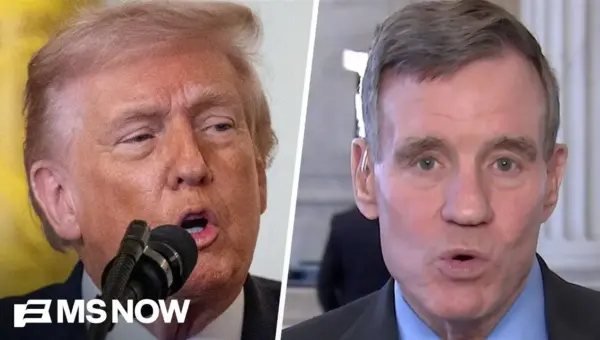
Senator Warner: No Imminent Threat Justified U.S. Strikes on Iran
Senator Mark Warner has asserted that intelligence presented to him did not indicate an imminent threat to the U.S. that would justify military strikes against Iran. He described the engagement as a "war of choice" by the Trump administration, challenging the official narrative and highlighting concerns for American citizens in the region.