Senator Blasts ‘Incoherent’ Middle East War Fueled by Oil
Senator Jeff Merkley criticizes the Trump administration's "incoherent" Middle East war strategy, citing conflicting messages and a significant troop buildup despite declarations of victory. He highlights the human and financial costs of prolonged conflict and questions the administration's priorities.

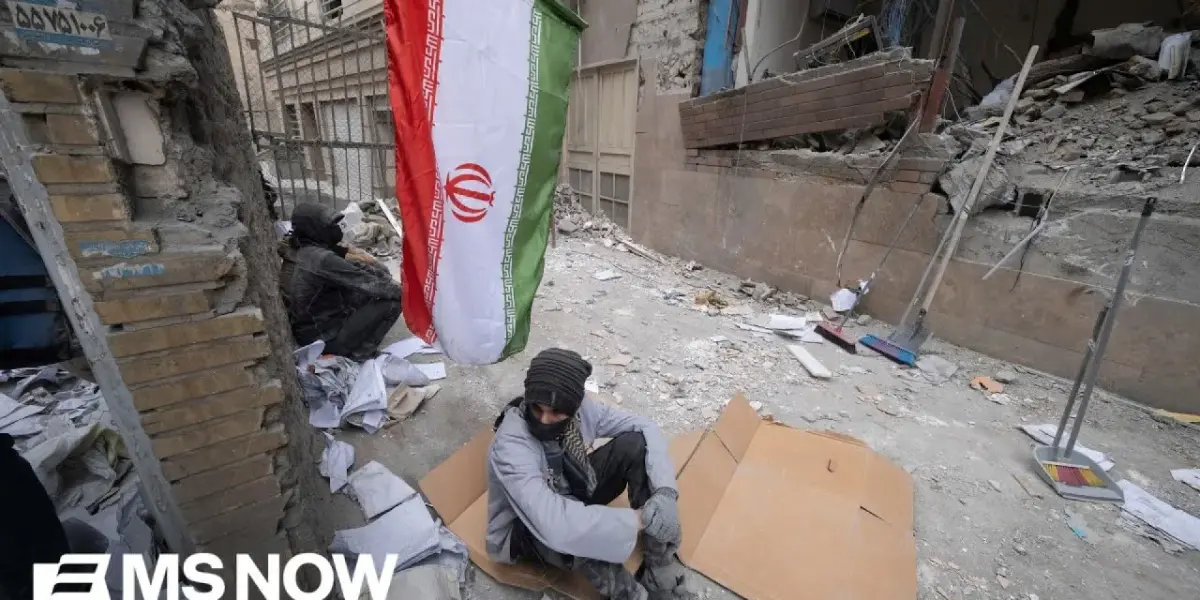
Senator Slams Trump Administration’s Conflicting Signals on Iran Conflict
The Middle East conflict with Iran has entered its fourth week, marked by conflicting messages from the Trump administration and escalating military actions. Overnight, Iranian state media reported an airstrike on the country’s largest nuclear facility, though no radiation leakage was confirmed. Israel’s defense minister announced plans to intensify attacks on Iran starting tomorrow, adding to the regional tension.
Confusing War Messaging and Troop Buildup
President Trump’s public statements have added to the confusion surrounding the war. He recently posted on Truth Social that the U.S. was “very close to meeting our objectives” and considered winding down military efforts. However, this statement contrasts sharply with the confirmed deployment of an additional 2,500 U.S. Marines and three warships to the region, a doubling of American forces. President Trump also told MSNC that while the U.S. could leave Iran now and cripple its rebuilding efforts for a decade, he felt it was not an acceptable outcome, suggesting a longer military engagement might be necessary.
Calls for $200 Billion Despite Declared Victory
The Pentagon is preparing to request a significant $200 billion in additional funds from Congress for the war effort. This request comes even as President Trump declared victory, stating, “I think we’ve won. We’ve knocked out their Navy, their Air Force, we’ve knocked out their anti-aircraft, we’ve knocked out everything.” He described the Iranian military as finished, only clogging up the Strait of Hormuz.
Senator Merkley Criticizes War Strategy
Senator Jeff Merkley of Oregon, a member of the Foreign Relations and Appropriations Committees, strongly criticized the administration’s approach. “The actions speak much louder than his words,” Senator Merkley stated. He pointed out that despite claims of winding down operations, more troops and warships are being sent. Merkley argued that the Straits of Hormuz remain unsecured and that the administration has left reformers in a worse position than before the war began, with no clear exit strategy.
“We have now 2,500 It’s roughly civilians have died in this. We have seen the toll in the U.S. hit our service members. There will be so much more blood on the sands of Iran if we put troops on the ground and so many more serious injuries that will be life-altering.”
Human Cost of Conflict
The human cost of the war is a significant concern. Thirteen service members have lost their lives, and over 100 casualties, including injuries, have been reported. Senator Merkley reacted strongly to reports that President Trump may have misrepresented private conversations with Gold Star families, calling such actions “personal” and manipulative. He emphasized that not everyone shares President Trump’s views and that such private exchanges should never be misquoted or misused.
Concerns Over Ground Troops and Misguided Priorities
Senator Merkley expressed deep concern about the potential for deploying U.S. troops on the ground in Iran. He warned of significant casualties and life-altering injuries, stating, “There will be so much more blood on the sands of Iran if we put troops on the ground.” He criticized President Trump for sending ordinary Americans to die without clear objectives or an exit plan, calling the endeavor “incoherent” and costly in lives and resources.
Republican Colleagues’ Silence on Ground Troops
When asked about the possibility of ground troops, Senator Merkley noted that his Republican colleagues have been largely avoiding the question in informal conversations. He expressed hope that recent information might prompt more serious discussion about the war’s direction.
Financial and Historical Parallels
As a member of the Appropriations Committee, Senator Merkley has not yet seen a detailed breakdown of the $200 billion war funding request, nor has he received briefings indicating ground troop deployment. He drew parallels to the costly mistakes made in Afghanistan and Iraq, highlighting the immense financial and human toll of prolonged Middle East conflicts. “We are spending this nation into bankruptcy on foreign wars focused in the Middle East,” he stated, questioning why such vast sums cannot be invested in domestic priorities like schools, healthcare, and infrastructure.
Debate Over the SAVE America Act
The conversation also shifted to domestic policy, specifically the SAVE America Act, which Senator Merkley is actively debating. The act proposes strict requirements for voter registration, including proof of citizenship, marriage certificates for name changes, and photo ID. Senator Merkley criticized the bill, arguing it is designed to disenfranchise voters, particularly women, students, and tribal members who may have name changes or lack specific forms of identification. He believes the bill is an effort to rig the November election by preventing citizens from voting, rather than stopping non-citizens.
Stalemate Over Government Funding
Senator Merkley also addressed the ongoing government shutdown, particularly concerning the Department of Homeland Security (DHS). He explained that Republicans are holding key agencies like the Coast Guard, TSA, and FEMA hostage, refusing to pass funding bills unless additional money is allocated to ICE, which he described as a “secret police.” Democrats are attempting daily to pass funding to free these agencies, but Republicans are blocking these efforts, then blaming Democrats for the shutdown.
Voter ID Debate and Democratic Proposals
Regarding voter identification, Senator Merkley acknowledged that most Americans believe some form of ID should be required. However, he stressed that the SAVE Act’s provisions are too restrictive and would disenfranchise millions. He contrasted this with the Democratic proposal in Senate Bill S.1, the Freedom to Vote Act, which supports voter ID but ensures it does not disproportionately affect certain groups and provides funding for states to implement fair identification processes. He concluded that if Republicans were serious about voter ID, they would support such comprehensive measures.
Source: ‘Incoherent Middle East war over oil’: Dem Senator blasts Trump admin. as Iran war enters week 4 (YouTube)

Related Articles

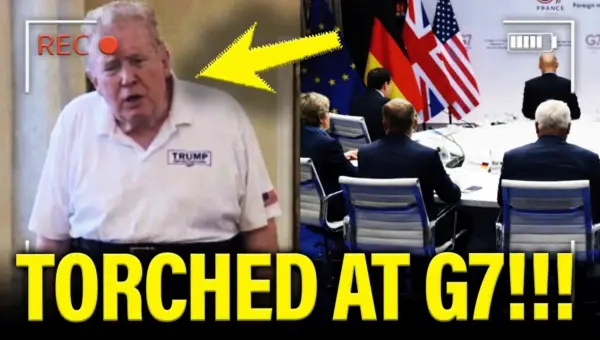
G7 Leaders Clash Over Trump’s Iran Policy Amidst Global Crisis
World leaders at a G7 meeting voiced sharp criticism of Donald Trump's Iran policy, citing concerns over the Strait of Hormuz and a looming global recession. Disagreements emerged regarding strategy and accusations of misinformation, highlighting deep divisions.
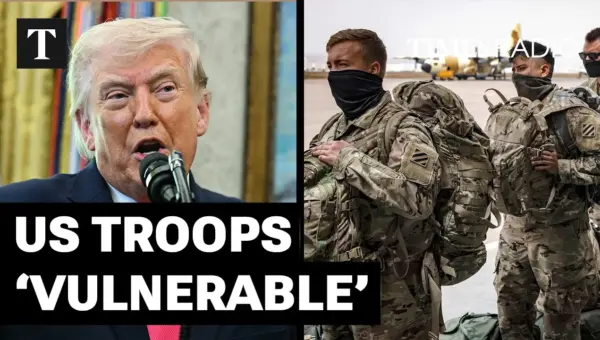
Ex-Army Major Warns of ‘Death Trap’ for US Troops in Iran Conflict
A recent Iranian strike injuring 12 U.S. troops in Saudi Arabia highlights the vulnerability of American forces, according to former Army Major Harrison Mann. He warns that proposed ground operations, particularly on islands like Kharg, could become a "death trap" due to Iran's missile capabilities and the lack of adequate defenses.
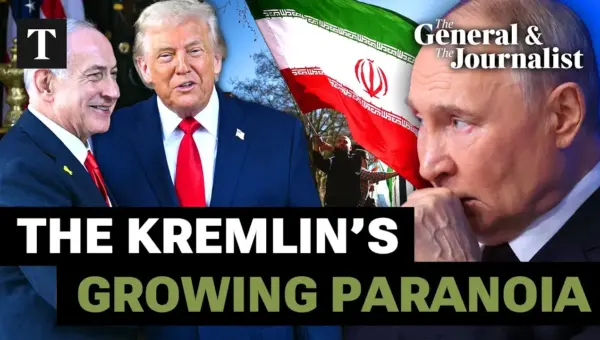
Kremlin Shakes: Elite Discontent Fuels Putin’s Paranoia
Internal turmoil and paranoia are reportedly gripping the Kremlin as President Putin faces growing elite discontent and the realities of the Ukraine war. Meanwhile, Russia's strategic involvement in the Iran conflict highlights complex calculations and potential risks, even as a wider global war remains unlikely.