Senate Debates SAVE Act, DHS Funding in Rare Weekend Session
The Senate convened for a rare weekend session to debate funding for the Department of Homeland Security amid a partial government shutdown and the contentious Safeguard American Voter Eligibility (SAVE) Act. The shutdown highlights specific agency impacts, while the SAVE Act sparks debate over voter ID laws, with Democrats calling it voter suppression and Republicans emphasizing election integrity.


Congress Works Weekend to Address DHS Shutdown and Voter ID Bill
The U.S. Senate convened for a rare weekend session to debate critical legislation, including funding for the Department of Homeland Security (DHS) and the controversial Safeguard American Voter Eligibility (SAVE) Act. This unusual schedule highlights the urgency surrounding the partial government shutdown and the deep divisions over election integrity.
DHS Shutdown Focuses on Specific Agency Impacts
Political analyst and historian Rich Rubino noted that this partial government shutdown differs from previous ones. Instead of affecting multiple agencies broadly, it primarily impacts the Department of Homeland Security. This includes agencies like the Transportation Security Administration (TSA), leading to significant disruptions at airports. Rubino explained that a prior agreement with some Democrats aimed to keep other government departments funded, leaving DHS as the sole focus of the shutdown. This narrow focus has intensified scrutiny on the agency and its operations.
Behind-the-Scenes Negotiations Aim to End Shutdown
While lawmakers debated on the Senate floor, discussions and negotiations were also occurring behind the scenes. Senator Tom Homan was reportedly meeting with centrist Democrats who had previously voted against their party to keep the government open. This strategy, according to Rubino, aims to bypass Democratic leadership, like Senate Minority Leader Chuck Schumer, who may face pressure from his base to avoid concessions to Republicans. The goal is to find enough Democratic support to break a filibuster and pass funding legislation, thereby ending the DHS shutdown.
SAVE Act Sparks Fierce Debate Over Voter ID
A major point of contention during the weekend session was the SAVE Act, which stands for Safeguard American Voter Eligibility Act. This legislation proposes stricter voter identification requirements. Rubino traced the history of federal voting legislation back to the Voting Rights Act of 1965, which removed many discriminatory voting restrictions. He also mentioned the Help America Vote Act of 2002, passed after the contentious 2000 presidential election. However, Rubino highlighted that the SAVE Act has become a central issue for former President Donald Trump, who has demanded its passage alongside DHS funding.
Concerns Over Voter Suppression vs. Election Integrity
The SAVE Act faces significant opposition from Democrats, who argue it amounts to voter suppression. They contend that the requirement to obtain specific forms of identification, such as birth certificates, could impose financial burdens on voters, particularly those in rural or remote areas. This could act as a modern-day poll tax, which is unconstitutional. Democrats also point out that instances of illegal voting are rare, making stringent ID laws unnecessary. Senator Lisa Murkowski of Alaska, a Republican, also voiced concerns, stating the act could disproportionately affect indigenous Alaskans in remote areas by making it difficult to vote via mail or obtain necessary identification.
Republican Support and the Path Forward
Republicans largely support the SAVE Act, arguing that requiring identification for voting is a common-sense measure, similar to needing ID for other activities. They believe it is essential to prevent voter fraud. However, even within this support, nuances exist. While the general idea of voter ID is popular, the specific requirements and types of acceptable identification in the SAVE Act have drawn criticism and revealed divisions. To pass in the Senate, the SAVE Act would require 60 votes to overcome a filibuster. Currently, it has unified Republican support, with the exception of Senator Murkowski. However, all Democrats are opposed, making its passage highly improbable.
Legacy of Robert Mueller Remembered
In addition to the legislative debates, the Senate session also marked an opportunity to reflect on the legacy of former FBI Director Robert Mueller, who recently passed away at age 81. Rubino described Mueller as one of the most consequential FBI directors in history, second only to J. Edgar Hoover. Mueller served for 12 years and was known for his integrity and willingness to challenge administrations, including President George W. Bush regarding warrantless wiretapping and President Donald Trump during the investigation into Russian interference in the 2016 election. Despite being a polarizing figure, particularly due to his investigation into Trump, Mueller is remembered for his dedication to the rule of law and his significant impact on the FBI and national security.
Looking Ahead: Funding Decisions and Election Laws
As the Senate continues its work, the focus remains on resolving the DHS funding impasse and the future of the SAVE Act. The outcome of these debates will not only determine the operational status of a key government department but also shape the national conversation around election security and voter access. The deep partisan divides suggest that finding consensus will remain a significant challenge in the coming weeks and months.
Source: Senate debates SAVE act in rare weekend session amid DHS shutdown (YouTube)

Related Articles

Voter ID: Common Sense or Suppression?
A growing debate surrounds voter ID laws, with proponents calling them a common-sense measure against fraud and opponents fearing voter suppression. Many countries and U.S. states already require ID to vote.

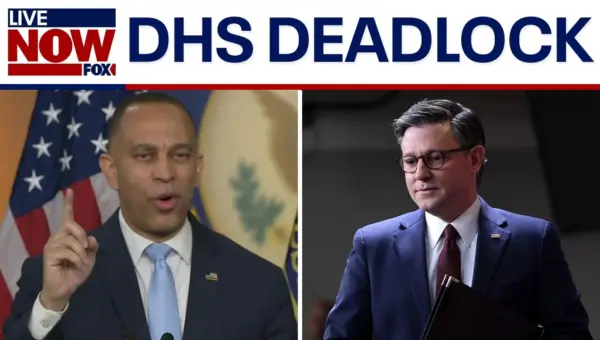
Democrats Demand End to DHS Shutdown, Pass Bipartisan Bill
Democrats are demanding an immediate end to the Department of Homeland Security (DHS) shutdown, urging House Republicans to pass a bipartisan Senate bill. The legislation aims to fund essential services, pay TSA agents, and end airport chaos. Democrats criticize Republicans for obstructing the bill to push ideological agendas and reform ICE.

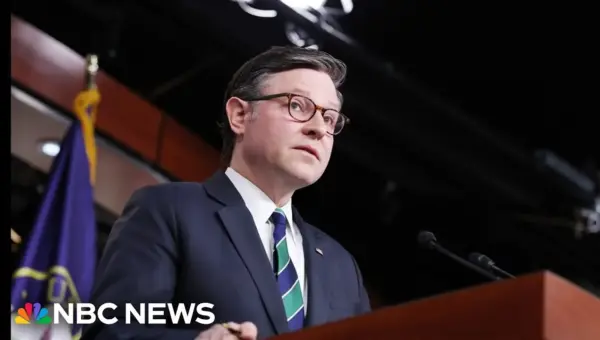
DHS Shutdown Deepens as Speaker Johnson Rejects Senate Deal
The partial government shutdown continues as House Speaker Mike Johnson rejected a bipartisan Senate deal to fund the Department of Homeland Security. Instead, the House will vote on a separate measure, a move Democrats call "dead on arrival." President Trump has used an executive order to unilaterally fund TSA workers, offering some relief amid widespread airport disruptions and financial hardship for federal employees.