Scarborough Slams Rubio, Johnson on Iran Attack Justifications
Joe Scarborough has sharply criticized Senators Marco Rubio and Speaker Mike Johnson for their justifications of recent U.S. strikes against Iran. Calling their explanations "two of the stupidest answers," Scarborough argued the administration's rationale "makes no sense." The debate centers on whether the preemptive actions were truly necessary to prevent greater casualties or if they represent a flawed strategic decision.

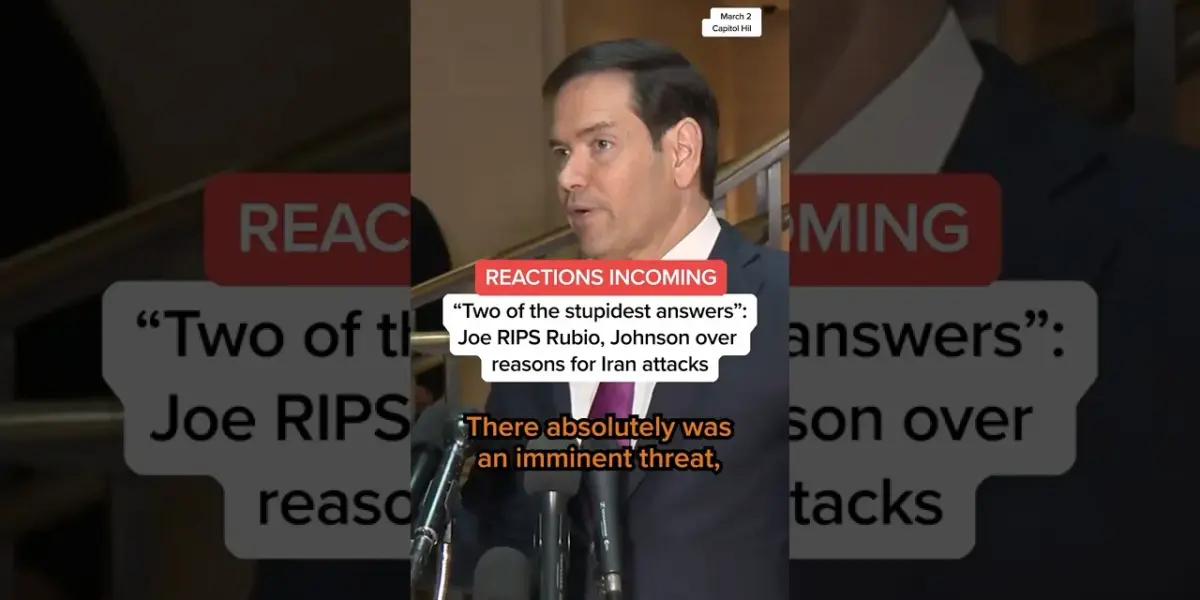
Scarborough Decries ‘Stupidest Answers’ on Iran Attack Rationale
Joe Scarborough, host of MSNBC’s ‘Morning Joe,’ launched a scathing critique of U.S. Senators Marco Rubio and Speaker Mike Johnson, labeling their recent explanations for the administration’s strikes against Iran as “two of the stupidest answers” he has ever heard. The comments came in response to the lawmakers’ justifications for the preemptive military actions, which they argued were necessary to avert larger-scale casualties and de-escalate the burgeoning conflict.
Appearing on MS NOW, Scarborough expressed profound disbelief at the administration’s stated reasoning, asserting that the rationale presented “makes no sense.” The core of the controversy lies in the U.S. response to recent escalations involving Iran, which the administration claims were preventative measures. However, Scarborough contends that the justifications offered by key Republican figures fail to hold up under scrutiny, raising questions about the strategic and logical underpinnings of the U.S. military engagement.
Defense of Preemptive Strikes
Senator Marco Rubio and Speaker Mike Johnson, both prominent figures in the U.S. political landscape, have publicly defended the administration’s decision to launch strikes. Their arguments center on the notion of preemption, suggesting that the United States acted decisively to neutralize imminent threats and prevent a more significant loss of American lives and resources. This strategic posture implies that intelligence indicated a high probability of escalating attacks from Iran, necessitating an immediate and forceful response.
The administration’s narrative posits that inaction would have emboldened adversaries and potentially led to a wider, more devastating conflict. By striking first, the argument goes, the U.S. aimed to disrupt enemy plans, degrade their capabilities, and signal a firm resolve to protect American interests and allies in the region. This approach, while controversial, is often framed as a necessary evil in a volatile geopolitical climate.
Scarborough’s Rebuttal: A Failure of Logic
Joe Scarborough, however, remains unconvinced by these justifications. His critique, aired on MS NOW, directly challenges the coherence of the administration’s defense. The phrase “stupidest answers” underscores his belief that the explanations provided are not only unconvincing but fundamentally flawed in their logic. Scarborough appears to question the very premise of the preemptive action, suggesting that the stated reasons do not align with observable realities or sound strategic reasoning.
“The administration’s rationale ‘makes no sense,'” Scarborough declared, indicating a deep-seated skepticism about the intelligence or the interpretation of that intelligence that led to the strikes. He seems to imply that the administration might be misrepresenting the situation or that the actions taken are disproportionate to the actual threat, thereby creating rather than preventing greater harm.
Broader Implications and Geopolitical Context
The debate surrounding the U.S. strikes on Iran occurs against a backdrop of heightened tensions in the Middle East. The region has long been a focal point of geopolitical maneuvering, with various state and non-state actors vying for influence. U.S. foreign policy in the area has historically been complex, balancing alliances, counter-terrorism efforts, and the management of regional rivalries.
The decision to engage militarily, even preemptively, carries significant weight. It can impact international relations, affect global energy markets, and potentially trigger retaliatory actions. Critics often point to the risk of unintended consequences, such as alienating allies, provoking further escalation, or drawing the U.S. into prolonged conflicts. The effectiveness of preemptive strikes as a foreign policy tool is a subject of ongoing debate among policymakers and experts, with historical examples yielding mixed results.
Furthermore, the political discourse surrounding these actions often becomes polarized. Supporters tend to emphasize national security and the need for decisive leadership, while opponents raise concerns about diplomacy, the cost of war, and the potential for miscalculation. Scarborough’s strong reaction highlights the deep divisions that can emerge when such critical foreign policy decisions are made and debated publicly.
What to Watch Next
As the situation in Iran and the broader Middle East continues to evolve, attention will remain fixed on the administration’s next steps. The effectiveness of the recent strikes in achieving their stated objectives, as well as the potential for retaliatory actions or further escalation, will be closely monitored. The public and political debate, fueled by critiques like Scarborough’s, is likely to intensify, demanding greater transparency and a clearer articulation of the long-term strategy guiding U.S. foreign policy in the region. The coming weeks and months will be crucial in determining whether the preemptive actions taken have indeed averted greater conflict or inadvertently sown the seeds for future instability.
Source: 'Two of the stupidest answers': Joe RIPS Rubio, Johnson over reasons for Iran attacks (YouTube)

Related Articles
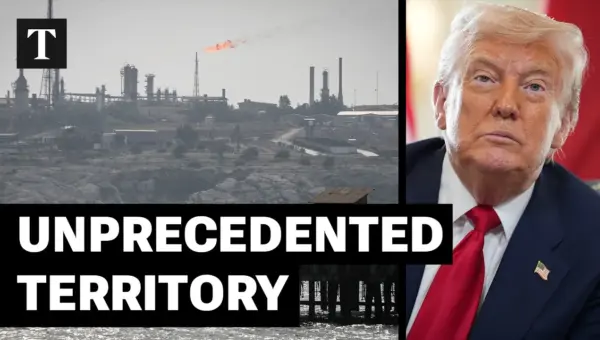
US Seeks Unprecedented Iranian Goal Amidst Oil Politics
Historian A.N. Wilson examines the long-standing U.S. objective of transforming Iran into a compliant, oil-rich ally, a goal with no historical precedent. The discussion delves into how global oil interests have consistently driven Western policy in the Middle East, tracing a path from the 1953 coup to contemporary geopolitical challenges.

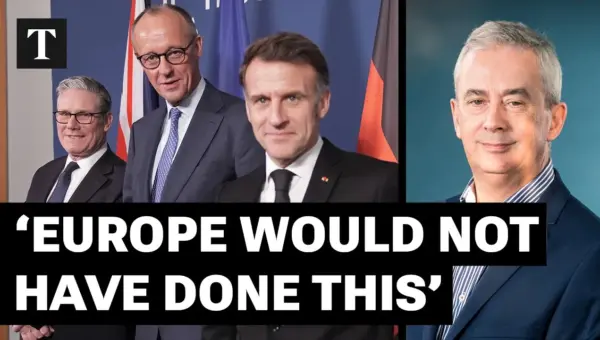
Europe Hesitates as US Leads Iran Conflict, Analysts Say
European nations are adopting a cautious, containment-focused approach to the escalating Iran conflict, largely leaving the US to lead military actions. Analysts suggest Europe is prioritizing its own interests and contemplating a post-regime-change role, while Spain stands as an outlier with its opposition to US operations. The broader implications of the conflict and the potential for regime change remain uncertain.


Senator Shaheen Questions US Control of Foreign Policy Amid Iran Strikes
Senator Jeanne Shaheen expressed deep concern over U.S. foreign policy control following recent Iran strikes, questioning whether President Trump or Prime Minister Netanyahu dictates American actions. The briefing revealed conflicting rationales for the preemptive military action, raising alarms about the administration's strategy and diplomatic preparedness.