SAVE Act: Voter ID Bill Sparks Fierce Debate
The proposed SAVE America Act (SAVE Act) seeks to mandate voter identification and ban non-citizen voting in federal elections. While proponents emphasize election integrity, critics raise concerns about potential voter disenfranchisement, particularly for minority groups and young people.

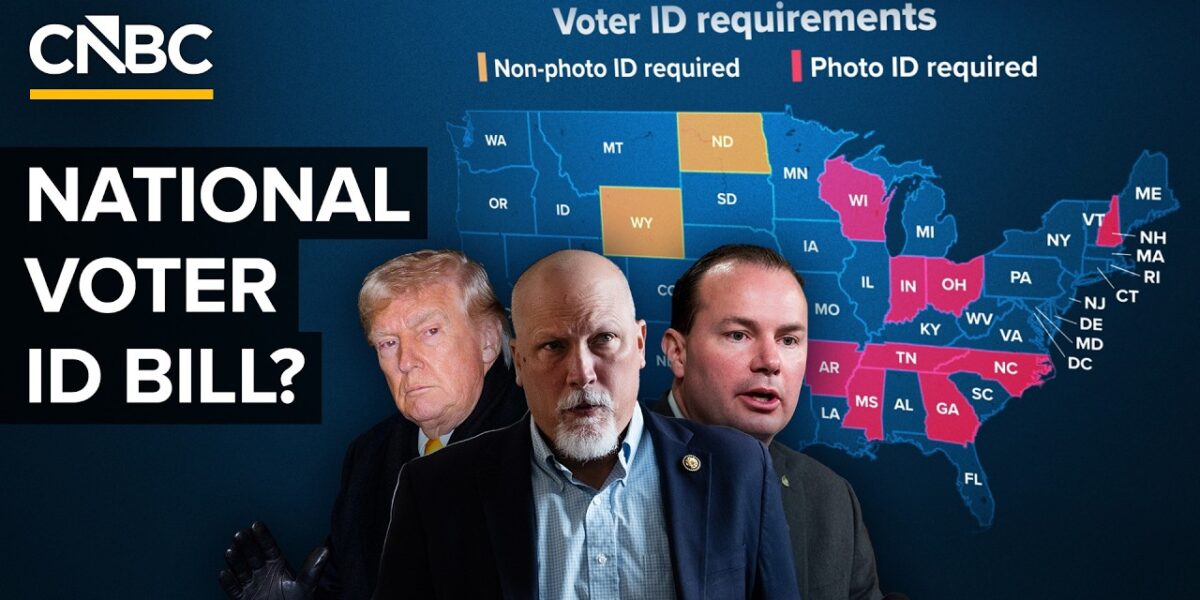
SAVE Act: Voter ID Bill Sparks Fierce Debate Amidst Concerns of Disenfranchisement
A legislative push spearheaded by some Republicans aims to bolster election integrity through the introduction of the SAVE America Act (SAVE Act). This proposed legislation, focusing on voter identification requirements and the prohibition of non-citizen voting in federal elections, has ignited a contentious debate, with critics arguing it could disenfranchise eligible voters. The bill’s evolution and the underlying political motivations are drawing significant attention from lawmakers, advocacy groups, and the public.
Understanding the SAVE Act’s Provisions
The initial iteration of the SAVE Act, introduced by Representative Chip Roy and Senator Mike Lee, mandated that individuals prove their U.S. citizenship to register and cast a ballot in federal elections. This would have required documentation such as a passport. However, an amended version introduced recently has slightly softened these requirements. While still necessitating some form of photo identification at the polls, the updated bill expands the list of acceptable forms of identification to include state-issued IDs. Crucially, college IDs remain prohibited under the amended proposal, a point of contention for many Democrats who view this as a targeted effort to suppress votes from demographics, particularly young people, that tend to favor the Democratic party.
“The purpose of the SAVE act is to ban non-citizens from voting in federal elections, and also to implement some kind of voter ID law where you would have to show your driver’s license when you go to cast a ballot.”
– Justin Papp, CNBC
Concerns Over Voter Access and Disenfranchisement
Senate Majority Leader Chuck Schumer has vocally opposed the SAVE Act, drawing parallels between its aims and historical disenfranchisement tactics. He contends that the bill, despite policy changes, shares the goal of making it harder for eligible citizens to vote. Schumer’s office has highlighted statistics suggesting a significant number of Americans lack readily available proof of citizenship or government-issued identification. Specifically, it is estimated that over 21 million Americans do not have easy access to documents proving citizenship, and more than 2 million individuals lack a valid government-issued ID.
The debate over voter ID laws has intensified, particularly within the Republican party. While non-citizens are already barred from voting in federal elections, and penalties exist for attempting to do so, the focus has shifted to the mechanics of identification at the ballot box. Some states, primarily in the Southern U.S. such as North Carolina and Mississippi, have already implemented their own voter ID laws. The federal government’s role in election administration is complex, as elections are largely state-run. However, the Constitution grants Congress authority to legislate on election procedures.
Political Landscape and Path Forward
Former President Donald Trump has been a consistent proponent of stricter election security measures and has repeatedly raised concerns about non-citizen voting, characterizing it as a significant issue. While non-citizen voting is illegal and carries penalties, Trump’s rhetoric suggests a belief that the problem is more pervasive. Most Democrats, however, fundamentally disagree with the concept of mandatory voter ID laws, viewing them as unnecessary barriers to voting. This ideological divide presents a formidable obstacle for the SAVE Act’s passage through Congress.
The Republican majority in the Senate is narrow, meaning the SAVE Act would require bipartisan support to overcome the 60-vote filibuster threshold. Proponents of the bill, including influential figures and organizations, have engaged in a significant campaign to garner support, often citing public polling that indicates broad agreement with the general concept of voter ID. However, voting rights groups and Democratic lawmakers emphasize that the specific implementation details of such laws are critical, as they can disproportionately affect certain segments of the electorate.
Market Impact
While the SAVE Act is primarily a political and social issue, its potential passage could have indirect market implications. Increased focus on election integrity and potential changes to voting access could influence investor sentiment regarding political stability and regulatory environments. Sectors that rely on consumer behavior and demographic shifts, such as retail or technology, might be indirectly affected by any perceived changes in voter turnout or engagement. However, the direct financial market impact is likely to be minimal unless the legislation leads to significant, unforeseen economic policy shifts or widespread disruption. The core issue remains a matter of legislative process and public policy rather than immediate economic drivers.
What Investors Should Know
Investors monitoring the political landscape should be aware that the SAVE Act represents a significant point of contention in the ongoing debate over election administration. While the bill’s current form may not directly impact financial markets, its progression highlights broader political trends and potential future legislative actions concerning governance and civil liberties. The emphasis on election security by some political factions, contrasted with concerns about voter suppression by others, underscores a polarized environment. Investors should consider how such political debates could influence consumer confidence, regulatory outlooks, and the broader economic policy agenda, particularly as election cycles approach.
The long-term implications are tied to the broader discourse on democratic processes and the accessibility of voting. Any legislation that alters the landscape of voter participation could, over time, influence demographic representation and policy outcomes, which in turn can shape the economic and investment environment. For now, the SAVE Act remains a subject of intense political negotiation, with its ultimate fate uncertain.
Source: What’s Inside The SAVE Act: Congress’ Voter ID Bill (YouTube)

Related Articles


Dem Strategist Warns of GOP Rigging Ahead of Midterms
Democratic strategist Simon Rosenberg expresses concern over alleged Republican plans to 'rig the midterms,' highlighting a shift in political tactics. The discussion emphasizes voter empowerment and vigilance to ensure every vote is counted in the upcoming elections.


Trump Agrees to Talks with Iran After Major Strikes
President Donald Trump has agreed to talks with Iran's leadership following coordinated strikes that reportedly killed key figures, including the Supreme Leader. While Trump claims significant military successes, U.S. strategy remains unclear, and public opinion shows limited support for the actions amid rising American casualties.

Democrats Demand Clarity on Iran Strategy Amid Strike Concerns
Top Democrats are demanding clarity on President Trump's strategy in Iran, calling for an immediate War Powers vote amid concerns over escalating military actions. Lawmakers cite a lack of clear objectives, potential constitutional overreach, and insufficient diplomatic engagement as key reasons for their pushback.