Saleh’s Titans: Fresh Start, Bald Staff, and Ward’s Ascent
New Tennessee Titans head coach Robert Saleh discusses his "bald" coaching staff, his excitement for quarterback Will Levis, lessons learned from his previous coaching stint, and his strategy for building a competitive team. Saleh emphasizes stability for Levis and the importance of interior defensive pressure.

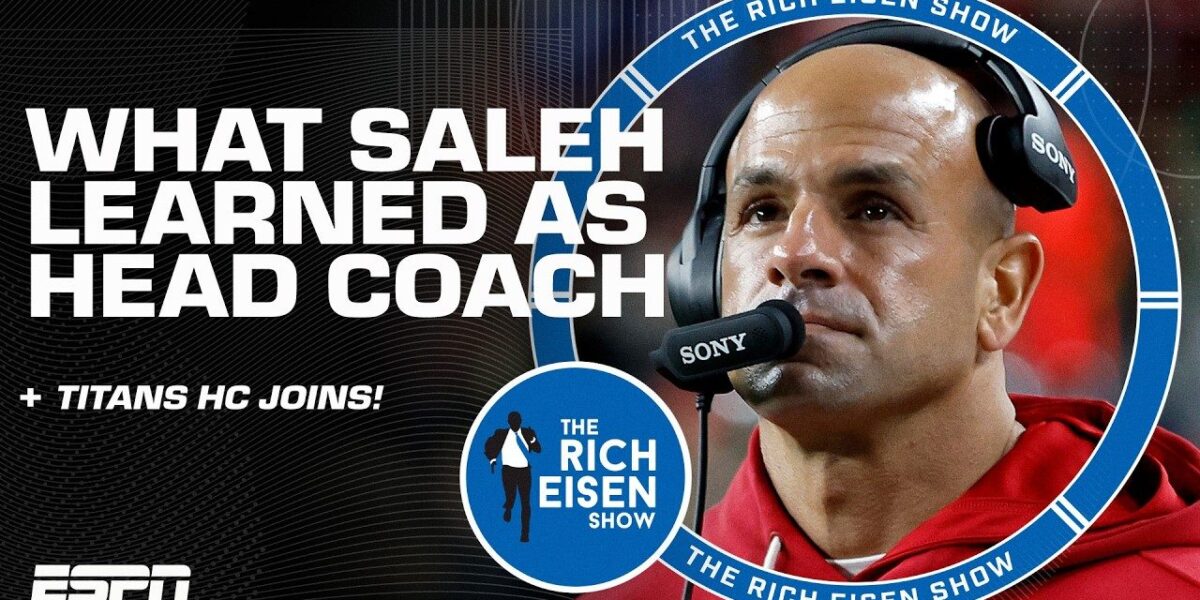
Saleh’s Titans: Fresh Start, Bald Staff, and Ward’s Ascent
The Bald Brotherhood Gets a New Leader
Robert Saleh, the newly appointed head coach of the Tennessee Titans, is making waves before the season even begins, and it’s not just about his strategic acumen. In a candid appearance on The Rich Eisen Show, Saleh addressed the now-famous “bald staff” he’s assembled, a detail that has become a talking point and a source of amusement. “You know, they say in a hiring process, you usually hire people you find are similar to you,” Saleh quipped when pressed about the striking uniformity of his coaching staff. “So maybe it was an unconscious thing, but I could tell you this much: those are unbelievable football coaches right there.” The striking visual of his leadership group has drawn comparisons to Larry David, with Eisen humorously rooting for their success “on behalf of everybody follically challenged.” Saleh, however, quickly pivoted, emphasizing the talent and dedication of his coaches, who he believes are “great at what they do.” The “no visors” rule, a lighthearted mandate, further cements the unique identity of this new Titans era.
A Blank Canvas and a Promising Quarterback
When asked what drew him to the Tennessee Titans job, Saleh pointed to a confluence of factors, chief among them the people within the organization and the opportunity for a fresh start. “First and foremost, I think the people within the organization are outstanding,” he stated, highlighting a desire to win from ownership down. He described the situation as a “blank canvas,” which, combined with the presence of a young quarterback, made the opportunity “very exciting.” Saleh, who has experienced various team-building scenarios in Houston, Seattle, Jacksonville, San Francisco, and New York, noted that while building a team can be manageable, finding a franchise quarterback has historically been the greater challenge.
This brings him to his current project: quarterback Will Levis. “You look at a guy like Will Levis, who we’re all really excited about, we think he has a real chance to be something special,” Saleh declared. He elaborated on Levis’s strengths: “He’s a very confident young man. He’s an elite worker. He’s truly authentic in who he is. And then you look at the arm talent and his ability to create off-schedule.” Saleh sees Levis as someone “scratching the surface with regards to the game of football” and is eager to provide the stability the young quarterback needs. “You go back to his college career in the NFL, he’s had a lot of coordinators, a lot of different systems, and just trying to create a new foundation for him to continue to build off of and get better off of every single day.” The journey from Incarnate Word to a potential first-overall selection is a testament to Levis’s self-belief, a quality Saleh clearly values.
Lessons Learned, Evolution Embraced
Saleh acknowledged that his previous head coaching experience with the New York Jets provided invaluable lessons. “There’s really no handbook for a first-time anything you do,” he reflected. “And I think we could all agree that if we look back at our first day, we’d all agree that we’re more prepared for our moments than we were back then.” He emphasized that he’s carrying forward key learnings while leaving others behind, recognizing that growth is an ongoing process. “I’m grateful for the opportunity I had in New York. I’m more prepared now than I ever was.”
When pushed on what he would do differently, Saleh highlighted a desire to maintain a stronger connection with his players. “The most superficial one, just one of the things that I feel is my strengths is my connection to the players. And I felt not calling plays, for example, in New York kept me from being able to connect to the players the way I feel like I need to.” He also spoke about refining internal processes, drawing inspiration from his time with Matt LaFleur in Green Bay and his return to San Francisco. “You’re always kind of evolving and you’re always growing and not being close-minded.” Saleh stressed the importance of looking inward rather than pointing fingers after setbacks: “When you don’t have success, you can either from an egotistical standpoint, you can point the finger and say, well, you know, you got kind of got screwed in the process, or you can look inward and just try to find a ways to get better and find your weak spots and try to make them strengths. And that’s kind of what I’ve been doing for the last year, year and a half.”
A Partnership Built on Empathy and Experience
The partnership with offensive coordinator Liam Coen is a cornerstone of Saleh’s vision. “It’s ultimately a partnership really in all three phases,” Saleh explained. He expressed excitement about the entire staff, noting the intense competition for coaching talent across the league this offseason. The fact that Coen, Gus Bradley (defensive coordinator), and Nick Holt (special teams coordinator) chose Tennessee among numerous offers is, according to Saleh, “a testament to what we have going on over here.”
Saleh highlighted the “empathy” and “understanding” between himself and Coen, stemming from their previous time together in New York. “We’ve bounced ideas off each other when he was in when we were both in New York and I’ll continue to do the same thing here.” He also pointed out that his new staff is significantly more experienced than his first in New York, a deliberate choice to “lean into guys who have done it before, who have had a lot of success in this league before and who have constantly evolved.” Saleh anticipates Coen’s success will lead to future opportunities, stating, “He’s not going to be here long. We’re going to have success. He’s going to get another opportunity also.” This confidence is rooted in Coen’s proven track record with quarterbacks like Josh Allen and Daniel Jones.
Draft Strategy and Building Around Levis
With the fourth overall pick in the upcoming NFL Draft, Saleh is focused on selecting the best player available, regardless of position. “When you’re drafting fourth overall, we’re in a position where we can draft the best player on the board,” he stated. While acknowledging the attention the first pick garners, Saleh emphasized the extensive evaluation process involving numerous Zoom meetings, pro days, and private visits. The presence of Levis as the established quarterback significantly influences their approach.
“Everything that we do is always going to involve the quarterback in terms of helping him develop,” Saleh reiterated. “And so building a football team that can support him.” He cautioned against unrealistic expectations for a young quarterback to single-handedly carry the team. “Asking a young quarterback to carry a team 60 plays a game is a little unrealistic.” The goal is to build a roster that allows Levis to “just be a piece of the puzzle” while also being prepared for moments when he might need to “put his team on his back.”
Defensive Dominance and the Rise of Interior Pressure
Saleh also touched upon the defensive side of the ball, particularly the impact of defensive tackle Jeffery Simmons. He praised Simmons’s intensity and leadership, drawing comparisons to elite defensive linemen he’s coached previously. “Jeffery is up there with all of them. I’m really excited for him and his opportunity and really excited for us to get our hands on him and cut him loose and see him operate in our system.”
Addressing the evolving landscape of defensive pressure, Saleh agreed with the notion that interior pressure is becoming increasingly crucial. “Offenses have gotten very, very good with regards to protection. They know exactly where to slide, who to chip.” He explained that with offenses efficiently neutralizing edge rushers, “most of the time it’s one of your inside guys that is going to get the one-on-one.” Therefore, having a dominant interior presence like Simmons is vital for winning those matchups and creating pressure. “The fastest way to get pressure into his lap to make him flinch is through the middle of the defense. And if you can do that, it’s always beneficial.” While acknowledging the perennial allure of the edge rusher for sack numbers, Saleh underscored the strategic advantage of consistent pocket disruption from the interior.
As Robert Saleh embarks on this new chapter with the Tennessee Titans, he brings a wealth of experience, a clear vision, and a uniquely charismatic staff, ready to build a winning culture from the ground up.
Source: What Robert Saleh is not taking from the Jets to the Titans | The Rich Eisen Show (YouTube)

Related Articles
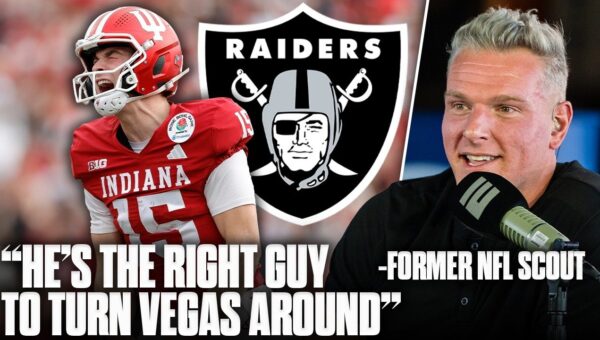
Mendoza Mania: Is He The Raiders’ Generational QB Hope?
Pat McAfee passionately defends quarterback Fernando Mendoza against draft analysts, highlighting his clutch performances and unique leadership qualities. McAfee believes Mendoza has 'generational' potential and could be the key to turning the Las Vegas Raiders around.

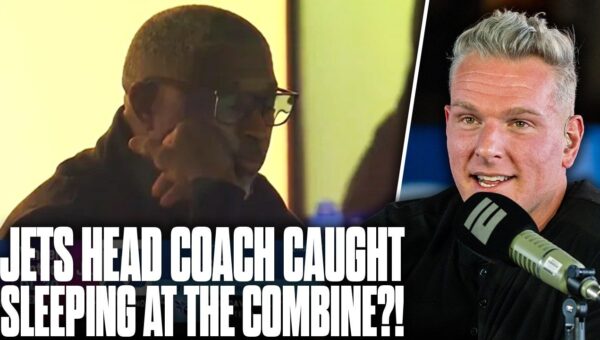
Jets HC Naps at Combine, Sparks Mockery
New York Jets defensive coordinator Aaron Glenn was caught appearing to nap at the NFL Combine, sparking widespread mockery and fueling the "Jets being the Jets" narrative. The incident occurred while the team holds the second overall pick in the upcoming draft.

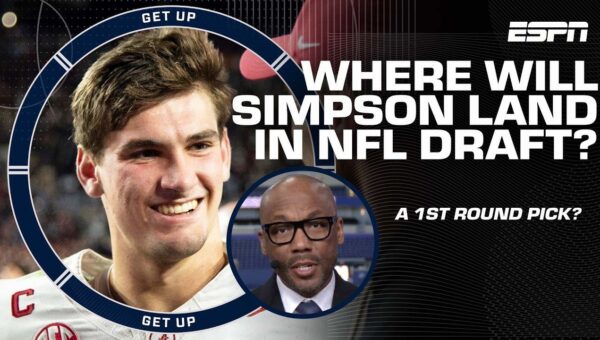
Ty Simpson’s Draft Stock Soars: Top 15 Lock?
Alabama quarterback Ty Simpson is generating significant buzz in the NFL Draft, with analysts debating his potential to be a top-15 pick. Despite a challenging season, his talent and competitive spirit are shining through, while the Dallas Cowboys face a contract standoff with CeeDee Lamb.