Russia’s War Machine Strains as Recruitment Struggles
Russia is facing a critical juncture in its war effort as battlefield losses begin to consistently outpace military recruitment. This imbalance is prompting Moscow to enact legal reforms to its conscription system and expand recruitment efforts beyond its borders, drawing international criticism and diplomatic friction.


Russia Faces Recruitment Crisis Amidst War Losses
In the protracted conflict in Ukraine, Russia is quietly grappling with a significant demographic challenge: its military recruitment numbers are beginning to fall short of battlefield losses. Despite official assurances of a stable and controlled situation, the stark reality of attrition rates is forcing Moscow to adapt its strategies, leading to legal reforms and an expansion of recruitment efforts beyond its borders. This shift signals a growing strain on Russia’s war effort, as the mathematical realities of sustained warfare begin to outweigh ideological pronouncements and bravado.
The Widening Gap: Losses Outpace Recruitment
For an extended period, Russia managed to maintain an illusion of balance, with monthly recruitment figures roughly offsetting battlefield attrition. However, this equilibrium has been disrupted. According to Western assessments and Ukrainian military data, January saw Russian battlefield losses exceed new contract signings by approximately 9,000 personnel. This deficit is not a minor fluctuation but a structural problem, exacerbated by Ukraine’s increased use of drones, which make front-line exposure more perilous and unit rotations more difficult. Even Russian commanders have acknowledged a significant slowdown in territorial gains, with progress measured in meters rather than kilometers. This imbalance is particularly uncomfortable for the Kremlin, as it undermines the long-held claim that the war could be sustained solely through contract soldiers. The implication is that new recruits are merely replacing fallen soldiers rather than bolstering military capabilities, transforming the system from one of proactive capacity building to a reactive scramble to plug persistent gaps.
Reshaping Conscription for Constant Readiness
In response to these mounting pressures, Russia has implemented legislative changes to its conscription system. While officially framed as administrative adjustments, the move towards year-round conscription—with continuous processing of medical and psychological screenings, draft commissions, and digital summonses—represents a significant structural shift. This eliminates the previous seasonal surges and lulls in recruitment, ensuring a constant pipeline of personnel. The decree setting a 261,000-person target for 2026, an increase from the previous year, underscores this strategy of perpetual intake. Critics view this as preparation for a larger, sustained conflict, while proponents suggest it merely streamlines the process. The Kremlin’s strategy appears designed to avoid the political fallout of a mass mobilization, which triggered significant emigration in 2022. By normalizing and stretching the draft across the calendar, Moscow aims to make conscription a less conspicuous, more background element of daily life, while simultaneously increasing efficiency in meeting recruitment targets.
Expanding the Recruitment Net Beyond Russia’s Borders
As domestic recruitment faces diminishing returns, Russia has increasingly turned its attention to foreign nationals. While not a new tactic, the scale and urgency of this outreach have grown. Incentives are tailored to attract migrants already in Russia with promises of residency or citizenship, and individuals abroad with offers of employment, security, or logistical roles. Reports indicate that men from South Asia, Africa, and the Middle East have been drawn into this system, some voluntarily due to attractive salaries, while others claim to have been misled. These foreign recruits, often facing language barriers and unfamiliar legal systems, are particularly vulnerable. Independent estimates suggest thousands of foreign nationals have passed through Russian units, with some never returning home or resurfacing injured and stranded. This strategy offers Moscow a way to supplement manpower without inflaming domestic opinion and to keep politically sensitive demographics within Russia less exposed. However, it carries significant risks, including attracting the attention of foreign governments and potentially damaging Russia’s international reputation.
International Backlash and Growing Diplomatic Friction
The consequences of Russia’s expanded foreign recruitment are becoming increasingly apparent, leading to significant international backlash. In Kenya, officials have noted a pattern of young men disappearing through unofficial channels, with families receiving fragmented information and bodies not being returned. The Kenyan government estimates around 200 citizens were recruited through deceptive intermediaries and has publicly condemned the practice as “unacceptable,” signaling a direct confrontation with Moscow. Similarly, South Africa has investigated reports of hundreds of its citizens being recruited under false pretenses, with requests for repatriation made directly to the Kremlin. These governments are moving beyond quiet consular diplomacy to publicly accuse Russia of exploitative practices and treating foreign nationals as expendable. This international scrutiny creates a dilemma for Moscow, generating diplomatic friction that undermines its claims of legitimacy. Each returned recruit’s story and each unreturned body chip away at the narrative of voluntary enlistment, exposing the human cost of Russia’s war effort.
A Balancing Act: Numbers, Perception, and Survival
Russia’s war effort has evolved into a complex balancing act, attempting to sustain a high-intensity conflict with low-visibility tools. The Kremlin is employing strategies such as relying on contracts instead of overt mobilization, utilizing bureaucratic reforms instead of public announcements, and recruiting foreign nationals to avoid domestic backlash. However, the fundamental arithmetic of war remains unforgiving. Each month where losses exceed recruitment diminishes flexibility. Legal workarounds signal anticipation of future strain, and international cases that reach headlines narrow Moscow’s room to maneuver. While a sudden collapse is not imminent, the system is being stretched to its limits. History suggests that as states reach this phase, choices become increasingly difficult, and the accumulation of pressure, however slow, can eventually force significant strategic shifts. The quiet story unfolding behind the propaganda is one of mounting strain, with fewer painless options remaining for the Kremlin as the war continues.
Source: 'SOMETHING DIRE' About to Happen in Russia. Recruitment SPEEDS UP and Reaches OUTSIDE OF RUSSIA (YouTube)

Related Articles

US Regime Change Efforts: A History of Tactical Wins, Strategic Losses
A comprehensive review of U.S. interventions reveals a consistent pattern: while the United States is adept at tactically removing foreign governments, achieving strategic success—the establishment of stable, legitimate political orders—has proven exceedingly difficult. Historical analysis points to unintended consequences and long-term instability as common outcomes.


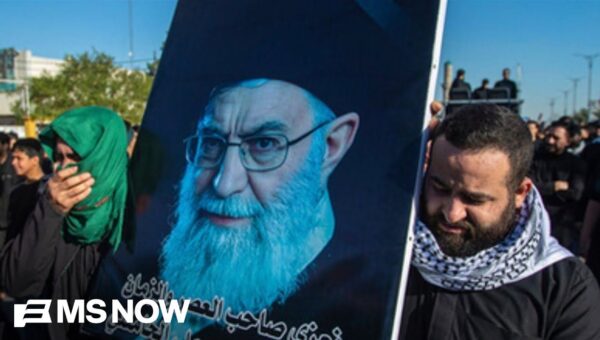
Thousands Mourn Khamenei, Chant ‘Death to America’ in Iran
Thousands gathered in Yazd, Iran, to mourn Supreme Leader Ayatollah Ali Khamenei following reported U.S. and Israeli strikes. The mourning ceremony was marked by chants of "Death to America," highlighting deep-seated anti-American sentiment amid geopolitical tensions.


Middle East Crisis Triggers Global Chaos: Flights, Oil Prices Hit
A major global crisis has erupted following coordinated strikes on Iran, triggering a massive retaliatory response that has impacted multiple countries across the Middle East. The large-scale attacks have caused widespread aviation chaos and pose significant risks to global energy markets and financial stability.