Russia’s Soaring Bills: The Unavoidable Cost of War Hits Home for Ordinary Citizens
Russian citizens are facing unprecedented utility bill hikes and skyrocketing living costs, with many struggling to afford basic necessities. This economic crisis is directly linked to the ongoing "Special Military Operation" in Ukraine, as the state shifts the financial burden of war onto its populace amidst rising inflation and a legacy of corruption. The widespread public outcry reveals a stark reality that challenges official propaganda and signals growing domestic discontent.

Russia’s Soaring Bills: The Unavoidable Cost of War Hits Home for Ordinary Citizens
As the ‘Special Military Operation’ in Ukraine continues, a growing chorus of discontent is emerging from within Russia, not over geopolitical strategy, but over the stark reality of daily economic survival. Across the vast nation, from the bustling streets of Moscow to the more modest towns in the regions, citizens are grappling with unprecedented hikes in utility bills and a skyrocketing cost of living. What was once dismissed as Western propaganda or a problem for ‘rotting Europe’ has now become an undeniable domestic crisis, revealing the true and direct financial burden of the ongoing conflict on ordinary Russian households.
The latest wave of outrage stems from January’s utility bills, which have seen increases far beyond what many can afford. Reports from across social media platforms, including those from prominent bloggers, paint a grim picture of financial strain, forcing Russians to confront the direct economic consequences of their nation’s imperial ambitions.
The Shock of January Bills: An Unprecedented Surge
The new year brought with it a harsh dose of reality for millions of Russians in the form of drastically inflated utility statements. What was once a manageable expense has, for many, transformed into an insurmountable financial hurdle. The transcript reveals numerous personal accounts, each more alarming than the last, showcasing the breadth and depth of this economic shockwave.
One individual recounts receiving a bill for 12,000 rubles for an apartment they haven’t even moved into yet, where electricity, gas, and water usage are minimal. This figure, for a property that is essentially dormant, highlights the punitive nature of the new tariffs. Another resident, previously paying around 10,000-11,000 rubles for a 78.2 square meter, three-room apartment for two people, suddenly faced a bill of 33,829 rubles in January. The sheer jump, a threefold increase, leaves them in disbelief and defiance: “I’m not going to pay that. Sorry.”
The situation escalates further with reports of electricity bills alone reaching astronomical figures. One household described their January electricity bill as almost 47,000 rubles, a staggering increase from 24,000 rubles in December. They lament that this amount is more than their mortgage payment, and that the increase of 23,000 rubles far exceeds the expected 4,000-ruble adjustment for the size of their home. Such drastic increases are prompting calls for official complaints to various government bodies, including the housing inspectorate, the federal monopoly service, and the prosecutor’s office, though the efficacy of such actions in the current climate remains uncertain.
Even those residing in what are considered more modest accommodations are not spared. A resident in Kazan reported a 19,000-ruble utility bill for a 58 square meter apartment, questioning if this could possibly be considered a “normal price.” Another individual, living in a communal apartment, received a bill for over 7,000 rubles for a single room, initially suspecting a double payment due to an oversight. The widespread nature of these complaints, spanning various cities and property types, underscores a systemic issue rather than isolated incidents.
The context provided in the transcript points to a significant policy change: utility rates across the country increased by 20% in January, with a second hike anticipated in June or July. This phased approach, ostensibly designed to give citizens time to “prepare to save up money,” is clearly failing to mitigate the financial distress, especially when initial increases are already crippling. The notion that people should “gather up all my money just to hand it over for utilities” reflects a growing sentiment of desperation and resentment.
Beyond Utilities: A Broader Economic Squeeze
The economic hardship extends far beyond just utility bills. Russians are simultaneously grappling with a sharp rise in the cost of basic necessities, particularly food. The transcript highlights the dramatic increase in grocery prices, transforming everyday staples into luxury items. Tomatoes, once an affordable ingredient, are now reportedly priced at 600 rubles per kilogram. Cucumbers, traditionally a cheap salad component, contribute to a salad that can cost upwards of 1,500 rubles. Even chicken, often a budget-friendly protein, is now fetching 600 rubles, leading some to jokingly contemplate starting their own farms to achieve self-sufficiency.
This general inflation is not a new phenomenon, with previous reports indicating a VAT increase and a sharp rise in overall food prices. However, the current confluence of soaring utility costs and persistent food inflation creates a perfect storm, eroding the purchasing power and quality of life for ordinary citizens. The irony is not lost on observers, who note that while Kremlin officials might dismiss these concerns, the impact on the average Russian’s wallet is undeniable and deeply felt.
Moscow vs. the Regions: A Widening Divide
For years, Moscow has been presented as a showcase of stability and prosperity, largely insulated from the economic struggles faced by other regions. However, the current crisis demonstrates that even the capital is not immune. Millionaire bloggers, often seen as indicators of prevailing sentiment among the more affluent, are openly expressing concern about the unaffordability of housing and utilities. If those with substantial incomes are feeling the pinch, the situation for ordinary Muscovites, let alone residents of more economically challenged regions, is dire.
The transcript explicitly highlights this disparity. While Muscovites complain of 16,000-ruble utility bills for a four-room apartment, a resident in Ufa reports paying 14,184 rubles for a three-room apartment on the city’s outskirts. This comparison underscores a critical point: while Moscow’s standard of living is generally higher, utility rates across the country are often comparable to, or even exceed, those in the capital, making them far less affordable for residents in regions with significantly lower incomes. The “real hunger games” described in the transcript, where citizens are pitted against each other in angry comments over who has it worse, is a stark indicator of the widespread and deep-seated frustration.
This regional disparity has long been a feature of Russia’s economic landscape, with wealth and opportunities heavily concentrated in Moscow and a few other major cities. The current crisis exacerbates these existing inequalities, pushing vulnerable populations in the regions further to the brink. For many, the promise of a better life in the capital has been replaced by a shared struggle against an increasingly hostile economic environment.
The Unavoidable Cost of Conflict: War’s Economic Toll
The most poignant and recurring theme in the public’s outcry is the explicit link between economic hardship and the ongoing ‘Special Military Operation’. The transcript makes this connection unequivocally clear: “Imperial ambitions are always paid for by the citizens of the empire.” The soaring utility bills, rising food prices, and increasing costs of basic services are presented not as isolated economic phenomena, but as a “direct invoice for the war.”
The immense financial requirements of sustaining a large-scale military conflict are undeniable. Missiles, drones, shells, maintaining the army, payments to security forces, and funding the extensive propaganda machine all come at a colossal cost. When the state budget is stretched thin, and revenues are impacted by international sanctions and reduced energy exports, the most straightforward path for the government is to “reach into its own citizens’ pockets.” Every ruble on a utility receipt, as one voice puts it, “is part of a system that turns money into shells.”
This direct correlation between personal financial pain and military spending is a powerful narrative, one that cuts through official rhetoric and propaganda. While state media can spin narratives and justify actions, the numbers on a utility bill are “silent, ruthless, and extremely convincing.” They represent an undeniable truth that propaganda struggles to explain away, forcing citizens to confront the tangible cost of their nation’s foreign policy.
The war’s economic impact is multifaceted. Beyond direct military expenditures, the withdrawal of foreign companies, the disruption of supply chains, and the ongoing international sanctions regime have collectively exerted immense pressure on the Russian economy. While the Kremlin initially dismissed the effectiveness of sanctions, claiming the economy was resilient, the current economic reality suggests otherwise. The need to finance the war and cover burgeoning budget deficits inevitably leads to inflationary pressures and the shifting of financial burdens onto the populace.
Propaganda’s Cracks: Reality Bites Back
For years, state-controlled media meticulously crafted a narrative of Western decline, particularly focusing on Europe’s supposed energy crisis and economic woes. Russians were told that Europeans were “all going to freeze,” paying exorbitant electricity bills of “€200 a month,” and facing imminent societal collapse. These narratives were actively pushed on television, with commentators like Solovyov confidently predicting doom for the West.
The current situation in Russia starkly contradicts this propaganda. As electricity prices in Russia now rival those in Europe, and reports emerge of power outages in regions like Belgorod, the carefully constructed illusion is crumbling. The transcript notes the sudden disappearance of all talk about “Europe rotting, freezing, and paying outrageous electricity prices” from state media. This silence is deafening, highlighting the stark disconnect between the official narrative and the lived experience of Russian citizens.
The realization that sanctions, once dismissed as ineffective, are indeed impacting daily life is a critical turning point. For a long time, the war existed “somewhere on the TV screen,” an abstract concept removed from personal reality. However, when the war arrives “in the form of a bill for electricity, water, and heating,” illusions end. The “greatness of the empire doesn’t heat your apartment or pay for your hot water,” as one commentator observes, exposing the hollowness of nationalist rhetoric in the face of economic hardship.
This dissonance between propaganda and reality creates a fertile ground for disillusionment. The very people who once echoed slogans like “We can do it again” and applauded strikes on Ukraine are now recording videos expressing shock and resentment over their own economic struggles. This shift indicates a growing awareness that the promised national glory comes at a very personal and painful price.
A Legacy of Neglect and Corruption
Adding another layer to the current crisis is the deep-seated issue of systemic corruption and long-standing neglect within Russia’s public services, particularly in the housing and communal services sector. The transcript uncovers a shocking historical precedent: as far back as 2003-2004, an “investment component” was introduced into utility tariffs, ostensibly to fund the repair and modernization of dilapidated infrastructure, such as power lines and pipelines.
Citizens were told that if they paid double their usual tariff, all communications would be “perfect” within five years. Yet, twenty years and four such five-year cycles later, the infrastructure remains in a state of severe disrepair, with 40% wear and tear nationally, and up to 80% in some “forgotten corners of Russia.” Even more damning, a former Deputy Prime Minister, Mr. Kusnelan, openly admitted that officials “still do not know where this component is, where the investment component is, where did its money go.” This public acknowledgment of missing funds, half of the money collected, without any apparent accountability, is a testament to the pervasive corruption that has plagued the sector for decades.
The irony is further amplified by the existence of a special department within the FSB, created in 2001, specifically to combat “especially important crimes in the field of housing and communal services.” Despite this, when specific names are brought forward, officials reportedly claim it’s “impossible” to trace the schemes by which the money disappears. This narrative paints a picture of a state apparatus aware of systemic theft but seemingly unwilling or unable to address it, leaving citizens to bear the financial brunt of both current conflicts and historical malfeasance.
This history of corruption directly impacts the current crisis. Had the “investment component” been properly utilized, Russia’s infrastructure might have been more robust, potentially mitigating some of the recent utility hikes or at least providing a justifiable reason for them. Instead, citizens are paying for a war while also subsidizing a system riddled with inefficiency and graft, exacerbating their financial woes.
The Silent Majority’s Dilemma: Apathy or Action?
A recurring criticism within the transcript is directed at the Russian populace itself for its perceived silence and inaction over the years. The sentiment expressed is that citizens who “stay silent, applauded, support, or simply pretend to be out of politics” for years are now forced to pay the bill. The commentary is sharp: “What should have been done was simple. Not to stay silent all those years and not to support Putin’s bloody rule.”
While the current outrage is widespread, it is largely confined to “kitchens and anonymous chats where it’s safe.” The observation that a “complaint is not a position. It’s an emotion without consequences. Empty cries. Noise without action” highlights the challenges of meaningful dissent in an authoritarian state. The risks associated with public protest or vocal opposition are significant, often leading to arrests, fines, or worse. This environment fosters a culture of self-censorship and political apathy, where individuals prioritize personal safety and stability over collective action.
The transcript suggests a fundamental denial by the state of its citizens’ right to life, even a subsistence minimum. This lack of guaranteed basic welfare, coupled with the repressive political climate, creates a complex dilemma for ordinary Russians. While the economic pain is undeniable and growing, the path to collective action is fraught with peril. The phrase “slaves have neither a voice nor a choice” encapsulates the despair felt by those who feel trapped between economic ruin and political repression.
However, the sheer scale of the current economic shock, particularly in Moscow, could test the limits of this silent consent. When the war moves from the abstract realm of television screens to the tangible reality of the “refrigerator and wallet,” it inevitably sparks a more visceral and personal reaction. Whether this translates into sustained, organized opposition or remains a chorus of “discounted sounds” in private spaces is a critical question for Russia’s future.
Echoes in Occupied Territories
The economic hardship is not confined to the Russian Federation itself. The transcript briefly but significantly notes that in “temporally occupied Ukrainian cities, water tariffs have also doubled.” This occurs despite the fact that essential services like water and heating supplies have often not been fully restored in these areas following the conflict. This detail underscores how Russia’s economic policies, and the burdens they impose, are extended to populations under its control, irrespective of their local circumstances or the state of their infrastructure.
This extension of Russian economic woes into occupied territories further highlights the human cost of the conflict, demonstrating that the financial burden is not only borne by Russian citizens but also imposed upon those in areas brought under Russian administration. It reflects a pattern of prioritizing military objectives and state revenue over the welfare of the civilian population, whether in Russia or in occupied Ukraine.
Expert Analysis and Future Outlook
While the transcript does not quote specific analysts, it alludes to their predictions: “analysts predict this is only the beginning.” This suggests a consensus among economic observers that the current price increases and economic strain are not temporary blips but rather the initial manifestations of deeper, structural problems exacerbated by the war. The Russian budget, under the immense pressure of military expenses and reduced revenues, cannot sustain itself without shifting the burden onto its citizens.
Economists generally agree that financing a protracted conflict of this scale inevitably leads to inflation, currency depreciation, and a decline in living standards, especially when coupled with international sanctions. The government’s options are limited: it can print more money, leading to hyperinflation; it can raise taxes and tariffs, directly impacting citizens; or it can cut non-military spending, which often includes essential social services. Russia appears to be employing a combination of these strategies, with a heavy emphasis on increasing the financial burden on its populace.
The long-term implications are severe. A sustained period of high inflation and declining real incomes can lead to widespread poverty, reduced domestic consumption, and a shrinking economy. It can also fuel social unrest, even in a highly controlled political environment. The erosion of trust in government, particularly concerning issues like corruption in utilities, further undermines social cohesion and stability. The Kremlin’s ability to continue funding its military ambitions without provoking broader domestic discontent will be a key challenge in the coming months and years.
Conclusion: An Invoice for War
The cries of outrage emanating from Russian kitchens and social media feeds are more than just complaints about rising prices; they are, as the transcript vividly puts it, a “direct invoice for the war.” From Moscow to Kazan, citizens are grappling with the harsh reality that every missile launched, every drone deployed, and every military operation undertaken is ultimately paid for through their utility bills, their grocery budgets, and their diminished quality of life.
The narrative of a strong, resilient Russia, impervious to Western sanctions, is being increasingly challenged by the undeniable figures on monthly statements. The contrast between the initial propaganda, which mocked Europe’s energy woes, and Russia’s current economic predicament is stark and deeply ironic. The historical legacy of corruption in the utilities sector only compounds the current financial pain, highlighting a systemic failure to serve the citizens.
While the immediate reaction has been shock and complaint, the long-term implications of this widespread economic distress are yet to fully unfold. The question remains: how long will Russians continue to endure this “miserable survival” and pretend they don’t understand what exactly they are being charged for? As the war continues, the bills will only grow, forcing more and more citizens to confront the true, personal cost of their nation’s imperial ambitions.
Source: 😱Russians are shouting over “SVO”! Total poverty has reached Moscow. Hysteria over rising prices (YouTube)

Related Articles
Trump’s Putin Stance: US Strategy and Global Implications
Analysis suggests Donald Trump's approach to the Ukraine war involves pressuring Kyiv, but US involvement is crucial for resolution. China's influence and the 'MAGA' agenda's geopolitical implications are key factors.

Melania Trump’s Quiet Diplomacy on Ukraine War
Former First Lady Melania Trump has emerged as an influential, though unofficial, voice on the Ukraine war, reportedly shaping her husband's perceptions and engaging directly on humanitarian issues like the deportation of Ukrainian children. Her advocacy, possibly influenced by her European background, has drawn international attention and sparked unique reactions, including widespread social media support from Ukrainians.
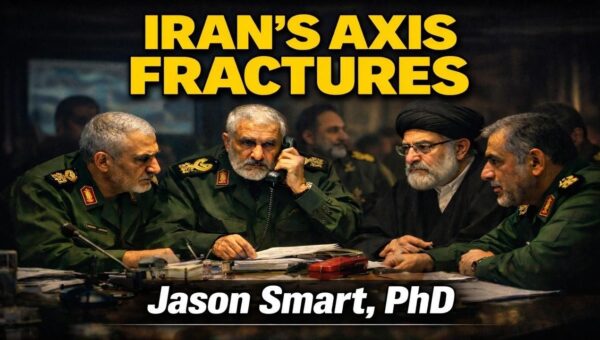
Iran’s Regime Under Siege: Attacks Cripple Leadership, Impact Russia
Iran's regime is reportedly facing critical blows from targeted attacks, crippling its leadership and severing a vital military supply line to Russia. This dual pressure is significantly impacting Russia's war efforts in Ukraine, while internal dissent grows within Iran.