Russia’s Muted Response to Middle East Escalation Puzzles Markets
As the Middle East faces a dramatic escalation with U.S. and Israeli-led strikes on Iran, Russia's conspicuous absence from the conflict has become a central question. Analysts explore whether Russia's non-intervention stems from military constraints, strategic economic benefits from rising oil prices, or a deliberate effort to avoid broader global conflict.

Russia’s Muted Response to Middle East Escalation Puzzles Markets
The Middle East is grappling with a dramatic escalation of conflict, now entering its third day of sustained strikes targeting Iran, primarily led by the United States and Israel. The United Kingdom has also become indirectly involved, allowing U.S. forces to utilize its bases, a move that has already drawn retaliatory actions, including a reported drone strike on a Royal Air Force (RAF) base in Cyprus. This evolving situation is rapidly moving beyond a contained regional dispute, with reports of retaliatory attacks surfacing in other Middle Eastern nations, creating significant concern for hundreds of thousands, potentially millions, of tourists currently in the region.
Western Alliances Mobilize Amidst Rising Tensions
The current geopolitical landscape sees a clear division. On one side, a Western bloc, including the United States, United Kingdom, France, and Germany, along with broader NATO alignments, is involved. The United States and Israel are at the forefront of the ongoing operations. The UK’s position has shifted from initial claims of non-involvement to confirmed indirect support, allowing U.S. forces access to its bases, including those in Cyprus, for what is described as defensive and support purposes. However, the distinction between defensive and offensive action appears blurred, as evidenced by the reported drone attack on a U.S. RAF installation in Cyprus, indicating that even limited involvement is drawing the UK into the conflict and highlighting the volatile nature of such escalations.
European powers like France and Germany are adopting more cautious stances. France has called for de-escalation and restraint while affirming Israel’s right to self-defense. Germany has echoed similar sentiments, offering political backing to Israel but stopping short of indicating direct military involvement. This spectrum of engagement, from direct action by the U.S. and Israel to operational support from the UK and political backing from other European nations, signifies a significant alignment of Western interests.
Iran’s Strategic Partner Remains Silent
On the opposing side, Iran has been cultivating strategic partnerships, most notably with Russia. A comprehensive strategic cooperation agreement signed in January 2024 outlined extensive collaboration, including military, security, intelligence sharing, and economic ties, particularly concerning energy and sanctions. This close relationship led many to anticipate Russia’s involvement should Iran face an attack. However, this expectation has not materialized, leaving observers questioning Russia’s whereabouts and intentions.
Russia’s Calculated Restraint: Three Potential Explanations
The critical point is that the agreement between Russia and Iran is not a mutual defense treaty, unlike NATO’s Article 5. This means Russia is under no obligation to defend Iran militarily, granting it the choice to engage or abstain. Several explanations are being considered for Russia’s current non-intervention:
- Inability to Engage: Russia’s extensive involvement in the war in Ukraine has significantly strained its military resources, depleting manpower and equipment. Opening a second major front in the Middle East would be an immense undertaking, potentially too risky given the ongoing conflict and economic pressures, including rising budget deficits and strained oil revenues.
- Strategic Benefit of Non-Involvement: Instability in the Middle East drives up global oil prices. As a major oil exporter, Russia could financially benefit from higher prices, even if it offers discounts on its crude. Furthermore, a large-scale conflict in the Middle East diverts global attention away from Ukraine, potentially easing pressure on Russia in its ongoing engagement there. From this perspective, standing back could be a calculated strategic move.
- Deliberate De-escalation: Russia might be actively avoiding direct confrontation with the United States and NATO forces. Direct intervention could escalate the conflict from a regional issue to a potential world war, a scenario Russia may be keen to avoid. This restraint, therefore, could be a calculated act rather than a sign of weakness.
Regardless of the specific reason, Russia’s decision not to defend a key strategic partner challenges its image as a global superpower and raises significant questions about its future geopolitical role.
Market Impact: Oil Surges, Volatility Rises
The escalating tensions and Russia’s muted response are already having tangible effects on global markets. Oil prices have surged sharply, trading in the $70-$75 range with spikes even higher, and speculation is mounting that prices could approach $100 per barrel if the conflict intensifies. This is a classic indicator of investor risk aversion, leading to increased volatility and notable declines in stock markets worldwide.
The Middle East is a critical artery for global energy supply and international trade. Disruptions in the region inevitably lead to increased shipping costs, higher insurance premiums, and delivery delays. Moreover, sustained increases in energy prices pose a significant threat to global inflation, potentially reigniting inflationary pressures at a time when many economies are just beginning to stabilize.
What Investors Should Know
The current situation presents a complex geopolitical and economic challenge. Investors are closely monitoring the conflict’s trajectory and Russia’s potential future actions. The surge in oil prices and heightened market volatility underscore the interconnectedness of global security and financial markets. The risk of sustained inflation, coupled with supply chain disruptions, could impact corporate earnings and consumer spending across various sectors. While the immediate focus is on the Middle East conflict, the long-term implications for global energy policy, international relations, and economic stability remain significant.
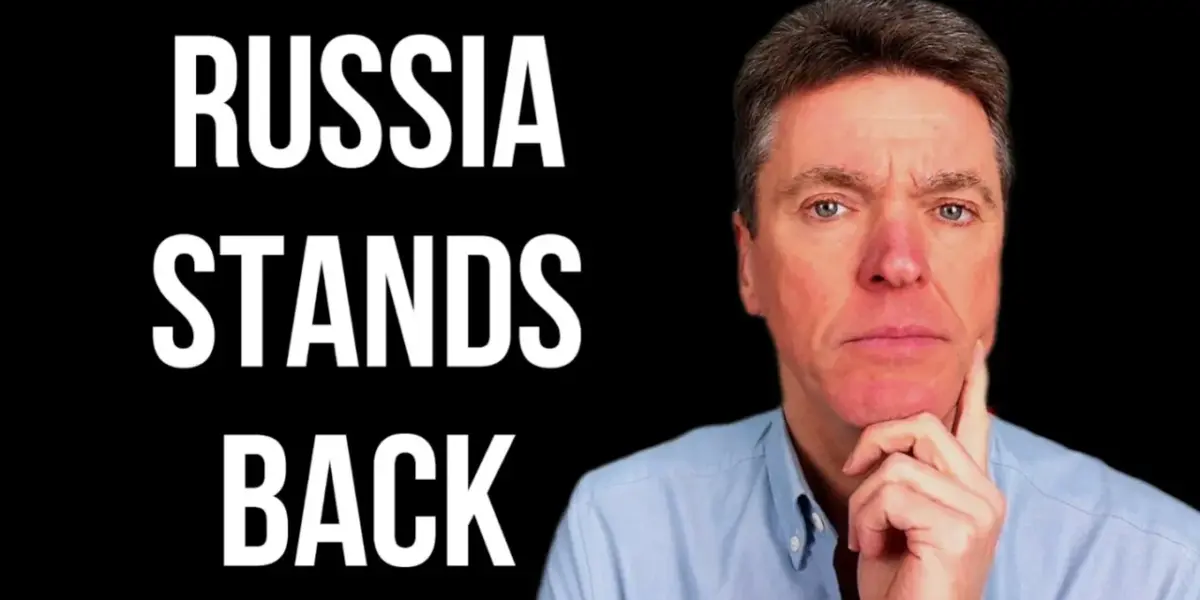
Source: RUSSIA Stands Back (YouTube)

Related Articles


Drapes Over Diplomacy: Trump’s Priorities Under Fire
Donald Trump's focus on drapes and building aesthetics over the human cost of military action against Iran has drawn sharp criticism. The lack of a consistent narrative from his administration regarding foreign policy raises concerns about leadership priorities and accountability.
Trump Predicts Iran Operation Lasting Weeks, Cites Rapid Progress
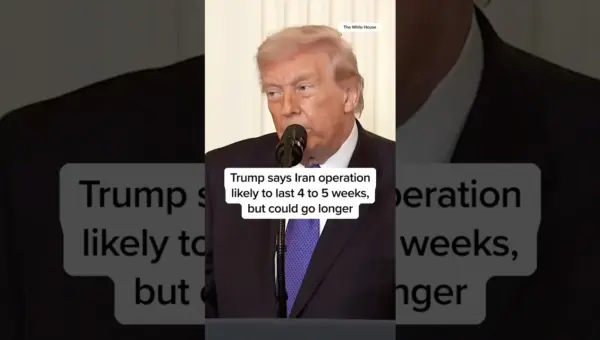
President Donald Trump stated that the U.S. military operation in Iran is progressing ahead of schedule and is likely to conclude within four to five weeks. He emphasized the nation's capability to extend the operation if necessary, signaling flexibility in strategic planning.


Middle East War Escalates: US Jets Downed, Oil Prices Soar
Middle East conflict escalates as US warplanes are shot down in a friendly-fire incident, leading to American casualties and soaring oil prices. The Austin mass shooting is being investigated as potential terrorism, while the search for a missing woman in Tucson intensifies.