Russia’s Last Offensive? Ukraine Faces Crucial Test
Russia may be launching its final major offensive, facing significant manpower and financial challenges. Analysts warn of potential Russian provocations in the Baltic states and discuss Europe's energy independence amid rising prices. Ukraine faces a crucial test to halt the advance, while internal dissent grows within Russia.

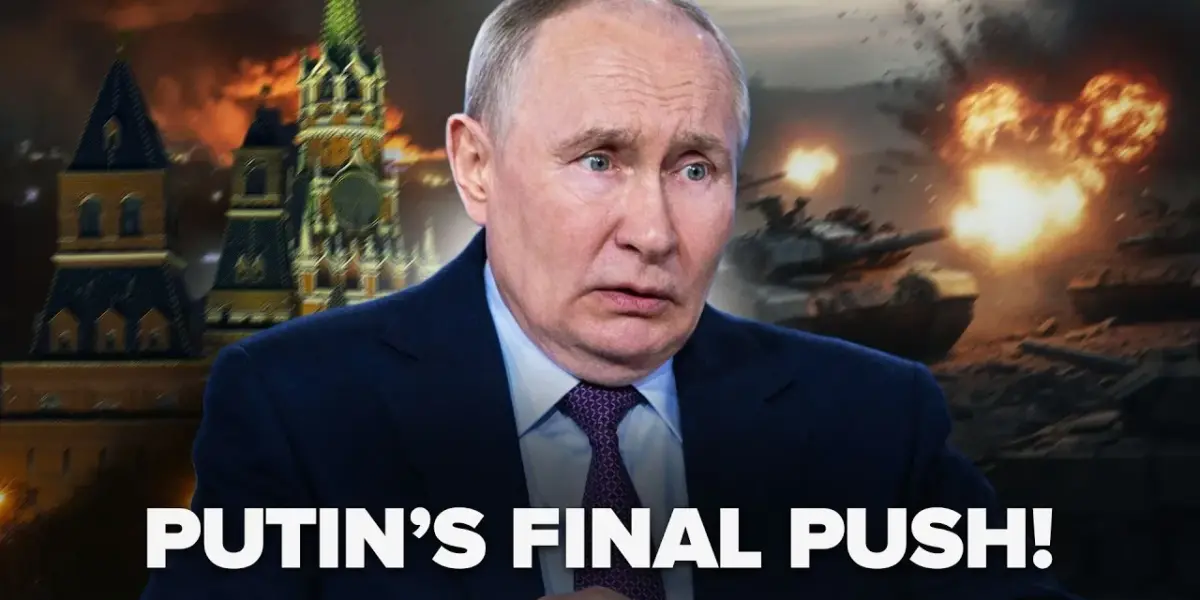
Russia’s Final Offensive? Ukraine Faces Crucial Test Amidst Shifting Global Focus
Recent analysis suggests Russia may be mounting what could be its last major offensive effort, a critical moment for Ukraine to halt the advance and alter the future trajectory of the conflict. This potential final push by Moscow comes as Russia faces mounting constraints in manpower and finances, making this offensive a high-stakes gamble.
Baltic States Under Scrutiny Amidst False Flag Fears
Journalists have published maps detailing potential Russian operations targeting Baltic states, with specific focus on Narva, Estonia. Reports indicate activities mirroring the 2014 Ukraine scenario, with suggestions of a “Narvas People Republic” being formed. Estonian intelligence views these parallels as striking.
Jamie Shea, a fellow at Friends of Europe and former NATO official, noted that military organizations routinely plan for various scenarios. He compared this to Warsaw Pact plans during the Cold War. Shea believes Russian military planning, in its current state, would naturally explore potential attacks on NATO’s perceived weak points, like the Baltic states. He also pointed out the potential for Russia to exploit Russian-speaking minorities in Estonia, Latvia, and Lithuania.
While Shea does not take these specific plans as immediate threats, he sees them as revealing the Russian military’s worldview. This outlook views the West, not just Ukraine, as a hostile adversary needing to be weakened.
Energy Politics and European Independence
Amidst rising energy prices, Russia is reportedly pushing a narrative for Europe to resume buying Russian gas and oil. This is seen as an attempt by Moscow to regain influence through energy dependence. Russia hopes the current energy shock will prompt some European governments to lobby for easing sanctions, potentially delaying or reversing bans on Russian liquefied natural gas and oil imports.
Leaders in Hungary and Slovakia have already argued that the European Union is acting too hastily in cutting off Russian energy. Shea urged the EU to maintain a united front, especially in supporting Ukraine. He pointed to underutilized domestic European gas and oil reserves, including fields in the North Sea, and the potential to import more gas from Norway.
The broader context includes a recent UN report highlighting the Earth’s hottest period in over two million years. This underscores the urgent need to move away from fossil fuels for human survival, not just for geopolitical reasons. Shea advocates for a dual approach: pragmatically increasing domestic European energy production in the short term by adjusting tax regimes and offering incentives. Simultaneously, he stresses the long-term necessity of reducing reliance on fossil fuels to achieve energy independence and avoid political blackmail from any nation.
Battlefield Dynamics: A Mixed Picture
Ukrainian officials report that Russian offensives have stalled, with Ukrainian forces regaining some territory in the southern regions of Zaporizhzhia and Dnipropetrovsk. However, the Institute for the Study of War suggests Russia may intensify operations by April, potentially deploying additional mobilized troops from Crimea.
Shea acknowledged the possibility of a Russian spring or summer offensive. He stated that Putin’s strategy appears to be delaying negotiations while attempting to capture more Ukrainian territory, weaken Ukraine’s position, and destroy its infrastructure. With global attention focused elsewhere, Putin may see this as an opportune moment for territorial gains.
While Ukraine has shown success in defending areas like Kherson and Zaporizhzhia, Russia continues to push in Sumy and Kyiv in the north, presenting a mixed battlefield picture. Shea emphasized that for Ukraine to succeed, it must quickly halt any Russian advance. This requires more drones, heavy armor, long-range artillery, and enhanced capabilities to strike Russian supply lines and logistics.
He reiterated that Russia’s manpower is not inexhaustible. Recruiting foreign fighters is not a sustainable long-term tactic. Russia faces potential manpower and financial problems. Therefore, Shea views this current offensive as potentially Russia’s “last throw of the dice.” Stopping this advance, he believes, would make future Russian offensives far less likely given Russia’s current constraints.
Internal Russian Control and Elite Dissent
Reports indicate Russia has restricted mobile internet access in major cities like Moscow and St. Petersburg. This move appears to prioritize regime control over potential economic consequences. Shea cited the earlier restrictions on Telegram, a messaging app, which impeded Russian military operations but was deemed a necessary price by Putin to control information access for the population.
Shea concluded that Putin’s priority is his own political survival and regime control. If forced to choose between setbacks in Ukraine and maintaining control at home, he will always choose domestic control.
While the Russian economy’s reliance on modern communication technology means these restrictions will have economic impacts, Shea predicts that widespread protests are unlikely in the short term. Putin has largely shielded the Russian population from the war’s realities, with casualties disproportionately affecting rural areas and Central Asia. However, a tanking economy, coupled with Ukrainian attacks on Russian energy facilities, is expected to eventually fuel public discontent and elite dissent, particularly within the business community.
Drawing parallels to the collapse of seemingly strong totalitarian regimes in Eastern Europe during the Cold War, Shea expressed cautious optimism. He noted that while focusing on Russia’s strengths is common, its vulnerabilities are real and can lead to rapid collapse once a trigger occurs. He cannot predict the exact moment but sees historical precedent for change.
Internal Criticism and the Blame Game
Recent statements from Sergey Shoigu, Russia’s former Minister of Defense and now Secretary of the Security Council, have been interpreted in various ways. Shoigu acknowledged that no region in Russia is safe from Ukrainian drones and long-range technologies.
Shea suggested this could be a warning to the Russian population that the government can no longer fully hide the war’s reality. Alternatively, it could be part of a “blame game” within the military establishment. When an army performs poorly, leaders may deflect responsibility to save their own positions.
Shea believes that dissent within the elite, driven by strategic or tactical failures, can eventually trickle down. This internal debate makes it easier for the media and civil society to follow. While grassroots change like popular uprisings seems unlikely, elite cracks could lead to political change in Russia. Shea hopes for more officials to express the reality of the situation rather than attempting to conceal it.
Source: 😱Putin’s regime collapsing! Kremlin is alarmed by failures at front. Russians are rising in revolt (YouTube)

Related Articles

China Faces Tough Choice as Iran Demands Military Aid
China is facing a major foreign policy challenge as Iran demands military assistance. Beijing is reportedly disappointed with Iran's treatment of Chinese vessels in the Strait of Hormuz. China must balance its economic interests and global reputation.
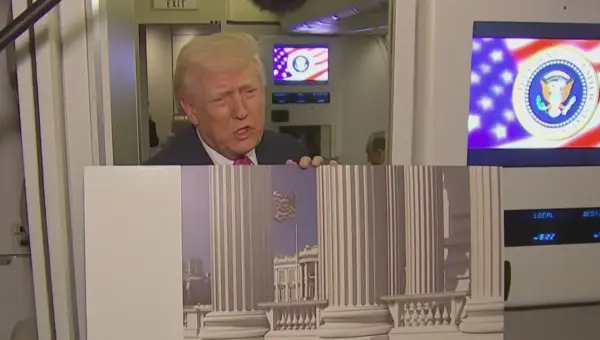
Trump Eyes New Defense Deal Amidst Global Power Plays
Former President Trump outlined ongoing defense negotiations for military assets and detailed enhanced security for the White House. His remarks touched on foreign policy, election integrity, and national security, suggesting a focus on projecting strength and fortifying defenses amidst global uncertainties.


Trump’s Iran Strategy: A Risky Gamble on Regime Change
President Trump claims significant regime change in Iran has already occurred, but critics argue this shows a misunderstanding of the nation's complex power structure. His strategy of combining strikes with negotiation and a focus on removing nuclear capabilities raises concerns about potential military escalation.