Russia’s Key Oil Terminal Hit by Drones
Russian oil infrastructure faced a significant drone attack at the Primorsk export terminal. Meanwhile, Ukraine expands its security role in the Middle East, and the U.S. accelerates troop deployments amid rising regional tensions. Russian ground offensives in Ukraine continue with heavy losses.

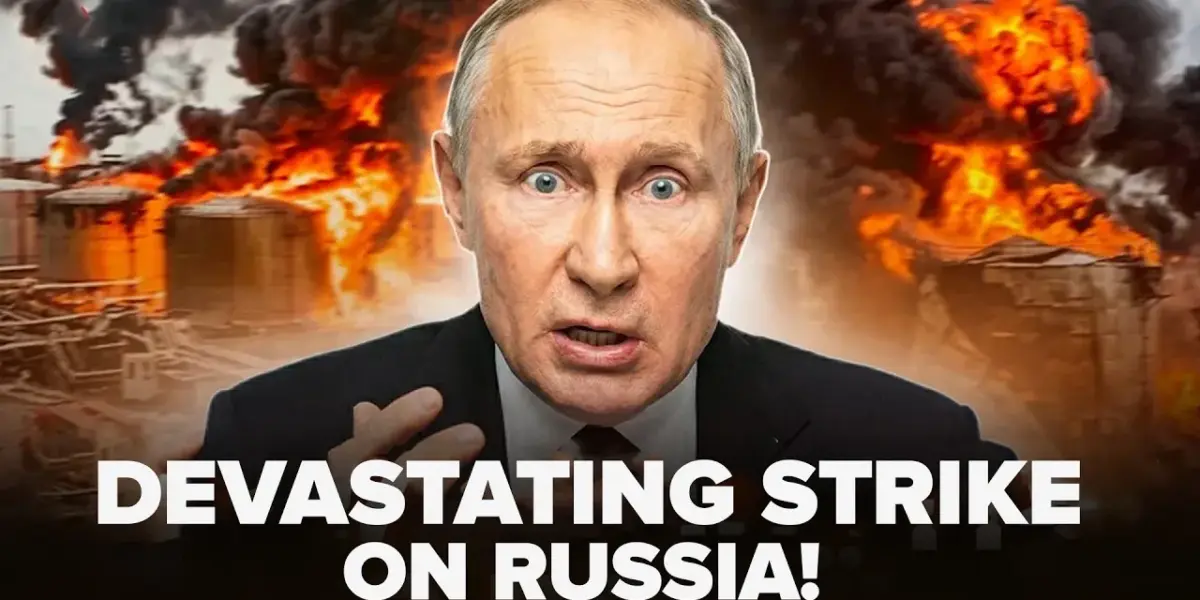
Russia’s Key Oil Terminal Hit by Drones Amid Shifting Sanctions and Geopolitics
Unidentified drones struck one of Russia’s largest oil export terminals in the Baltic Sea, causing a fire and leading to the evacuation of personnel. The attack on the port of Primorsk, located in the Leningrad region, occurred around midnight on March 28th. Russian media reported alerts about drone threats in the region, with similar reports of a drone attack in Smolensk. Videos shared on social media showed air defense systems in action. The strike hit a fuel tank at the Primorsk port, which is a crucial hub for Russian oil exports with a pipeline system capable of handling up to 75 million tons of oil annually. The governor of the Leningrad region, Alexander Drozdenko, confirmed the damage to a fuel tank and the ensuing fire, stating that firefighting operations were underway.
Air defense and electronic warfare systems reportedly destroyed 35 drones during the attack. There were no immediate reports of casualties. This incident comes as the U.S. Treasury Secretary, Janet Yellen, stated that any easing of U.S. sanctions on Russian oil would bring Moscow only about $2 billion in additional revenue. She described this amount as insignificant, noting it represents roughly one day of the Russian Federation’s budget. Yellen believes that easing sanctions actually helps reduce Russia’s revenues by stabilizing global oil prices, thereby limiting Moscow’s potential income.
Ukraine’s Expanding Role in Middle East Security
The drone attack on Russia’s oil infrastructure occurs amid reports of Ukraine stepping up its cooperation with countries in the Middle East. Ukraine is reportedly providing defense expertise and support to help stabilize the region, particularly against drone attacks. These efforts are said to be causing frustration within Russia’s leadership. According to a statement attributed to Ukrainian President Volodymyr Zelenskyy, this situation is “most unacceptable” for countries like Russia when other nations are not acting alone and are not leaving people to face invaders.
Earlier reports indicated that over 200 Ukrainian military experts are assisting Middle Eastern countries in defending against drone attacks. Specialists are currently deployed in three countries, with over 30 additional experts ready for deployment. Ukraine has also sent three specialist teams to the Middle East to counter Iranian-made drones, sharing expertise in drone interception. Beyond sharing knowledge, Kyiv aims to strengthen its own air defenses, including by acquiring advanced missile systems like the Patriot PAC-3.
U.S. Accelerates Middle East Deployment Amid Tensions
Against this backdrop of regional instability and potential Iranian aggression, the United States is reportedly accelerating the deployment of its forces to the Middle East. Reports suggest the U.S. is considering a ground operation to seize Iran’s Hark Island in the Persian Gulf, which serves as a primary hub for Iran’s oil exports. According to sources cited by the Jerusalem Post, U.S. officials have informed counterparts in Israel and other nations that Washington may have no choice but to seize the island to compel Iran to stop blocking shipping through the Strait of Hormuz. Approximately 90% of Iran’s oil exports go to China.
A U.S. official confirmed that the military has accelerated the deployment of thousands of Marines and Navy personnel to the region. This deployment includes the USS Boxer Amphibious Ready Group, comprising the amphibious assault ship USS Boxer, the amphibious transport dock USS Portland, and the USS Comstock. These vessels carry about 4,500 Marines and additional combat personnel. Discussions within the U.S. administration about potentially occupying Hark Island have reportedly begun.
Russia Intensifies Ground Offensive Amid Rising Losses
On the Ukrainian front lines, Russian forces have intensified their offensive operations amid improving weather conditions. However, this surge in activity has been accompanied by sharply rising Russian losses. President Zelenskyy stated that in just one week, Russia lost over 8,000 soldiers killed or seriously wounded. He indicated that the Russian command has become aware of the actual locations of units on the front, which differ from official reports, leading to the replacement of some brigade-level commanders for providing false information.
Despite these intensified efforts, Ukrainian positions in the Luhansk region have not significantly changed over the past week. In the Kharkiv region and border areas of the Sumy region, Russian forces have attempted advances from the border but have been repelled by Ukrainian defenses. Ukrainian assault and airborne units continue active operations, with noted accuracy in deep strikes and plans for further operations approved for the spring-summer campaign.
Diplomatic Efforts and Security Framework Talks
Meanwhile, diplomatic efforts continue, with Ukraine and the United States holding their second round of talks in Florida. These discussions focused on Ukraine’s future security framework and humanitarian issues, aiming to advance a comprehensive peace agreement. Key participants included Ukrainian National Security and Defense Council Secretary Oleksiy Danilov and Head of the President’s Office Andriy Yermak, alongside U.S. representatives including Jared Kushner and Josh Greenblatt. President Zelenskyy expressed gratitude for American support and emphasized the importance of ensuring security guarantees for Ukraine and Europe to achieve lasting peace, stating that the aggressor should not be rewarded for the war.
NATO Secretary General Jens Stoltenberg confirmed ongoing U.S. support for Ukraine, including intelligence sharing and weapons supply through European partners. He noted that while the U.S. is focused on various geopolitical issues, including Iran, ensuring Ukraine’s defense remains a priority. Stoltenberg also mentioned discussions with President Zelenskyy about ending the war and making sure Russia is willing to negotiate in good faith. The discussions highlight a complex geopolitical environment where military actions, economic pressures, and diplomatic negotiations intertwine.
Source: 💥Panic in Russia, explosion after explosion! Putin has lost a key facility. Screams in Moscow (YouTube)

Related Articles
Ukraine Strikes Russian Oil Refinery, Eyes Iran Threat
Ukrainian forces struck a key Russian oil refinery, disrupting Moscow's war capabilities. Meanwhile, Finland's president urged continued U.S. support for Ukraine, as Kyiv shares its air defense expertise globally amid growing geopolitical complexities involving Iran and potential sanctions against Hungary.


Trump Halts Iran Strikes Amid Stalled Diplomacy
President Trump announced a pause on planned strikes against Iran, citing productive talks, though Iran denies negotiations occurred. Reports also suggest a potential U.S. ground operation on Iran's Hark Island. The situation raises concerns about international support for Ukraine and potential shifts in U.S. foreign policy.

G7 Allies Clash Over Iran War Strategy, Urge Focus on Russia
G7 foreign ministers met in Paris, revealing deep divisions over the U.S. war with Iran. European allies urged the U.S. to pressure Russia, linking its actions to the conflict and fearing support for Ukraine will wane.