Russia’s Iran Gambit Backfires: A Drone Supply Chain Crisis
Russia's reliance on Iranian Shahed drones has exposed a critical vulnerability in its war effort. The complexities of securing components and the potential instability of international partnerships pose significant challenges, mirroring broader concerns for Western defense supply chains.

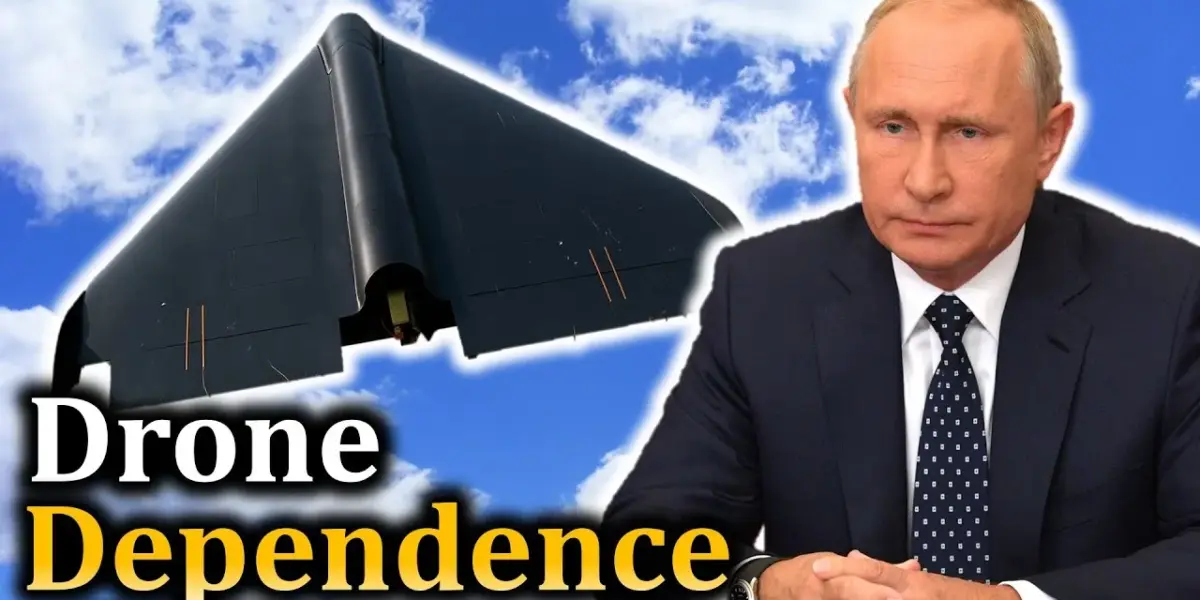
Russia’s Iran Gambit Backfires: A Drone Supply Chain Crisis
The ongoing conflict in Ukraine has evolved from what Russia termed a “special military operation” into a full-fledged war. Amidst this, a critical, yet often overlooked, problem is surfacing for the Kremlin concerning its reliance on Iranian Shahed drones. This issue, rooted in the complexities of international supply chains and trust, has profound implications not only for Russia’s war effort but also for the broader geopolitical landscape, particularly in the context of potential conflicts in the Indo-Pacific.
The Shahed Dependency: A Solution’s Unforeseen Flaw
When Russia’s invasion of Ukraine began in February 2022, the country was not heavily utilizing one-way attack drones. However, as the conflict dragged on, Moscow turned to Iran for a steady supply of Shahed drones. The initial narrative might suggest that a potential termination of these exports by Iran would be the primary concern for Russia. However, the reality is far more nuanced and centers on Russia’s attempt to localize production.
Following the 2014 annexation of Crimea, Russia found itself increasingly subject to Western sanctions, impacting its access to global supply chains for essential military components. This necessity, coupled with a desire to circumvent sanctions, led Moscow to forge closer ties with countries like North Korea and Iran – nations with experience in producing weapons outside of Western-dominated supply networks. The arrangement with Iran for Shahed drones was initially one of technological necessity, evolving into a licensing deal where Russia could produce the drones domestically for a fee. On the surface, this seemed to reduce Russia’s vulnerability to supply disruptions from Tehran.
The Mystery of Domestic Production
The exact state of Russia’s domestic Shahed production remains a significant mystery. While it is known that Russia has factory floors producing these drones, the extent to which they are truly manufactured from scratch is unclear. Russia still relies on external supply chains for critical components, with a substantial portion sourced from China, a global leader in drone manufacturing. Alarmingly, some parts, like German transistors, are reportedly still being acquired from Western countries through third-party intermediaries and black market schemes, highlighting the cat-and-mouse game of sanctions evasion.
A crucial, yet unanswered, question is the extent of Russia’s continued reliance on Iran for specific, complex parts. Given Iran’s longer experience in Shahed production, it is plausible that Russia outsources more intricate components to Iran and then assembles the final product domestically. This scenario, however, introduces a strategic vulnerability for Iran itself.
Iran’s Strategic Leverage and Russia’s Dilemma
International relations, unlike domestic legal systems, lack robust third-party enforcement mechanisms for contracts. The transcript illustrates a potential scenario: Russia approaches Iran for licensing, gains the technical know-how to produce Shaheds, and then, facing no legal recourse for non-payment, simply stops paying the agreed-upon licensing fees. To mitigate this risk, Iran might have structured the licensing agreement to retain control over a critical, complex 10% of the drone’s components, while teaching Russia to produce the remaining 90%. This would allow Iran to “brick” or disable Russian-produced drones if Russia reneged on the deal.
This strategy, however, is contingent on the stability of the Iranian regime. If the current Iranian government were to face collapse or significant disruption (as suggested by the hypothetical “Operation Epic Fury” and the U.S. strategy of proactively targeting drone and missile capabilities), Iran’s ability to enforce such an agreement would be compromised. A disruption to Iran’s production capacity, whether due to internal instability or external pressure, could render Russia’s entire domestic production line useless if it relies on that critical 10% from Iran. This would not only halt production but also render invested resources temporarily worthless.
Even if Russia manages to develop a solution for the missing components, the fast-paced nature of warfare means that by the time they do, Ukraine might have developed countermeasures for the current drone models, rendering Russia’s efforts obsolete.
Historical Context and Broader Implications
The challenges Russia faces with its drone supply chain are not isolated. They mirror concerns prevalent in Western countries, particularly regarding potential conflicts in the Indo-Pacific. Many Western drones used in Ukraine, even those manufactured outside Ukraine, incorporate components from China. This reliance creates a vulnerability: should Beijing decide to support Moscow more directly or engage in conflict, it could cut off these vital supply lines.
The situation with Taiwan is particularly salient. A conflict in the Taiwan Strait would necessitate a robust drone capability for both Taiwan and the United States. However, if China were to impose export bans, access to Taiwanese exports – including crucial components like radio chips and motors used in Western drones – could vanish. Furthermore, the complex, multi-tiered nature of global manufacturing means that even components sourced from Western companies might ultimately contain sub-components manufactured in China, creating a pervasive risk.
Western Efforts and the Race for Supply Chain Resilience
Western nations are actively working to address these vulnerabilities. Initiatives like Latvia’s drone coalition aim to stabilize supply chains. Governments are providing subsidies to domestic drone manufacturers to offset the higher costs associated with excluding Chinese components. Companies like NEROS Technologies, a startup founded by former drone racers, are at the forefront of this effort, progressively shifting their production away from Chinese parts. Their journey from using predominantly Chinese components in early prototypes to aiming for entirely non-Chinese sourcing in later models illustrates the difficulty and gradual nature of this transition.
However, Western startups face a significant hurdle: financial fragility. Unlike the heavily subsidized Russian defense industry, these companies operate on thin margins. A disruption in supply, leading to stockpiles of unusable parts, can quickly lead to financial ruin. Russia, by contrast, can likely absorb temporary production halts due to its state-backed subsidies.
Why This Matters
The intricate web of global supply chains, particularly for advanced military technology like drones, has become a critical factor in modern warfare. Russia’s struggle to localize Shahed production, hampered by its reliance on external components and the potential for its partner, Iran, to be destabilized, highlights the fragility of relying on foreign technology and the challenges of sanctions evasion. This situation underscores that military strength is no longer solely about battlefield tactics but critically hinges on the resilience and control of logistics and supply chains.
Trends and Future Outlook
The trend towards onshoring and diversifying supply chains, especially for critical technologies, is likely to accelerate. Western nations will continue to invest in domestic production capabilities and foster partnerships to reduce reliance on geopolitical adversaries. The development of more resilient, adaptable manufacturing processes will be paramount. For Russia, the challenge will be to secure alternative, reliable sources for components or to achieve true domestic self-sufficiency, a difficult task given its economic constraints and existing sanctions. The ongoing technological race means that both sides must not only secure components but also ensure their manufactured goods remain relevant against evolving threats and countermeasures.
Source: The Hidden Problem Russia Faces with Iran's Destruction (YouTube)

Related Articles

G7 Allies Clash Over Iran War Strategy, Urge Focus on Russia
G7 foreign ministers met in Paris, revealing deep divisions over the U.S. war with Iran. European allies urged the U.S. to pressure Russia, linking its actions to the conflict and fearing support for Ukraine will wane.

Iran Blocks China Ships, Exposing Beijing’s Weak Grip
Iran's recent decision to block Chinese ships at the Strait of Hormuz is exposing the limits of Beijing's influence in the Middle East. This action is causing delays and cancellations for Chinese manufacturers, turning a perceived geopolitical win into an economic strain.
Rubio: US Can Achieve Iran War Goals Without Troops
Senator Marco Rubio outlined a strategy to counter Iran without deploying U.S. ground troops, focusing on weakening the regime and enhancing maritime security. He also criticized Cuba's economic system and expressed concerns about West Bank violence.