Russia’s Internet Blackouts Cripple Key Services
Russia is grappling with severe internet outages that have crippled major banks, telecom services, and state portals. The disruptions, linked to Roskomnadzor's information control efforts, are impacting daily life and raising concerns about the country's technological stability and internet freedom.


Russia’s Internet Blackouts Cripple Key Services
Russia is experiencing severe and widespread internet outages that are disrupting vital services, including major banks, telecommunications, and state-run platforms. This marks the second significant blackout in a short period, highlighting a growing problem for the Russian Federation. These disruptions are not just minor inconveniences; they are impacting the daily lives of citizens and the operations of critical national infrastructure.
The recent outages have affected prominent entities like Alpha Bank, one of Russia’s largest financial institutions, and NTV Plus, a major television provider. Ros Telecom, the state-owned telecommunications company, has also been impacted. These failures extend to government services, with state service portals like ‘Gosuslugi’ becoming inaccessible. This situation places Russia second only to North Korea in terms of internet freedom and access, according to recent assessments.
Roskomnadzor’s Role and Unintended Consequences
Roskomnadzor, the Russian government agency responsible for filtering information and censoring content, appears to be at the center of these disruptions. The agency’s efforts to control online information, by blocking certain websites and messengers like Telegram, are reportedly causing these widespread system collapses. While the stated goal is to prevent citizens from accessing what the Kremlin deems ‘bad news’ or ‘dangerous’ content, the methods employed are proving to be highly disruptive.
These actions are particularly problematic in the 21st century, where internet access is fundamental for business, education, and daily communication. The agency’s attempts to block or restrict internet access are proving difficult to execute perfectly. They are struggling to manage various forms of internet connectivity, including VPNs, mobile data, and optical networks, leading to system failures. This is a stark contrast to the internet’s role in Russia over the past decades, where it has become deeply integrated into society.
Impact on Daily Life and Business
The consequences of these internet failures are far-reaching. Citizens are facing difficulties with basic transactions, unable to pay for services or access essential information. During a previous outage on April 3rd, the system failures were so severe that Moscow’s metro system had to allow passengers to enter without payment because ticketing systems were down. This inability to conduct even simple transactions highlights the fragility of systems reliant on continuous connectivity.
The situation is causing significant frustration and economic disruption. Businesses reliant on online platforms are suffering, and individuals are finding it increasingly difficult to communicate, learn, or travel. The government’s approach, which seems to prioritize information control over functional infrastructure, is seen by some observers as counterproductive, potentially accelerating the instability of the current regime.
Broader Implications and Geopolitical Context
The internet shutdowns also raise questions about Russia’s technological capabilities and its commitment to digital freedom. The country’s ranking alongside North Korea in internet freedom is a significant development, suggesting a deliberate move towards greater information isolation. This isolation could have long-term economic and social consequences for Russia.
The comments from Pavel Durov, the CEO of Telegram, highlight the complexities of navigating government restrictions. While Telegram was previously banned in Russia, Durov’s current criticisms of the disruptions and financial losses suggest a shift in the relationship between tech companies and the Russian state. This contrasts with narratives often promoted by pro-Russian sources that suggest greater freedom of speech in Russia compared to Western countries. However, major platforms like X, Instagram, Facebook, and YouTube are banned in Russia, with access often requiring VPNs, a fact that undermines claims of widespread online freedom.
Strategic Implications
The ongoing internet disruptions in Russia represent a significant challenge to the country’s internal stability and its integration with the global digital economy. By prioritizing information control over functional infrastructure, the Russian government risks alienating its population and hindering economic activity. The inability of critical services like banking and state portals to operate effectively demonstrates a critical vulnerability. This situation could lead to increased public discontent and further economic hardship. The international perception of Russia as a technologically capable nation is also being undermined, potentially impacting foreign investment and technological collaboration.
Source: RUSSIA BANKS DOWN: CASH ONLY PANIC Vlog 1372: War in Ukraine (YouTube)

Related Articles
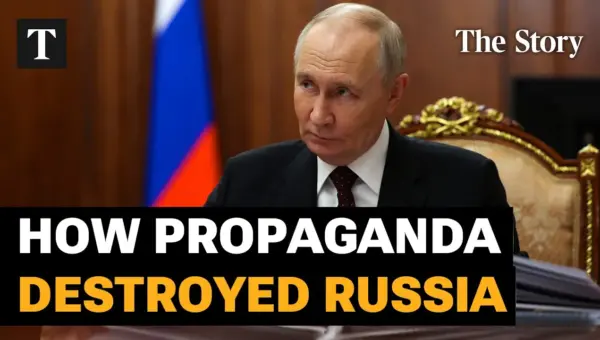
Putin’s Russia: 25 Years of Propaganda and Paranoia
For 25 years, Mark Bennett lived in Russia, witnessing its transformation under Vladimir Putin. His firsthand account details the rise of state propaganda, the erosion of truth, and how a nation seemingly sleepwalked into conflict, influenced by a narrative of Western hostility and Russian destiny.

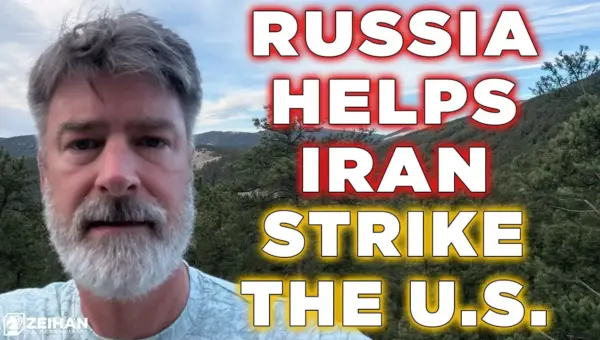
Russia Aids Iran in Striking US Base
Russia has provided Iran with crucial targeting intelligence, enabling a successful strike on a U.S. military base in Saudi Arabia. This alarming collaboration highlights growing Russian support for anti-U.S. actions and raises serious questions about American military defenses and global security.


AI Leaders Warn of Risks, Sparking Global Debate
AI leaders like Sam Altman are warning about job losses and new disease threats, sparking global debate on regulation. Experts discuss the complex motives of AI developers and the real dangers of cyber and biological attacks. The rapid advancements necessitate careful consideration of ethical development and international cooperation.