Russia’s Economy Strains as SMEs Face Tax Hikes Amid War
Small businesses in Russia are reportedly struggling with increased taxes and falling demand, a situation highlighted by a direct appeal to President Putin. Meanwhile, diplomatic efforts for peace in Ukraine remain stalled, with fundamental disagreements over territorial concessions and sovereignty. European unity is also tested as Hungary threatens to block sanctions against Russia, while Eastern European nations bolster their defenses against perceived Russian aggression.

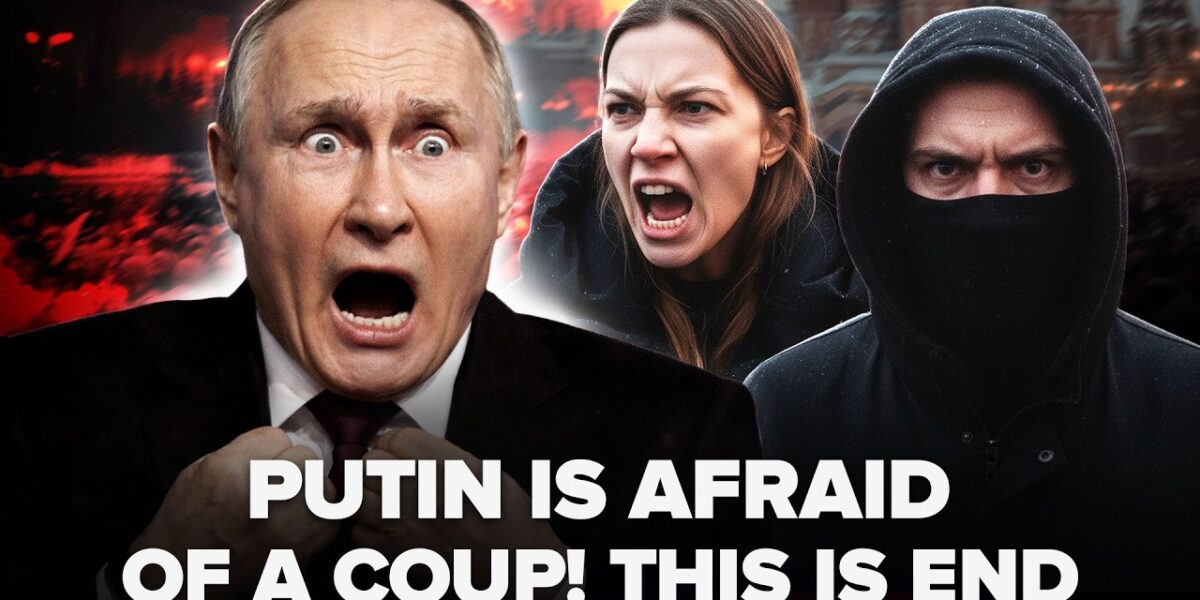
Kremlin Faces Internal Economic Pressure as Businesses Suffer
Four years into Russia’s full-scale invasion of Ukraine, a narrative promoted by the Kremlin—that of a resilient Russian economy strengthened by sanctions—is facing increasing scrutiny. Reports indicate that small businesses across Russia are struggling under the weight of rising taxes, declining consumer demand, and escalating operational costs. This economic strain is evidenced by an increasing number of vacant storefronts on major city streets, a stark contrast to the image of prosperity often projected by the government.
Direct Appeals to Putin Highlight SME Struggles
The challenges faced by small and medium-sized enterprises (SMEs) were brought into sharp focus during President Vladimir Putin’s annual televised call-in show. A bakery owner from the Moscow suburbs directly addressed the president, voicing concerns over recent tax reforms that have significantly increased the financial burden on small businesses. While Putin promised to investigate the issue and even made a lighthearted remark about receiving pastries, the interaction highlighted a deeper economic reality.
The reforms in question have led to a sharp reduction in the revenue threshold for many small firms, requiring them to pay value-added tax (VAT). This effectively multiplies their tax obligations. Entrepreneurs nationwide report that survival is increasingly dependent on downsizing operations, liquidating assets, or ceasing business altogether.
Testimonies from Affected Entrepreneurs
“We used to pay about 120,000 rubles in taxes a year. Now, after switching to VAT, our average tax bill is 250 to 300,000 rubles a month. I’m terrified for tomorrow. I already closed one salon because of the tax reform. It’s scary to grow, scary to move anywhere. We’re just trying to preserve what we have.”
This quote from the owner of a beauty salon chain in St. Petersburg illustrates the dramatic increase in tax liabilities. The owner expressed fear for the future and the difficult decisions being made to simply maintain existing operations.
Wartime Economy Drives Tax Increases
Economists explain that Russia’s war-driven budget is under considerable strain. Weakening oil revenues, rising deficits, and sustained high military expenditures are forcing the Kremlin to seek additional funding. The government is increasingly relying on consumers and small businesses to fill the fiscal gap.
Diplomatic Stalemate: Summit Prospects Diminish
Amidst these internal pressures, diplomatic efforts to resolve the conflict in Ukraine remain complex and challenging. Recent discussions about a potential meeting between Ukrainian President Volodymyr Zelenskyy and Russian President Vladimir Putin have been met with skepticism. Analysts suggest that such a meeting, if it were to occur, would likely be a high-profile event with little prospect of substantive breakthroughs due to the fundamental divergence in the war aims of both nations.
The United States has reportedly floated proposals for direct talks between Kyiv and Moscow, potentially including a trilateral summit with former President Donald Trump. However, key conditions set by Washington, such as the requirement for a deal to be in sight before any meeting, effectively render such summits improbable. The core positions remain mutually exclusive: Russia demands territorial concessions, neutrality, and a strategic weakening of Ukraine, while Ukraine insists on preserving its land, people, and sovereignty.
Clash of War Aims
As one observer noted, “This is not a gap in details. This is a clash of war aims.” The territorial issue itself, a core demand of the Kremlin and a red line for Kyiv, remains a significant obstacle. Under these circumstances, a leaders’ meeting is seen by many as unlikely to unlock peace but rather to stage a visible deadlock.
The promotion of such summits by the West is interpreted by some as a political instrument for pressure and signaling. It demonstrates diplomatic activity to domestic audiences while signaling to both Moscow and Kyiv a desire for a swift political resolution. However, a rapid outcome is widely seen as achievable only through concessions, and the expectation of these concessions is primarily directed at Ukraine.
Ukraine’s Unwavering Stance on Sovereignty
President Zelenskyy has consistently argued that Russia uses negotiation talks as a delaying tactic to impose its terms without altering battlefield realities. He has made it clear that Ukraine will not trade territory for a ceasefire. Any pause achieved through concessions, he believes, would only grant Moscow time to regroup and resume aggression.
Ukraine’s position remains that restoring its internationally recognized borders is both a strategic objective and a matter of justice. This must be achieved without catastrophic human losses and with sufficient military capability. Zelenskyy frames the war as a broader confrontation, an attempt by Russia to impose its model of power beyond Ukraine and reshape the global order. He points to the continued functioning of the Ukrainian state under full-scale invasion as evidence that defeat is not inevitable.
Dependence on Western Support
The pace of Ukraine’s territorial recovery is heavily dependent on the timely provision of Western weaponry, particularly air defense and missile systems. Ukraine’s requests for permission to domestically produce certain US-designed systems are still pending approval. For Ukraine, the stakes extend beyond its own borders, influencing the scale and nature of Russia’s wider confrontation with the global order.
European Divisions and Sanctions Pressure
Ukraine faces pressure not only from Moscow but also from within the European Union. Hungary and Slovakia have escalated threats regarding energy supplies to Ukraine, linking them to political concessions. This pressure comes as Russia intensifies its attacks and seeks to fracture European unity ahead of renewed diplomatic maneuvers.
Hungary’s Sanctions Stance
Hungary, in particular, has threatened to block EU financial assistance to Ukraine and veto the EU’s 12th package of sanctions against Russia. Hungarian Foreign Minister Péter Szijjártó stated that Hungary would block the adoption of the sanctions package until oil shipments to Hungary resume, linking this to alleged risks facing ethnic Hungarians in Ukraine—a justification Kyiv views as politically motivated.
European leaders have expressed dismay at Hungary’s stance. Germany’s Foreign Minister stated that Berlin is astonished by Budapest’s actions and warned that it would be wrong for Hungary to betray its struggle for freedom and European sovereignty. Officials in Brussels anticipate that the sanctions package will eventually pass, but acknowledge that Hungary and Slovakia are deliberately slowing the process to extract energy concessions.
Eastern European Nations Bolster Defenses
Meanwhile, Eastern European nations are rapidly expanding their defenses and investing in long-range strike capabilities and border fortifications, anticipating a potential major war with Russia. Countries like Finland, the Baltic states, and Poland are moving towards a permanent readiness posture, understanding that deterrence requires Moscow to know that any conflict could extend to Russian territory.
These nations are building robust mobilization systems and territorial forces. As the United States potentially reduces its role, the continent’s defense is expected to rely increasingly on coalitions of states that view the Russian threat as existential. The eastern and northern parts of Europe are emerging as the core of deterrence, with frontline states systematically preparing for the scenario of a direct confrontation with Russia.
Source: 😱Angry Russians appealed to Putin! Kremlin using its own people. Russia being destroyed from within (YouTube)

Related Articles
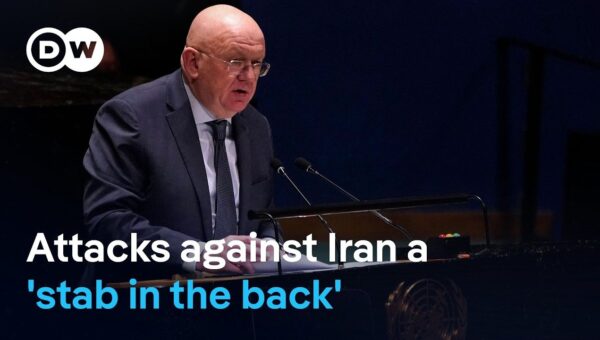
Putin Condemns US Strikes on Iran as ‘Cynical Violation’
Russian President Vladimir Putin has condemned US air strikes on Iran, calling them a "cynical violation" of international law and morality. While Moscow offers strong words of support, experts suggest Russia's practical aid to Iran may be limited by capacity and logistical constraints. The incident also raises questions about Russia's global standing and its impact on the war in Ukraine.

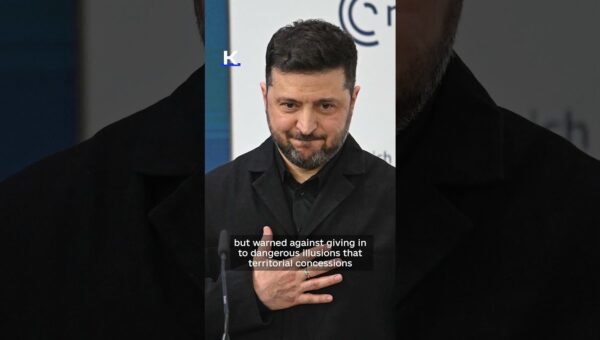
Europe Faces Post-Cold War Order Collapse After Munich Security Summit
Western leaders at the Munich Security Conference acknowledged the end of the post-Cold War security order, raising concerns for Europe's future. Ukrainian President Zelenskyy urged continued support against territorial concessions, while transatlantic tensions underscored the shifting geopolitical landscape.
Trump’s Putin Stance: US Strategy and Global Implications
Analysis suggests Donald Trump's approach to the Ukraine war involves pressuring Kyiv, but US involvement is crucial for resolution. China's influence and the 'MAGA' agenda's geopolitical implications are key factors.