Russia’s Economy Crumbles: Citizens Cursing Putin Amidst Poverty
Russia faces a deepening economic crisis, with citizens lamenting poverty and rising prices despite President Putin's claims of stability. Experts warn of recession and default, while citizens express frustration over funds being diverted to war efforts.

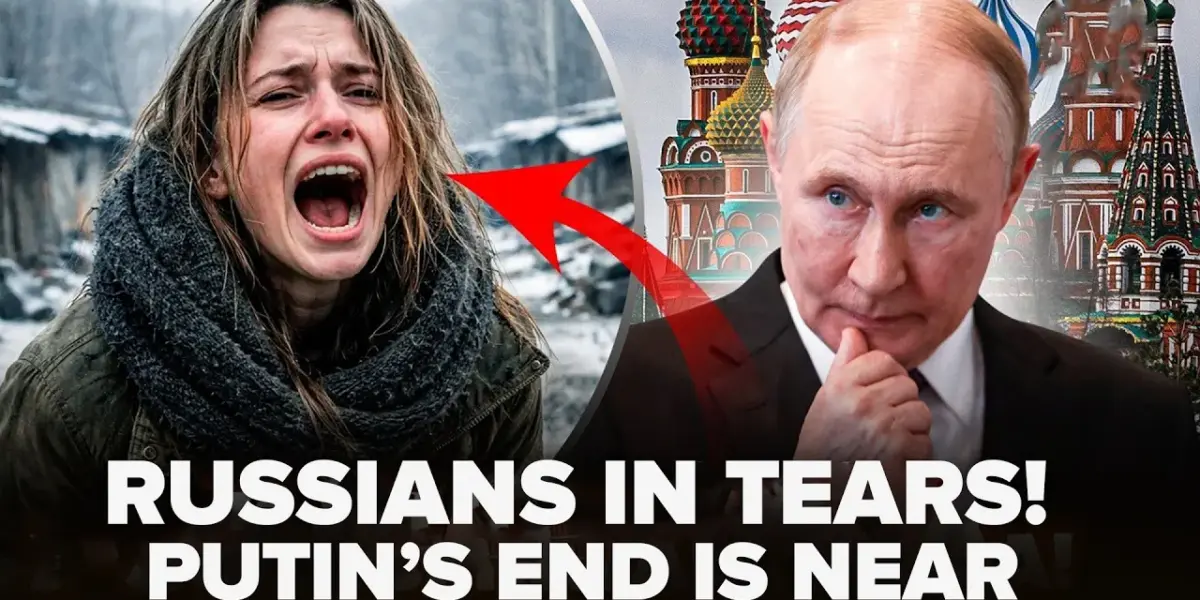
Kremlin’s Propaganda Fails as Economic Woes Grip Russia
In a stark contrast to official pronouncements of stability, new reports and citizen testimonies reveal a deepening economic crisis across Russia. Despite President Vladimir Putin’s claims of a robust economy, rising prices, business closures, and delayed salaries paint a grim picture for ordinary Russians. The Kremlin’s usual propaganda channels appear to be losing their grip, forcing Putin himself to address the nation directly in an apparent attempt to quell growing discontent.
Putin’s Reassurance Rings Hollow Amidst Soaring Prices
Speaking recently, President Putin asserted that Russia’s economy is stable, with no inflation and all systems under control. He emphasized the nation’s growing economic and technological potential, aiming to reassure a populace increasingly grappling with hardship. “We increase the economic and technological potential of the regions which means that we serve the task of spatial development of Russia with its vast territory,” Putin stated. However, this narrative is increasingly being met with skepticism and disbelief from citizens on the ground.
“Control? It’s laughter through tears. Russia is rolling to the bottom and even he feels it because the only thing that is stable in Russia is rising prices. Businesses are steadily closing. Salaries are steadily being delayed even at defense factories.”
The disconnect between official rhetoric and lived reality is becoming undeniable. While the Kremlin projects an image of economic resilience, anecdotal evidence and expert analysis suggest a far more precarious situation. The simple act of grocery shopping has become a stark illustration of this disparity. One citizen expressed shock at the cost of a Greek salad, noting, “A thousand rubles are not enough to make a Greek salad. I have 900 rubles on my card. That’s all I could buy. All cheese, tomatoes, cucumbers, and pepper. I’m just shocked. Prices. What is happening? I leave the store and almost cry.” This sentiment is echoed by many, who find their purchasing power drastically diminished.
Experts Sound Alarm on Looming Recession and Default
Beyond individual consumer struggles, economic experts are issuing dire warnings. Spring 2024 has seen Russia’s economy characterized as “extremely unstable,” with the specter of a new default on the horizon. Projections for the ruble’s value are bleak, with some analysts predicting it could fall to 140-150 against the dollar by the end of the year if current trends persist. The real economy is reportedly heading towards a full-fledged recession, marked by significant reductions in industrial output and the implementation of shorter work weeks at many enterprises.
Defense Industry Hit by Salary Delays
Even sectors considered crucial to the state, such as defense manufacturing, are not immune to the economic downturn. Reports indicate salary delays at these very factories, a situation that undermines the government’s claims of stability and its ability to fund key national priorities. This points to systemic financial strain that is reaching even the most vital industries.
Citizen Discontent Grows: “Forced to Sponsor a War”
Frustration among the Russian populace is bubbling to the surface, with citizens openly questioning the government’s economic policies and priorities. In online discussions, many express a sense of being exploited to fund a conflict they do not support. One anonymous individual stated, “Everyone has already discussed how we raise VAT, how prices rise with this. But why is no one saying that we are being forced to sponsor a war with which we do not agree?” The sentiment suggests a growing disillusionment with how national resources are being allocated, with funds seemingly diverted from domestic needs to military expenditures.
“Do you really think that this tax increase will be used to improve our yards or maybe to improve the level of education or healthcare?”
The feeling is that the burden of the ongoing conflict is falling disproportionately on the shoulders of ordinary citizens, while the elite remain insulated from the economic hardships. This growing resentment poses a significant challenge to the Kremlin’s authority.
Social Spending Cuts and Degradation of Public Services
The financial strain is also leading to significant cuts in regional budgets, impacting essential public services. The Primorsky Krai region, for instance, recently slashed its 2026 budget by 3 billion rubles, just three months after its initial adoption. Funds previously earmarked for education, including equipping schools and repairing children’s camps, have been significantly reduced. Similar cuts are affecting social welfare, culture, and emergency response services. These reductions are attributed to the diversion of funds towards military operations, illustrating a clear trade-off between domestic development and ongoing conflict.
Deterioration in Science, Education, and Technology
Experts also point to a broader degradation across key sectors like science, education, and technology. Research is reportedly hampered by restrictions, and the study of certain countries is implicitly or explicitly discouraged. The aviation industry faces challenges with maintenance and route cancellations due to aircraft unserviceability, a consequence of sanctions impacting access to parts and services. This systemic decay, experts argue, is a direct result of the prolonged period of international sanctions and the economic policies pursued by the government.
Sanctions Taking Their Toll, Regime Facing Internal Pressure
After years of sanctions, their cumulative effect on the Russian economy is becoming increasingly apparent. The government’s attempts to maintain a facade of stability are reportedly faltering as the budget deficit widens and the burden shifts to citizens through increased taxes and prices. Even major state-owned corporations like Rosneft and Gazprom are reporting substantial losses, further straining state finances. The upcoming increase in VAT to 30% is expected to exacerbate the financial pressure on households.
The situation is characterized by a widening gap between the Kremlin’s optimistic pronouncements and the harsh economic realities faced by its citizens. This growing dissonance suggests that the internal structures of the Russian government may be under significant strain. As economic indicators continue to decline, the focus is shifting from territorial gains to the fundamental stability of the Russian state and its ability to provide for its populace. The coming months will be critical in determining whether the Kremlin can navigate these mounting economic challenges and quell the rising tide of public discontent.
Source: 😱RUSSIANS ARE CUSSING OUT PUTIN! TOTAL POVERTY HITS Russian cities. Kremlin regime is collapsing (YouTube)

Related Articles

MAGA’s Blind Spot: Trump’s Economic Betrayal Ignored
While MAGA supporters voice anger over issues like the Epstein files, a critical economic betrayal by Donald Trump appears to be overlooked. The persistent rise in inflation and its impact on everyday Americans demands greater attention and accountability.
Lavrov’s Sanctions Shift: Russia Abandons Ally Amidst Global Tensions
Russian Foreign Minister Sergey Lavrov announced Russia will not impose sanctions on the U.S. amid escalating Middle East tensions. This comes as a drone attack targets the Saudi embassy in Iran, prompting a U.S. pledge for swift retaliation. The geopolitical landscape is further complicated by evidence of Russian components in Iranian drones and concerns over European disunity.
Russia’s Global War Falters: Putin Faces Mounting Crises
Russia's war in Ukraine is revealed as part of a larger global conflict, with Moscow facing internal instability and economic strain. Facing mounting pressures, the Kremlin is employing distraction tactics and seeking unreliable allies, while its strategic miscalculations have led to significant global ramifications.