Russia’s Economic Paradox: Rate Cut Amid Rising Inflation Signals Deepening Crisis
The Bank of Russia's recent decision to cut interest rates to 15.5% has sparked concern, as it contradicts rising inflation and a deteriorating economic outlook. This move, meant to stimulate growth, highlights a deepening crisis characterized by a disconnect between official and public inflation figures, an unsustainable wartime economy, and plummeting oil revenues. Russia's high interest rates place it alongside struggling economies globally, signaling profound long-term challenges.

Russia’s Economic Paradox: Rate Cut Amid Rising Inflation Signals Deepening Crisis
In a move that has sent ripples through financial markets and raised eyebrows among economists, the Bank of Russia recently announced a surprising cut in its key interest rate to 15.5%. This decision, seemingly counter-intuitive given the backdrop of persistent and recently rising inflation, underscores the complex and increasingly perilous economic tightrope Russia is walking amidst the ongoing conflict in Ukraine and escalating international sanctions. Far from signaling economic stability, this ‘shock decision’ appears to be a desperate attempt to stimulate a faltering economy, revealing a deeper crisis beneath the surface of official pronouncements.
The Central Bank’s Conundrum: Battling Inflation While Fueling Growth
Central banks globally typically wield interest rates as their primary tool to manage inflation. An increase in rates makes borrowing more expensive, thereby dampening demand, reducing spending, and theoretically bringing prices down. Conversely, a cut in rates lowers borrowing costs, encouraging investment and consumption, which can stimulate economic growth but risks exacerbating inflationary pressures. The Bank of Russia, like its counterparts worldwide, is mandated to maintain economic stability, with inflation control being a cornerstone of this responsibility. Its target inflation rate stands at 4%, a figure notably higher than the 2% typically aimed for by major Western economies, despite Russia’s classification as an ‘advanced economy.’
The journey of Russian inflation since the full-scale invasion of Ukraine in February 2022 has been volatile and concerning. Immediately following the invasion, inflation surged past 16%, a level indicative of severe economic stress. While it subsequently retreated, averaging between 8% and 10% over the past four years—still more than double the central bank’s target—recent data for January showed a renewed uptick, climbing to 6% from 5.6% in December. This resurgence, after a period of decline from a peak of 10.3% in March, presents a significant challenge. For any conventional central bank, an increase in inflation would typically warrant consideration of rate hikes, not cuts. The Bank of Russia’s decision to reduce rates in this environment thus appears to prioritize short-term economic stimulation over the immediate battle against rising prices, a strategy fraught with risk.
The Disconnect: Official Figures Versus Public Reality
Perhaps one of the most alarming indicators of Russia’s economic predicament is the stark divergence between official inflation statistics and the public’s perception of price increases. While the official January inflation rate stands at 6%, surveys within Russia reveal that households anticipate future inflation to be around 13.7%. This figure is more than double the official rate and represents some of the highest inflation expectations observed in the past five years, with projections consistently above 12% for 2025 and early 2026. This significant ‘disconnect’ between reported figures and lived experience suggests a profound erosion of trust in official data and hints at a far more challenging inflationary environment on the ground. Such a gap can undermine economic planning, distort consumer behavior, and potentially sow the seeds of social discontent as purchasing power steadily diminishes for ordinary citizens.
The implications of this public perception are far-reaching. If individuals and businesses expect prices to rise significantly, they may adjust their behavior accordingly—demanding higher wages, accelerating purchases, or hoarding goods—all of which can become self-fulfilling prophecies, further entrenching inflationary spirals irrespective of official interest rate decisions. In an economy where public trust in institutions is already fragile, this divergence poses a formidable obstacle to effective monetary policy.
A Rollercoaster of Interest Rates: A Reflection of Crisis Management
The trajectory of Russia’s interest rates over the past five years reads like a dramatic chronicle of crisis management. In the immediate aftermath of the Ukraine invasion, the Bank of Russia executed an emergency hike, soaring rates to an unprecedented 20% to stabilize the ruble and prevent a financial meltdown. This drastic measure, though painful, achieved its immediate goal. Rates then fell rapidly, perhaps more quickly than anticipated, reaching 7.5%—a level even below pre-war rates, an odd move given the ongoing conflict. This period of rapid reduction was likely an attempt to cushion the economy from the initial shock of sanctions and to encourage some level of domestic activity.
However, this respite was short-lived. Between mid-2023 and early 2025, interest rates surged once more, peaking at an extremely prohibitive 21%. Such high rates are designed to aggressively combat inflation and support the currency but come at the cost of stifling investment and growth. The most recent nine months have seen a gradual reduction, bringing the rate down to the current 15.5%. This latest cut, despite the January inflation rise, suggests a shift in priorities, perhaps signaling that the Kremlin and the central bank are now more concerned with preventing a deeper economic contraction than with strictly adhering to inflation targets. The constant volatility in interest rates reflects an economy under immense pressure, with policymakers struggling to find a stable footing amidst shifting geopolitical and internal economic realities.
The Ruble’s Paradox: Strength as a Detriment
A narrative often promoted by the Kremlin is the ‘strength’ of the Russian ruble, touted as a sign of economic resilience. Indeed, over the past 12 months, the ruble has strengthened significantly against the US dollar, moving from approximately 93 rubles per dollar to around 77. While a strong currency can make imports cheaper and potentially help curb inflation, in Russia’s case, this strength is largely artificial and comes with significant drawbacks, particularly for its crucial export-oriented sectors.
Russia’s economy heavily relies on the export of raw materials, primarily oil, gas, and coal. These companies typically receive payment in foreign currencies (like Chinese Yuan, US dollars, or Euros) because few international partners are willing to transact in rubles. When these earnings are converted back into rubles for domestic reporting and taxation, an artificially strong ruble means they receive fewer rubles for the same amount of foreign currency. This depresses their reported revenues and profits, consequently reducing their tax contributions to the state budget. This phenomenon is a direct contributor to the slowdown in Russia’s Gross Domestic Product (GDP) growth.
The ruble’s ‘strength’ is not a natural market phenomenon but rather a managed outcome. President Putin has reportedly expressed dissatisfaction when the ruble weakened significantly, leading to directives for the central bank to maintain a stronger currency. This intervention, while satisfying a political narrative, distorts market mechanisms and imposes a de facto tax on exporters, undermining the very sectors that generate the nation’s foreign exchange earnings and fund its budget. In an open market, high interest rates like Russia’s would typically attract international capital seeking higher returns, thereby supporting a strong currency. However, given Russia’s isolation from global financial markets and capital controls, the ruble’s valuation is more a reflection of state management than true economic health.
The Wartime Economy: Running Out of Steam
The initial years of the conflict saw Russia’s economy surprisingly resilient, largely due to a massive state-led mobilization of resources towards the war effort. State-sponsored companies received significant funding to boost military production, creating jobs and driving wage increases in these sectors. This ‘wartime economy’ provided a temporary boost to GDP. However, this model is proving unsustainable. President Putin himself announced a disappointing 1% GDP growth for 2025, a sharp decline from the 4.1% observed in 2023 and 2024. This signals that the economic stimulus from military spending is now ‘running out of steam.’
The reasons are manifold. Firstly, the Russian state is grappling with a massive budget deficit, struggling to finance its extravagant military expenditures. The ‘merry-go-round’ of funding cannot continue indefinitely without severe consequences. Secondly, diverting vast resources and human capital towards military production inevitably ‘crowds out’ the civilian sector, stifling innovation, investment, and growth in non-military industries. This imbalance leads to a lopsided economy, vulnerable to the cessation of military demand and lacking the diversified engines for sustainable long-term growth. The high competition for labor in the defense sector, while boosting wages for some, draws talent away from other areas, further weakening the broader commercial landscape.
Deteriorating Fiscal Outlook: The Oil Price Predicament
Russia’s fiscal health is inextricably linked to global energy prices, particularly oil. The original Kremlin budget was predicated on an average oil price of $59 per barrel for Russian crude. However, the Bank of Russia’s latest forecast has significantly revised this downwards, first to $55 and now to a mere $45 per barrel. This $14 reduction compared to the budget assumption represents a massive shortfall in anticipated revenue for 2026, creating an even larger budget deficit.
The reality on the ground is even grimmer. Due to international sanctions, particularly the G7 price cap, Russia is forced to sell its oil at significant discounts. Recent reports indicate discounts of around $10 per barrel, pushing the actual selling price down to approximately $30 per barrel for some Russian crude. This figure is substantially below even the central bank’s revised $45 forecast, portending a devastating impact on state revenues. A larger deficit means Russia will have to resort to dwindling financial reserves, such as the National Wealth Fund (which is reportedly almost extinguished), gold sales, or increased borrowing. Each of these options weakens the long-term financial stability and prospects of the Russian economy. The inability to secure reliable markets for its oil, as evidenced by difficulties in selling to key partners like India, further threatens to force production cuts, potentially inflicting irreversible damage on Russia’s vital oil industry.
A Troubling Peer Group: Russia’s Place Among Struggling Economies
A comparative analysis of global interest rates paints a stark picture of Russia’s economic standing. At 15.5%, Russia’s rates are not merely high in absolute terms but also place it in the company of nations facing severe economic distress. While not as extreme as Venezuela (60%), Turkey (37%), Zimbabwe (35%), or Argentina (29%), Russia’s rates are comparable to Ghana’s and higher than those of Brazil, Congo, Ethiopia, and even war-torn Ukraine (15%). It shares this high-rate club with Uzbekistan, Zambia, and South Sudan – economies typically associated with instability, high risk, and significant structural challenges.
This unsettling comparison fundamentally contradicts any narrative of economic strength. High interest rates are a symptom of deep-seated problems: high inflation, currency instability, lack of investor confidence, and a desperate attempt to stabilize a precarious financial system. For businesses within Russia, borrowing at 15.5% or higher is prohibitively expensive, effectively halting investment in new facilities, technology, and human capital. This lack of investment leads to stagnation, obsolescence, and ultimately, contraction, hindering any prospects for long-term growth and modernization.
Long-Term Fallout and the Path Ahead
The confluence of these economic indicators – a counter-intuitive rate cut amidst rising inflation, a managed currency harming exporters, a ‘wartime economy’ losing momentum, and a deteriorating fiscal outlook due to low oil prices – paints a bleak picture for Russia’s long-term economic prospects. The tightening grip of international sanctions continues to exacerbate these challenges, making it harder for Russia to access critical technologies, finance, and markets. The struggle to secure reliable buyers for its oil, a lifeline for the budget, highlights the growing effectiveness of these punitive measures.
The problems facing the Russian economy are not transient; they are structural and deeply entrenched. Even if the conflict in Ukraine were to end tomorrow and all sanctions were lifted—a highly improbable scenario—the damage inflicted on Russia’s productive capacity, its integration into the global economy, and its long-term growth potential would be immense and difficult to reverse quickly. The inability of businesses to invest and expand at current borrowing costs means a gradual process of economic contraction and decay, leading to an aging and less competitive industrial base.
The Bank of Russia’s ‘shock decision’ to cut rates, despite the clear inflationary signals, is less a sign of confidence and more an acknowledgment of the severe growth deceleration and the urgent need to inject some life into the economy. Yet, this strategy risks unleashing further inflationary pressures, trapping Russia in a vicious cycle of high prices and stunted growth. The long-term problems of the Russian economy are profound, and the path to genuine recovery appears distant and fraught with immense challenges.
Source: RUSSIA's Shock Decision (YouTube)

Related Articles


Breaking Into Real Estate: Opportunity Knocks
High property prices and interest rates dominate current real estate discussions, leading many to believe market entry is impossible without wealth. However, historical perspective and strategic thinking suggest opportunity persists for those willing to learn and adapt, regardless of their starting financial position.
Russia’s Hidden Debt Crisis: A Silent Drain on Citizens
Russia is reportedly accumulating significant debt through complex financial schemes, which critics argue are subtly draining resources from its citizens. The government's reliance on borrowing, coupled with inflation and rising interest rates, is placing a growing burden on ordinary Russians.

Iran Strait of Hormuz Blockade Threatens Global Oil Prices
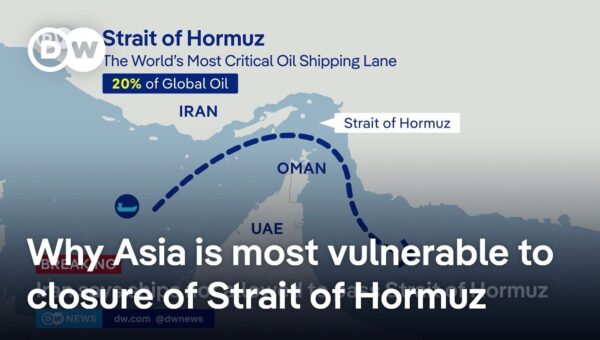
Iran's Revolutionary Guard has issued warnings against ships passing through the Strait of Hormuz, a critical global oil chokepoint. This potential blockade threatens to disrupt 20% of the world's crude oil flow, potentially spiking energy prices and fueling global inflation. Experts warn of significant market reactions and widespread economic consequences.