Russia’s Commercial Sector Faces Existential Threat as Economic Squeeze Intensifies
Russia's commercial sector is facing an unprecedented economic squeeze, with plummeting producer prices, rampant inflation, and soaring costs driving businesses into losses. While state-backed entities tied to the war effort remain insulated, the broader commercial landscape is grappling with unsustainable conditions, threatening widespread bankruptcies and a profound recession. This two-tier economy highlights the devastating long-term impact of sanctions and internal economic pressures on Russia's non-military enterprises.

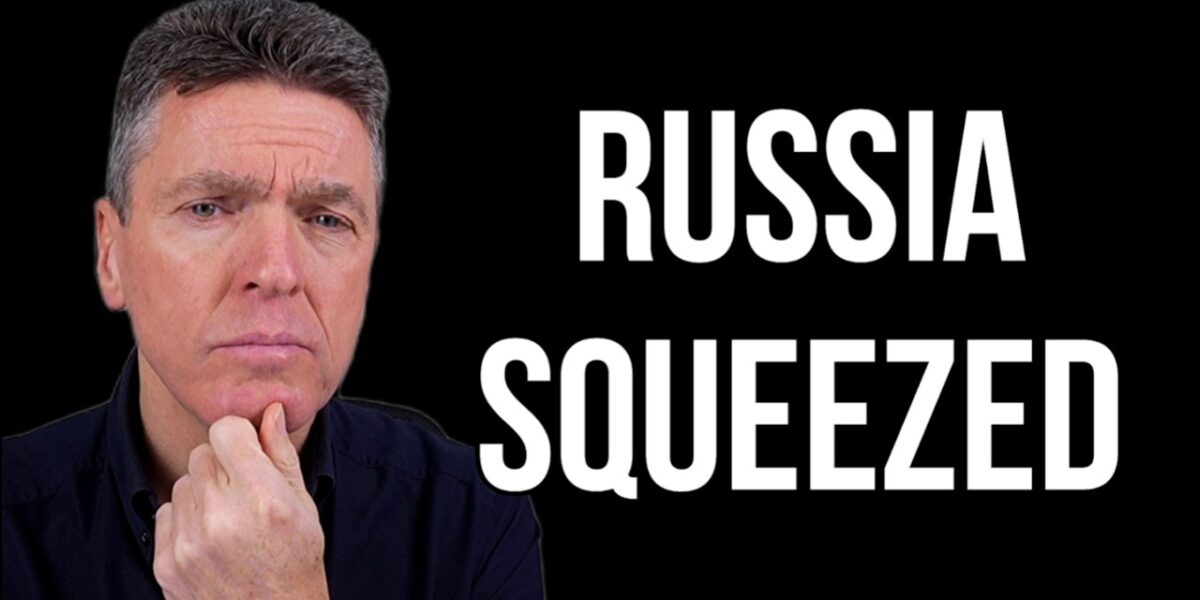
Russia’s Commercial Sector Faces Existential Threat as Economic Squeeze Intensifies
Russia’s economy, increasingly bifurcated by the demands of war, is witnessing a severe and potentially catastrophic squeeze on its commercial enterprises. While state-backed industries tied to the military-industrial complex continue to receive substantial government funding, the broader commercial sector is grappling with a perfect storm of plummeting producer prices, rampant inflation, escalating operating costs, and punitive borrowing rates. This economic environment is systematically eroding profit margins, pushing countless businesses into loss-making territory, and raising the specter of widespread bankruptcies and a profound recession.
The Kremlin’s iron grip on information has severely limited the flow of economic data to the West. However, a critical indicator, the Producer Price Index (PPI), often referred to as factory gate prices, offers a stark glimpse into the deepening crisis. This metric, which tracks the average change over time in the selling prices received by domestic producers for their output, reveals a disturbing trend that signals an unsustainable future for many Russian businesses.
The Alarming Decline in Producer Prices: A Profit Margin Annihilator
The most recent data on Russia’s Producer Price Index paints a grim picture. Over the past 12 months, producer prices have experienced a significant and sustained fall, moving into negative territory in recent months, specifically November, December, and January. The latest figures for January indicate a year-on-year decline of 5%. This trend is particularly alarming because it signifies that Russian businesses are being forced to cut their prices, even as their own operating costs continue to rise.
For any business, the ability to pass on cost increases to consumers or clients in the form of higher prices is fundamental to maintaining profitability. When producer prices fall, it means businesses are absorbing these rising costs, directly impacting their profit margins. In Russia’s current climate, this isn’t merely a reduction in profit; for many, it’s a complete eradication of margins, pushing them into a loss-making state.
Historically, the economic landscape was different. In 2021, prior to the full-scale invasion of Ukraine, producer prices in Russia, much like globally, were increasing rapidly. This was largely a consequence of the post-COVID-19 pandemic surge in demand, as economies reopened and businesses scrambled to meet renewed consumer appetites. This upward trajectory continued into early 2022, with producer prices climbing by more than 20% at the start of that year. However, the onset of the war in Ukraine marked a turning point. Producer prices began to decline, moving into negative territory by late 2022 and early 2023.
While there was a brief period in 2024 where some sectors, likely those linked to the state-funded war economy, saw a return to double-digit growth, the broader commercial sector is now firmly in reverse. The current negative territory for producer prices, particularly the -5% year-on-year figure for January, represents a significant downturn not seen since early 2023. This is not a fleeting blip but a sustained and intensifying pressure. The month-on-month data further underscores the severity, with January witnessing a 2.5% fall in producer prices – the worst monthly decline in over two years. Such a rapid and steep decline is an “absolute nightmare” for businesses, forcing them into a desperate struggle for survival.
A Tale of Two Economies: The War Machine vs. Commercial Collapse
The divergence in Russia’s economic performance can be largely attributed to the emergence of a stark two-tier system. On one side are the businesses directly integrated into or sponsored by the Kremlin’s war effort. These entities are recipients of guaranteed state contracts, handsomely compensated, and largely insulated from the commercial pressures of market competition or the need to manage final prices. Their output is absorbed by the state, ensuring their profitability and continued operation, irrespective of broader economic headwinds.
On the other side stands the vast commercial sector, comprising businesses that traditionally competed in global markets. These are the enterprises now bearing the brunt of the economic squeeze. Hit by an unprecedented wave of international sanctions, they have lost access to many of their traditional markets and supply chains. Despite nominal efforts to pivot to alternative markets, the reality is that their ability to sell products and services internationally has been severely curtailed. It is this segment of the Russian economy that is suffering immensely from the falling producer prices, the rising costs, and the overall hostile business environment. These are the businesses struggling to find buyers, market their products effectively, and generate genuine commercial income.
The Inflationary Paradox: Consumers Pay More, Businesses Earn Less
Adding another layer of complexity and pain to the Russian economic situation is the paradox of high inflation. For the majority of the past 12 months, Russia has grappled with double-digit inflation. While the January figure showed a slight moderation to 6%, it still represented an increase from December and remains a significant concern for households. The problem is not merely the high inflation itself, but its peculiar nature within the Russian context.
Ordinarily, rising consumer prices might suggest that businesses are successfully passing on their increased costs, thereby maintaining or even boosting their profits. However, in Russia, the opposite is true. Consumers are indeed paying more for a wide array of products and services, yet Russian businesses are not benefiting. Instead, they are making smaller profits, or, more frequently, incurring losses. This disconnect strongly suggests that the inflationary pressures are not being driven by domestic company pricing power but primarily by external factors – specifically, the increased cost of imports.
The extensive sanctions regime imposed on Russia has made it significantly more expensive and complex to import goods. Despite the ruble’s nominal increase in value on paper, which theoretically should enhance purchasing power for international goods, the practical reality is that few countries are willing to accept payments in rubles. This effectively negates any beneficial impact of the ruble’s perceived strength, forcing Russian importers to navigate costly and circuitous payment mechanisms, ultimately driving up the cost of imported goods that permeate the entire economy.
Furthermore, the persistently high inflation over the past five years has eroded purchasing power and created an environment of economic instability. Consumer inflation expectations, as evidenced by a projected 13.1% in February, indicate that ordinary Russians perceive prices to be rising even faster than official statistics suggest. This disparity between rapidly rising consumer prices and collapsing producer prices highlights the dire situation for the commercial sector, where the benefits of higher retail prices are not translating into business profitability.
Mounting Cost Pressures: Wages, Debt, and Taxes
Beyond the fundamental challenge of falling producer prices, Russian businesses are simultaneously contending with a confluence of rapidly escalating operating costs, further squeezing their already thin margins.
Rising Wages: A Double-Edged Sword
While often seen as a positive indicator for household income, rising wages present a significant burden for businesses struggling with revenue. Recent data, though not yet complete for December and January, indicates that real wages in Russia rose by 5.8%. When combined with the latest inflation figure of 6%, this suggests a nominal wage increase of approximately 11.8%. For businesses facing reduced sales prices, this substantial increase in labor costs directly eats into their profit margins, making it even harder to remain solvent.
Exorbitant Borrowing Costs: A Debt Trap
As businesses incur losses and their profit margins vanish, many are forced to resort to borrowing money to bridge the gap and maintain operations. However, the cost of debt in Russia has become prohibitively expensive. Prior to the war, interest rates were a healthy 4%. Following the invasion, they surged dramatically, reaching 20% immediately, then moderating to around 7.5%, only to spike again to 21% in 2023. Currently, the official borrowing rate stands at 15.5%.
For commercial businesses, the actual cost of borrowing is even higher. Banks typically add a profit margin above the official rate, pushing the average lending rate for businesses to a staggering 18.8%. To put this into perspective, five years ago, the average business lending rate was around 5.9%. This represents an astronomical increase of approximately 13 percentage points, effectively tripling the cost of debt. This creates a devastating “double whammy”: businesses are forced to take on more debt to cover their losses, and the cost of servicing that debt has become cripplingly expensive. This unsustainable cycle is pushing many towards insolvency.
Increasing Tax Burden: Future Headwinds
Further exacerbating the long-term outlook for Russian businesses are announced increases in the tax burden. While these changes are slated for future implementation, they cast a long shadow over current business planning and sentiment. Corporate tax, levied on company profits, is set to increase from 20% to 25% on January 1, 2025. This significant hike will further reduce the cash flow available to profitable businesses, disincentivizing investment and growth.
Additionally, the Value Added Tax (VAT), which is applied to the sales price of goods and services, is scheduled to rise from 20% to 22% on January 1, 2026. While VAT is ostensibly passed on to the consumer, it also applies to business inputs. This means that anything a business purchases from its Russian suppliers will become more expensive, indirectly adding to their operational costs and further eroding their competitive edge.
The Bleak Math: Profit Margins Under Siege
To illustrate the devastating impact of these combined pressures, consider a hypothetical Russian business. Let’s assume a company that, in the past, enjoyed a healthy 20% profit margin before interest and tax (EBIT). With revenues of 100 units (rubles or dollars for simplicity), a 5% fall in producer prices means their sales price now stands at 95 units. If material inputs, typically around 50% of revenue, have risen with inflation (6%), they now cost 54 units. Wages, previously 21% of revenue, have increased by 11.8% to 23.5 units. Other operating expenditures, also rising with inflation, reduce the initial 20% EBIT margin to a mere 9%.
Now, factor in the increased cost of debt. Assuming the business carries debt equivalent to 20% of its revenue, the cost of servicing this debt at 18.8% would significantly eat into profits. A company that previously had an EBIT of 16 (after deducting interest at previous rates) would now see this plummet to just 5. This is a massive swing, making a once robust business significantly vulnerable.
The situation becomes even more precarious for companies with thinner margins. A business previously operating with a 10% EBIT margin would now find itself making a loss of 1.8 units before interest. After accounting for the interest burden, a previous EBIT of 6 would transform into a loss of 6. For a company with a slim 5% EBIT margin, the picture is catastrophic: a loss of over 7 units before interest, and a staggering loss of 10.91 units after interest, compared to a previous profit of 1.24. These calculations vividly demonstrate how easily once-viable businesses are being pushed into deep loss-making territory, rendering their operations unsustainable.
Long-Term Implications: A Return to Soviet-Era Isolation?
The current economic squeeze is not merely a short-term challenge; it represents the long-term, destructive implications of the sanctions regime on Russia’s commercial fabric. Businesses painstakingly built since the dissolution of the Soviet Union in 1991, many of which had successfully integrated into the global market, are now being systematically dismantled. Their profitability is being destroyed, their markets are shrinking, and their ability to compete is severely compromised.
Operating at a loss is not a sustainable business model. While banks may provide temporary funding to cover these losses, often under implicit or explicit state encouragement, this “merry-go-round” cannot continue indefinitely. Without genuine sales and sustainable income, businesses will eventually default on their debts and face bankruptcy. The analogy to China’s property developers, such as Evergrande, is apt; even state-backed funding eventually reaches its limit when the underlying business model is fundamentally unsound.
The inevitable outcome for a significant portion of Russia’s commercial sector is widespread business closures and a surge in unemployment. This could precipitate one of the deepest recessions Russia has ever experienced. Furthermore, the systematic destruction of its commercial enterprises risks pushing Russia back towards an economic model reminiscent of the Soviet Union – an isolated, state-controlled economy with minimal global commercial engagement. The long-term implications are clear: a less diversified, less innovative, and ultimately weaker Russian economy, increasingly reliant on state directives rather than market forces.
Conclusion: The Unfolding Economic Crisis
The Producer Price Index, often overlooked, serves as a crucial barometer for the health of Russia’s commercial sector. Its precipitous fall, coupled with rampant inflation, soaring operating costs, and punitive borrowing rates, paints a stark picture of an economy under immense pressure. Profit margins are being wiped out, and countless Russian businesses are now operating at a loss. This situation is unsustainable. The state’s efforts to prop up the economy through backdoor lending will eventually face their limits, leading to widespread bankruptcies, job losses, and a profound economic downturn.
The current economic trajectory suggests that Russia is heading towards a period of unprecedented commercial contraction and isolation, with long-lasting consequences for its economic development and the welfare of its citizens. The squeeze is real, and its ultimate impact promises to be transformative and deeply challenging for the nation.
Source: RUSSIA Squeezed (YouTube)

Related Articles

Russia’s Economy Crumbles Amidst War and Sanctions
Russia is facing a severe economic crisis marked by business closures, high inflation, and a growing budget deficit, exacerbated by war costs and sanctions. Even state media acknowledges the widespread hardship, as consumer power dwindles and vital sectors like oil and defense struggle with funding shortages.
Russia’s War Toll: Economy Strains, Putin’s Grip Holds
Russia faces mounting economic pressure and public hardship four years into the Ukraine war, yet President Putin's grip on power remains firm. Meanwhile, Britain has denied Russian claims of supplying Ukraine with nuclear weapons, highlighting escalating tensions and information warfare.
Russia’s Economy Under Strain: Debt and Sanctions Bite
Russia's economy is facing a severe debt crisis, with companies struggling under the weight of high interest rates and international sanctions. A surge in loan restructurings indicates underlying financial fragility, raising concerns for the banking sector.