Russian TV Host Clashes Over Ukraine War, Accuses Germany of Nazism
Russian TV host Vladimir Solovyov engaged in a fiery on-air clash, with a guest challenging his threats against Europe and his accusations of Nazism against German Chancellor Friedrich Merz. The segment exposed the distorted narratives and internal contradictions within Kremlin propaganda regarding the Ukraine war.

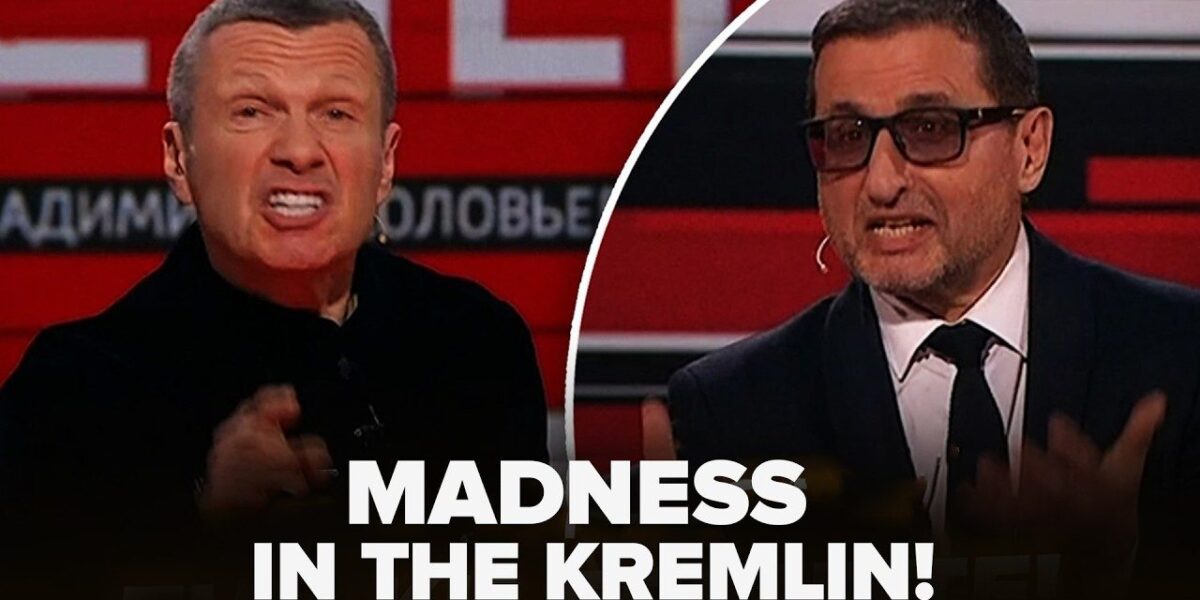
Propagandist Vladimir Solovyov’s Inflammatory Rhetoric Sparks On-Air Confrontation
A recent broadcast on Russian state television descended into chaos as host Vladimir Solovyov engaged in a heated exchange with a guest over the ongoing war in Ukraine and escalating threats against Europe. The segment, which has drawn international attention, highlighted the increasingly aggressive and contradictory nature of Kremlin propaganda, particularly concerning Germany’s support for Ukraine.
The core of the dispute erupted when a guest challenged Solovyov’s persistent threats of nuclear strikes and his accusations against German Chancellor Olaf Scholz. The guest directly confronted Solovyov, stating, “If you are going to threaten Europe, then go ahead and hit already. Stop talking.” This direct challenge to Solovyov’s rhetoric, which often involves veiled or explicit threats of military action, underscored a growing frustration within some Russian circles regarding the perceived lack of decisive action despite constant saber-rattling.
Germany Under Fire: Accusations of Nazism and Twisted Narratives
Solovyov, a prominent Kremlin propagandist, launched a vitriolic attack on German Chancellor Friedrich Merz, accusing him of Nazism. This accusation stemmed from Merz’s characterization of Russia’s actions in Ukraine as “deep barbarism” and his assertion that “don’t expect peace anytime soon.” Russian media outlets, including Solovyov’s show, have systematically twisted these remarks, portraying Merz’s sober assessment of the geopolitical situation as evidence of a resurgent, anti-Russian sentiment reminiscent of Nazi Germany.
“Meritz is following the path laid down by his Nazi predecessors, paths that always end in colossal disasters for the unfortunate German people,” Solovyov proclaimed, drawing a direct and inflammatory parallel between contemporary German leadership and the Nazi regime. He further elaborated, suggesting that Merz’s words stem from an “inner core” that reveals itself, implying a deep-seated, inherent inclination towards aggression and historical revisionism.
However, the transcript reveals a stark contrast between Solovyov’s inflammatory claims and Merz’s actual statements. Merz described Russia’s actions as “deep barbarism” and offered a “blunt, honest assessment of the real political and military situation.” The narrative presented on Russian TV, therefore, represents a significant distortion aimed at demonizing Western leaders and justifying Russia’s actions by projecting historical grievances onto current events.
The “SVO”: Propaganda vs. Reality on the Ground
The broadcast also touched upon the perceived failures of Russia’s so-called “Special Military Operation” (SVO) in Ukraine. Critics within the show pointed out the discrepancy between Russia’s aggressive rhetoric and its limited military achievements. “Maybe they don’t have the strength,” one guest speculated, questioning the efficacy of Moscow’s threats. “Or maybe Moscow can only fight a peaceful neighbor with no nukes or anything.” The guest further highlighted that Russia has struggled to achieve its objectives, even in the Donbas region, which it now seeks to annex through negotiations.
The discussion also revealed the propagandistic nature of Solovyov’s threats. When pressed to act on his threats of striking Berlin, Solovyov resorted to evasive tactics, suggesting that the threats themselves are the primary objective. “The more you shout, ‘We’ll strike,’ the less scary it gets,” a guest countered, directly challenging Solovyov’s strategy of intimidation. Solovyov’s response, “And then we strike and it’s over,” was met with further skepticism, as the guest pointed out his shifting threats from marching into Berlin to destroying it entirely.
“The more you shout, ‘We’ll strike,’ the less scary it gets.”
Historical Parallels and Justifications for War
The use of historical parallels, particularly the invocation of Nazism and World War II, is a recurring theme in Russian state propaganda. Solovyov and others frequently equate Ukraine’s government and its Western supporters with Nazis, attempting to frame the conflict as a continuation of the Soviet Union’s fight against fascism. This narrative serves to legitimize Russia’s invasion and rally domestic support by invoking a powerful historical memory of national struggle and sacrifice.
The transcript critiques this narrative, pointing out that Russian President Vladimir Putin employs similar methods and rhetoric to those of Hitler. The justification of aggressive wars, the claim of protecting Russian-speaking populations, and the suppression of Ukrainian culture are all cited as echoes of Nazi ideology. The guest argued that by accusing the West of “Russophobia” and “Nazism,” Russia ignores its own “real Nazism” and the historical oppression of various nationalities within the Soviet Union.
Negotiations: A Tool for Delay and Demands
The discussion also addressed the topic of peace negotiations, with Russian state media consistently portraying Moscow as the sole party interested in peace. Solovyov asserted that “Russia wants peace” and that other parties, particularly the United States, are prolonging the conflict for their own strategic interests. He suggested that peace is only possible on Moscow’s terms, which in practical terms means Ukraine’s surrender.
The transcript refutes this, characterizing the Russian stance on negotiations as a “sham.” It argues that Russia’s demands are not fair but are designed to undermine Ukraine’s sovereignty. The piece concludes that if Russia truly desired peace, it would withdraw its troops, echoing Donald Trump’s sentiment that the war could end in 24 hours if Russia ceased its aggression.
What’s Next: Continued Propaganda and Resistance
The broadcast segment underscores the persistent nature of Russian propaganda, which continues to employ inflammatory rhetoric, historical distortions, and threats to intimidate Ukraine and its Western allies. The internal contradictions and heated exchanges within Russian state media suggest a potential fracturing of consensus or, at the very least, a struggle to maintain a coherent and convincing narrative. As Ukraine continues to receive support and Russia faces ongoing international pressure, the effectiveness of such propaganda tactics in the long term remains to be seen. The world watches to see if these threats will translate into action or remain mere bluster, while Ukraine and its allies remain steadfast in their support for Ukrainian independence.
Source: 😱They Almost Got Into a Fight! Guest Shut Solovyov Up. Clash Over the Collapse of Putin’s “SVO” (YouTube)

Related Articles

Europe Faces Post-Cold War Order Collapse After Munich Security Summit
Western leaders at the Munich Security Conference acknowledged the end of the post-Cold War security order, raising concerns for Europe's future. Ukrainian President Zelenskyy urged continued support against territorial concessions, while transatlantic tensions underscored the shifting geopolitical landscape.
Trump’s Putin Stance: US Strategy and Global Implications
Analysis suggests Donald Trump's approach to the Ukraine war involves pressuring Kyiv, but US involvement is crucial for resolution. China's influence and the 'MAGA' agenda's geopolitical implications are key factors.
Melania Trump’s Quiet Diplomacy on Ukraine War
Former First Lady Melania Trump has emerged as an influential, though unofficial, voice on the Ukraine war, reportedly shaping her husband's perceptions and engaging directly on humanitarian issues like the deportation of Ukrainian children. Her advocacy, possibly influenced by her European background, has drawn international attention and sparked unique reactions, including widespread social media support from Ukrainians.