Russian Tanker Nears Cuba Amid US Quarantine
A Russian oil tanker, the Anatoly Kolodkin, is en route to Cuba, carrying vital oil supplies amid a U.S. quarantine. The U.S. faces a decision to intercept the vessel, risking confrontation, or allow it to reach the island, undermining its policy. This event unfolds against a backdrop of global oil market volatility and complex geopolitical dynamics.

Russian Tanker Nears Cuba Amid US Quarantine
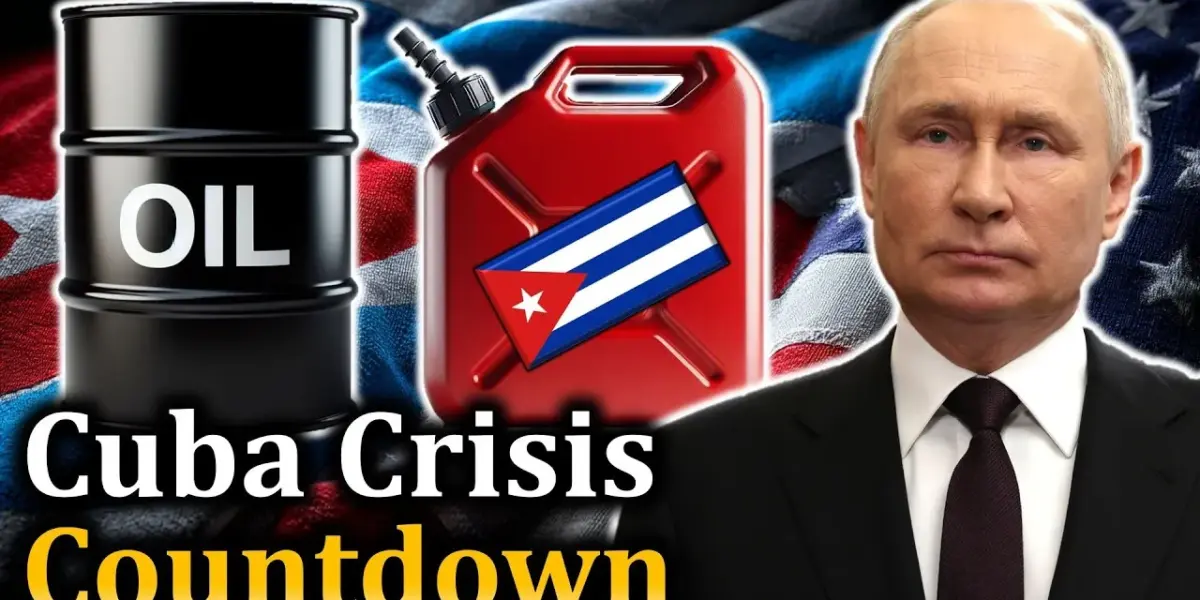
A Russian oil tanker, the Anatoly Kolodkin, is on a direct course for Cuba, potentially igniting a new confrontation with the United States. The vessel, carrying over 700,000 barrels of crude oil, could reach the island nation as early as March 23, according to reports. This development occurs as the U.S. maintains a de facto oil quarantine on Cuba, a policy implemented following a U.S. operation that led to the arrest of Venezuelan President Nicolas Maduro.
Cuba’s Oil Crisis Deepens
Cuba faces a severe energy shortage, consuming approximately 100,000 barrels of oil daily but producing only 40,000 barrels. This leaves a daily deficit of 60,000 barrels, leading to widespread power outages and growing desperation within the Cuban government. The island’s primary hope for relief lies in oil imports, with Russia emerging as a potential supplier. The U.S. policy has effectively cut off subsidized oil shipments from Venezuela, previously Cuba’s main source.
US Oil Quarantine and Enforcement
The United States has declared an oil embargo, termed a “quarantine” by the administration, against Cuba. This policy threatens tariffs on any nation attempting to supply oil to the island. Most countries, including Mexico, have complied with this directive. To enforce the quarantine, the U.S. Coast Guard has deployed cutters near Cuba, prepared to intercept vessels. While the U.S. has stated these tankers are unarmed, this detail may hold future significance.
Previous Attempts and Interdictions
This is not the first attempt by a tanker to reach Cuba under the current U.S. policy. On February 5, the Ocean Mariner, carrying 84,000 barrels of oil, was rerouted from an initial declared destination of the Dominican Republic to Cuba. The U.S. Coast Guard successfully interdicted the vessel, ensuring it reached its declared destination. Later, in mid-February, the Sea Horse departed Russia with 200,000 barrels of oil. After weeks of idleness in the Atlantic, it resumed movement, reportedly aiming for a Caribbean destination other than Cuba. Speculation suggests the Chinese ownership of the Sea Horse may have led to political pressure, halting its original plan and prompting a search for an alternative buyer.
The Anatoly Kolodkin’s Voyage
The Anatoly Kolodkin departed Russia on March 9, with its declared destination humorously listed as “Atlantis, USA.” This cryptic routing may be a deliberate provocation, referencing Cuba’s association with the mythical Atlantis and perhaps alluding to U.S. intentions toward the island. The tanker’s cargo of 730,000 barrels could potentially supply Cuba with an additional twelve days of oil, significantly easing its current crisis.
Global Oil Market and Waivers
The current situation unfolds against a backdrop of global oil market volatility, exacerbated by an ongoing conflict involving Iran. Oil prices have seen significant fluctuations, impacting consumer prices, particularly at the gas pump. The U.S. administration has utilized waivers on certain Russian oil exports, a move intended to increase global supply and stabilize prices. However, these waivers, initially applied to oil already in transit, have complex implications for future sales and may indirectly benefit Russia.
In a move that initially caused confusion, the U.S. extended similar waivers to Iranian oil, despite ongoing conflict. This policy, described as a “parlor trick band aid,” aims for short-term consumer relief. The “Air Bud rule” analogy was used to explain how the initial waiver’s wording, not explicitly excluding certain countries, led to speculation that Cuba could benefit. However, the U.S. administration quickly issued an updated waiver explicitly denying oil imports to Cuba, alongside North Korea and Russian-occupied Ukraine.
Naval Escort and Potential Confrontation
Russia provided a naval escort for the Anatoly Kolodkin through the English Channel, a measure taken to deter potential detentions by European nations concerned about high oil prices impacting their economies. France recently detained a Russian tanker. However, the escort separated from the Anatoly Kolodkin upon entering the Atlantic. This suggests that the U.S. Coast Guard could intercept the tanker if it attempts to reach Cuba. The U.S. anticipates no direct harm to its personnel, assuming no Russian marines are aboard, though such a possibility has been discussed in Russian media.
Strategic Implications and Geopolitical Context
The U.S. faces a strategic decision: allow the Anatoly Kolodkin to reach Cuba, potentially nullifying months of quarantine policy, or intercept it, risking a direct confrontation with Russia. The Kremlin’s withdrawal of the naval escort before reaching the Americas suggests a limited capacity for power projection in the region, especially given its focus on the conflict in Ukraine. The U.S. also operates under the historical precedent of the Monroe Doctrine, asserting influence in the Western Hemisphere.
The broader geopolitical context involves potential Russian leverage over the U.S. through its intelligence and targeting assistance to Iran. While Russia’s manufacturing capacity is strained, its ability to share intelligence and advanced targeting systems, like AI-enhanced Shahed drone designs, presents a different kind of threat. This situation, while less immediately escalatory than the Cuban Missile Crisis, highlights the complex interplay of energy security, sanctions, and geopolitical maneuvering.
Uncertainty and Future Outlook
The ultimate outcome of the Anatoly Kolodkin’s voyage remains uncertain. The U.S. administration appears unwilling to compromise, and Russia may instruct the tanker to find an alternative destination. The situation underscores the difficulty in verifying agreements involving intelligence sharing, making a direct trade-off between Russian assistance to Iran and U.S. aid to Ukraine improbable. This high-stakes scenario, occurring concurrently with other global conflicts, warrants significant attention but has received limited media coverage.
Source: Days Away: The Russian Tanker About to Test America's Cuba Quarantine (YouTube)

Related Articles


Iran Targets US With Cyberattacks, Escalating Digital Warfare
Iran is increasingly using cyberattacks to challenge the U.S., as seen in a recent hack of the FBI director's account. Experts say this is a strategic shift due to Iran's limitations in conventional warfare. The U.S. needs to strengthen its digital defenses, focusing on encryption and cloud computing, rather than solely relying on traditional security measures.

Ukraine Strikes Russian Oil Refinery, Eyes Iran Threat
Ukrainian forces struck a key Russian oil refinery, disrupting Moscow's war capabilities. Meanwhile, Finland's president urged continued U.S. support for Ukraine, as Kyiv shares its air defense expertise globally amid growing geopolitical complexities involving Iran and potential sanctions against Hungary.

Iran’s Missile Threat Reduced by 90%, Analyst Says
An analyst reports that Operation Epic Fury has degraded Iran's missile launchers by 90%, despite challenges in targeting hidden sites. The conflict's duration and media coverage are also discussed, with implications for global energy markets and investor confidence.