Russian Lawmaker’s ‘Zeroed Out’ Remark Reveals Military Rot
A Russian lawmaker's casual reference to military slang for extrajudicial killings, "zeroed out," has exposed a disturbing normalization of violence within the Russian armed forces. Investigations into units like the 5th Brigade reveal systemic issues of coercion, extortion, and a distorted incentive structure where loyalty and financial control supersede accountability and ethical leadership.


Lawmaker’s Casual Remark Exposes Deep-Seated Military Abuses
A seemingly minor online spat over stray dogs in the remote Russian region of Khakassia has inadvertently illuminated a disturbing trend within the Russian military: the normalization of extreme violence and extrajudicial killings. When regional lawmaker Alexander Pashchenko, a member of the United Russia party, responded to a constituent’s complaint by referencing being “zeroed out” on the front lines, he used a phrase that, in contemporary Russian military slang, refers to commanders eliminating their own subordinates outside of legal channels. This casual invocation of such brutal practices, rather than a retraction or apology, signals a profound institutional shift, suggesting that such violence has become disturbingly commonplace and accepted within the military hierarchy and its former members.
Language as a Mirror to Institutional Decay
The online reaction to Pashchenko’s comment quickly bifurcated. While some debated the stray dog issue and the civility of the online exchange, a more critical conversation emerged regarding the lawmaker’s use of the term “zeroed out.” The casualness with which Pashchenko employed this phrase, and his subsequent doubling down by stating he spoke to the citizen “in the language he understands,” indicates a deeply embedded normalization of these practices. He neither saw inappropriateness in referencing them nor hesitated to assume public comprehension. This linguistic shift is not an isolated incident but reflects a broader institutional evolution, as evidenced by independent investigations from outlets like “Verstka,” “Vot Tak,” and “Astra.” These reports have documented over 100 officers allegedly involved in severe abuses against their own personnel, with similar patterns emerging across various units. The casual use of such terms in public discourse suggests these practices have moved from the shadows into a semi-public consciousness, indicating that the institutions themselves have already shifted.
The 5th Brigade: A Microcosm of Control and Exploitation
The 5th Guards Motor Rifle Brigade has repeatedly surfaced in investigative reports, linked to extortion, illegal detentions, coercion, forced deployments under duress, and internal disappearances. A notable case involved the death of American volunteer Russell Bentley, which, while leading to charges against service members, received limited attention due to the victim’s foreign nationality. This highlights an asymmetry in accountability: foreign involvement can increase visibility, but when Russian soldiers are the victims, accountability often appears less urgent. The disappearance of multiple battalion commanders from the same brigade further underscores the internal turbulence within the command structure, suggesting that issues extend far beyond individual soldier grievances. The media landscape plays a crucial role, with figures like Vladimir Solovyov defending controversial officers and orchestrating media campaigns to reframe potentially abusive commanders as heroes. This demonstrates that accountability is not solely a legal matter but is heavily influenced by political backing and media influence. Conversely, officers like Major General Marat Ospanov, who faced formal charges without significant media protection, saw their cases proceed more directly, illustrating the power of public narrative in shaping legal outcomes.
Economics of Coercion: Money, Power, and Survival
The incentive structure within units like the 5th Brigade is driven by a confluence of factors: immense financial leverage, inconsistent oversight, and the prioritization of loyalty over competence. Commanders overseeing thousands of contract soldiers, each earning substantial wartime pay, possess significant financial control. Allegations suggest that soldiers are pressured to surrender portions of their pay in exchange for safer assignments or reduced risk, making coercion economically rational. In such an environment, silence becomes a form of currency and fear a tool for stability. The system incentivizes internal enforcement mechanisms, where public exposure is the primary threat. This is not random cruelty but a distorted incentive architecture that, when scaled, becomes systemic. The lack of clear strategic objectives in the ongoing conflict further exacerbates this issue, transforming manpower into a consumable asset rather than a resource to be optimized for a defined outcome.
Strategic Drift and Manpower as a Disposable Commodity
Independent investigations into various brigades, including the 15th, 30th, and 7th Motor Rifle Brigades, reveal a disturbing lack of overlap in reported atrocities, suggesting a systemic collapse rather than isolated incidents. Coupled with the slow, incremental gains on the battlefield and the constant need for manpower replenishment, this creates a brutal equation: ambiguous strategic objectives lead to manpower being treated as a continuously consumed resource. Military doctrine often treats personnel as assets, but without clear endgame criteria, asset management detaches from outcome optimization. In this vacuum, secondary incentives like personal survival, career advancement, financial extraction, and network loyalty dominate. For officers, cynicism and emotional detachment become professional assets, reducing personnel to mere numbers. However, this cynicism, unchecked by strategic clarity, leads to moral degradation. The system rewards coercion over competence, ensuring that those who survive and advance are not necessarily the most ethical leaders. This results in a culture where soldiers allegedly “buy” safer assignments and brutal discipline rituals are presented as proof of loyalty.
The Shadow of Post-War Narratives
The systems and norms established during wartime do not simply dissolve when the conflict ends. Survivors, particularly those who have mastered internal enforcement and maintained loyalty through coercion, are poised to shape post-war narratives. They will likely emphasize discipline, resilience, and sacrifice, while the families of those who disappeared under opaque circumstances may struggle for documentation and accountability. Independent investigations play a vital role in creating a parallel archive, preventing institutional amnesia. Russia faces a profound challenge in processing the war’s demographic, economic, and psychological costs. Public discourse often remains narrowly focused on territorial shifts, overlooking the systemic self-inflicted damage. The casual reference to “zeroing out” by a lawmaker in Khakassia exemplifies the dangerous seepage of frontline logic into civilian political speech. If coercion becomes normalized language in politics, institutional degradation will spread beyond the military. Sustainable systems rely on accountability loops; their weakening accelerates internal decay. The ultimate question for Russia is whether its system can self-correct, moving beyond individual scandals to address the fundamental issues of accountability, incentive structures, and institutional health exposed by the war.
Source: Russia’s War Incentives Are Completely Broken. (YouTube)

Related Articles

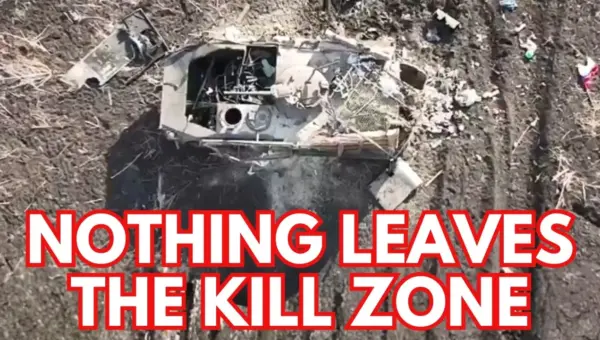
Russia’s Failed Armored Assaults Reveal Shifting War Dynamics
Russia's return to large-scale armored assaults has been met with devastating Ukrainian drone and artillery fire, resulting in heavy losses. This shift signals a potential change in Russian strategy driven by unsustainable personnel attrition, while Ukraine solidifies its defensive gains and expands its role in regional security.


Putin’s Spring Offensive: Russia Targets Ukraine’s Infrastructure
Russia is escalating its attacks on Ukraine's critical infrastructure, including energy, water, and rail systems, as part of a perceived desperate strategy to destabilize the country. Analysts believe these moves signal a shift from an expected swift victory to a prolonged campaign of attrition. The Kremlin's actions also come amidst internal political maneuvering within Ukraine and ongoing, albeit stalled, peace negotiations.


Russian Army Morale Collapses Amid “Zeroing Out” Abuses
A new investigation reveals the Russian military's widespread use of "zeroing out," a practice of systemic abuse, extortion, and violence against soldiers by their own commanders. This internal brutality is reportedly fueling morale collapse, driving desertions, and paradoxically serving as a tool for the Kremlin to maintain offensive momentum despite immense human cost.