Russia Weighs Mideast War, Hints at Nuclear Deterrence
Russia finds itself in a delicate position as the U.S. and Israel engage in a large-scale operation against Iran. While Moscow offers cautious statements and avoids direct military involvement, its strategic partnership with Tehran and potential nuclear rhetoric highlight regional tensions.

Russia Weighs Mideast War, Hints at Nuclear Deterrence
The United States and Israel launched a large-scale operation against Iran on February 28, 2026. The attacks targeted Iran’s missile infrastructure, including nuclear facilities, storage sites, and launch systems. Iran’s naval fleet was also struck. This conflict, dubbed Operation Apic Fury, has sent shockwaves globally. Analysts warn that if the war continues, it could severely impact major Persian Gulf economies like Saudi Arabia, the United Arab Emirates, and Qatar.
Strait of Hormuz Becomes Global Flashpoint
The Strait of Hormuz, a vital waterway for about one-fifth of the world’s oil supply, is now a center of global crisis. Ship traffic has been heavily restricted after at least 16 vessels were attacked. Insurance rates have surged, and Iran has officially declared the strait closed. Western nations are seeking ways to ensure safe passage, while experts highlight significant global economic and food risks.
Moscow’s Delicate Balancing Act
While the conflict is far from Russia’s borders, it has placed Moscow in a difficult position. On one hand, the hostilities divert Western attention and resources from the war in Ukraine. On the other hand, Russia faces a complex diplomatic challenge. President Vladimir Putin has offered only cautious statements, seemingly avoiding direct confrontation with the United States and President Donald Trump. Despite past declarations of alliance, Russia’s support for Iran has been largely rhetorical.
Putin Expresses Condolences, Avoids Direct Blame
Following the reported death of Iran’s Supreme Leader Ayatollah Aliki and his family, President Putin sent a telegram of condolences. The Kremlin reported this on March 1st. Putin described the event as a “cynical violation of moral norms and international law.” However, he did not assign blame for the deaths. This careful wording, according to analyst Alexander Bonov, allows Russia to avoid direct accusations against the U.S.
Putin also held calls with leaders from the UAE, Qatar, Bahrain, and Saudi Arabia, offering Russia’s help to stabilize the region. Experts note that Russia’s traditional policy in the Middle East involves balancing relations between Iran and its rivals. This strategy suggests Russia has established limits on how far it will support Iran.
Russia’s Limited Response to Conflict
During a previous incident in the summer of 2025, when the U.S. and Israel struck Iranian military facilities, Russia limited its response to rhetorical support. The current conflict, a 12-day war, has seen a similar pattern. The Kremlin condemned the actions of the U.S. and Israel but did not intervene militarily.
Russia’s Foreign Ministry accused Israel of conducting attacks under the guise of negotiations. Notably, Reuters reported that the Kremlin did not announce any new communications with Iran’s leadership after the war began. Some Russian officials and deputies made statements suggesting international law had weakened. Andrei Kartapolov, head of the State Duma’s defense committee, stated that international norms had effectively vanished. Foreign Minister Sergey Lavrov commented that the U.S. no longer considers the UN charter a factor in discussions.
Nuclear Rhetoric and Warnings
Amidst the tensions, some Russian officials turned to nuclear rhetoric. Senator Andrei Klishas suggested developing nuclear deterrence in response to U.S. actions. Former Russian President Dmitry Medvedev warned of a potential world war if regime change policies continued. He emphasized that the U.S. understands the dangers of nuclear conflict.
Medvedev also criticized President Trump, stating, “The peacemaker has once again shown his true face.” He added, “All negotiations with Iran are a cover operation. No one seriously intended to reach any agreement.” Medvedev concluded with a historical comparison, noting the age of the U.S. versus the ancient Persian Empire, and questioning who would have more patience.
Propagandists Reveal Tensions
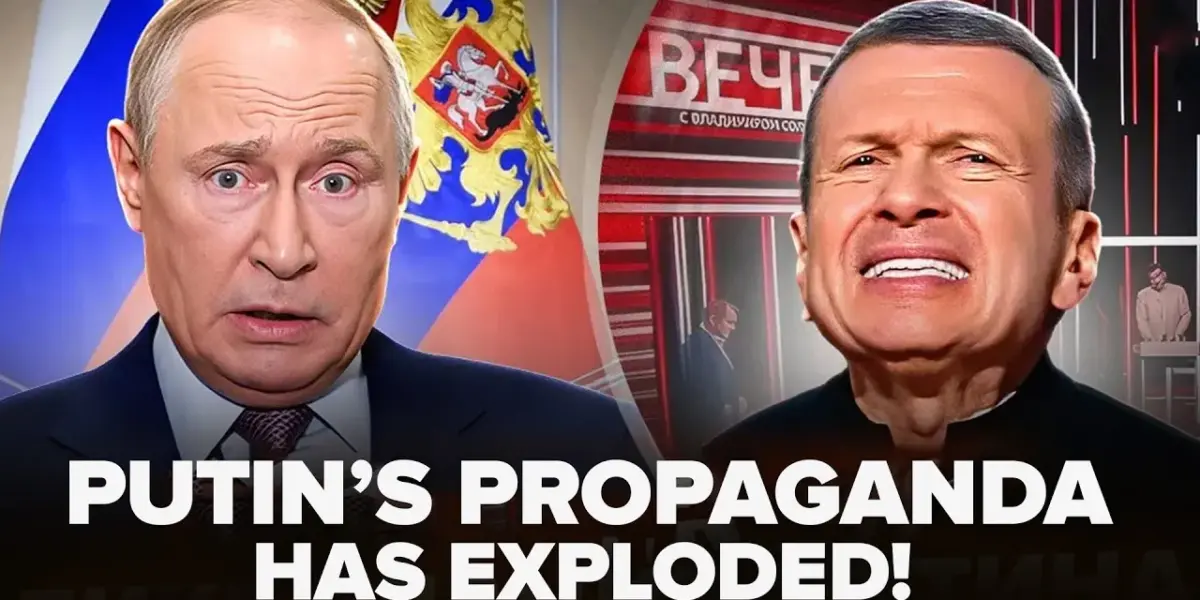
Russian state television propagandists offered a more aggressive perspective. Sergey Markedonov, a host on Solovyov Live, called for transferring nuclear technologies to Iran. He openly stated Russia’s support for Iran and wished for Israel’s defeat, calling it a U.S. ally. “We watch with enthusiasm,” Markedonov said. “We are in any case supporting Iran. Naturally, we wish defeat for Israel.” He argued that Russia should help Iran with technologies, including its nuclear program.
Later, after public outcry over Moscow’s perceived silence, Vladimir Solovyov attempted to explain Putin’s stance. He suggested that one cannot help those who do not seek assistance and pointed out that Iran had not requested military aid from Russia or China. Solovyov also claimed no strategic partnership agreement existed between Iran and Moscow.
Partnership Agreement Contradicts Claims
However, official records contradict Solovyov’s statements. Russia’s official legal information portal shows a strategic partnership agreement with Iran was signed by Presidents Putin and Peskan on January 17, 2026. This ratified document covers defense, security, counterterrorism, and joint development in various sectors like industry and energy. This agreement was highlighted by Solovyov himself in the summer of 2025, when he threatened Azerbaijan with a joint operation alongside Iran against perceived NATO influence.
Iran’s Role in Ukraine Conflict
The war in the Middle East is ongoing, and Iran’s influence extends beyond the region. Iran has supplied Russia with thousands of drones since the full-scale invasion of Ukraine began. Furthermore, Iran has reportedly helped Moscow establish factories to produce these drones. President Zelenskyy confirmed this in an interview, stating Ukraine had warned Iran that its drones would be used against civilians.
Despite denying support for Russia and downplaying drone shipments, Iran’s Foreign Minister Abbas Araghchi stated on March 15th that Russia and China were providing support, including military cooperation. While Moscow attempts to maintain a dual stance, its actions are becoming increasingly apparent. Putin cannot deploy troops to the Persian Gulf due to existing commitments in Ukraine. Consequently, Russian propagandists are left to justify the regime’s position, but it is clear Moscow aligns with Iran. The duration of this alignment will depend on its perceived benefit to Putin.
Source: 😱Putin made a scandalous statement! Solovyov is shaking. Moscow is on the brink of total chaos (YouTube)

Related Articles


G7 Allies Clash Over Iran War Strategy, Urge Focus on Russia
G7 foreign ministers met in Paris, revealing deep divisions over the U.S. war with Iran. European allies urged the U.S. to pressure Russia, linking its actions to the conflict and fearing support for Ukraine will wane.

Iran Blocks China Ships, Exposing Beijing’s Weak Grip
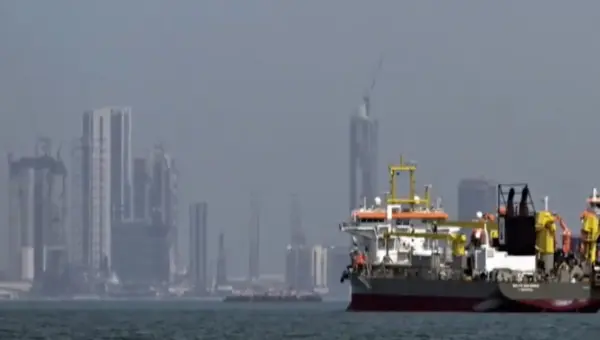
Iran's recent decision to block Chinese ships at the Strait of Hormuz is exposing the limits of Beijing's influence in the Middle East. This action is causing delays and cancellations for Chinese manufacturers, turning a perceived geopolitical win into an economic strain.
Rubio: US Can Achieve Iran War Goals Without Troops
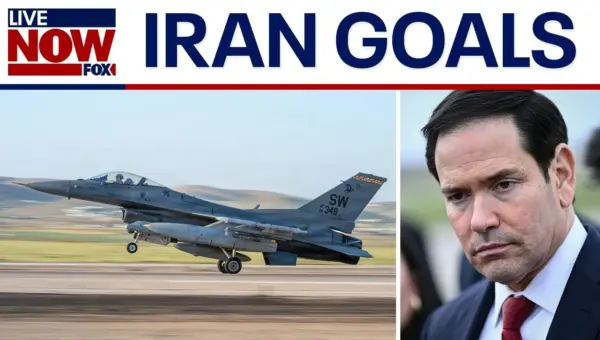
Senator Marco Rubio outlined a strategy to counter Iran without deploying U.S. ground troops, focusing on weakening the regime and enhancing maritime security. He also criticized Cuba's economic system and expressed concerns about West Bank violence.