Russia Tightens Digital Grip, Building ‘Great Firewall’
Russia is implementing widespread internet outages and building a state-controlled digital infrastructure, mirroring China's 'Great Firewall.' This move aims to tighten control over information and communication, impacting citizens within Russia and in occupied Ukrainian territories. Experts believe the restrictions are primarily a defense against domestic dissent rather than a response to drone attacks.

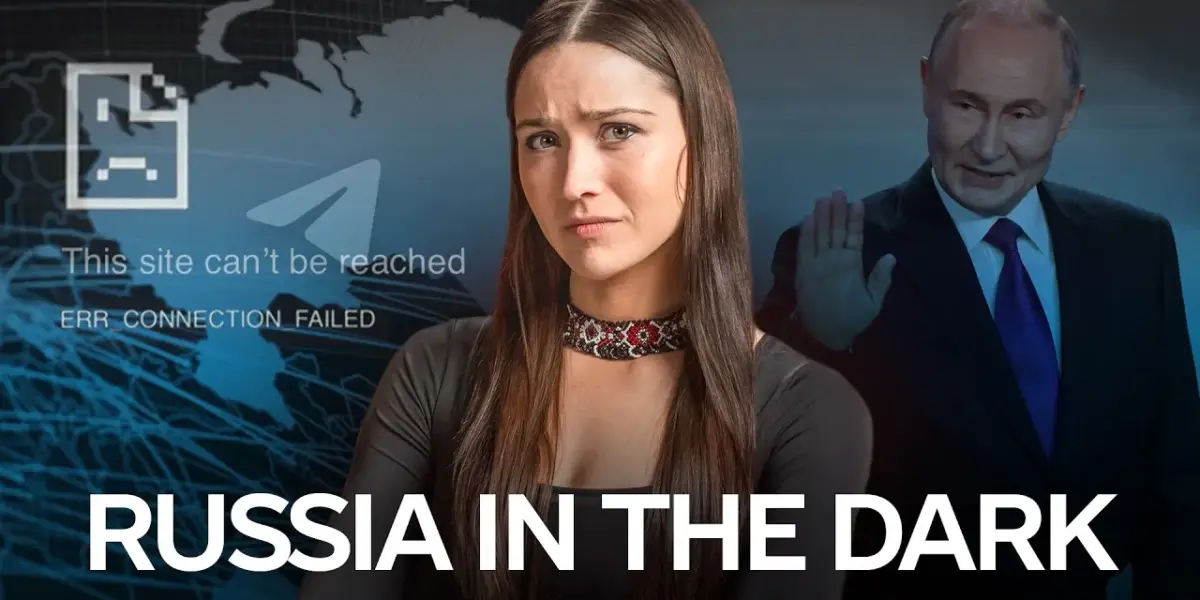
Russia Builds Digital Iron Curtain
In early March, Moscow saw a surge in sales of paper maps, travel guides, pagers, and walkie-talkies. This unusual demand wasn’t for a sudden outdoor adventure trend. Instead, it pointed to widespread internet outages across Russia. Many Russians were seeking analog ways to navigate and communicate as their digital connections failed.
While Russia claims these blackouts are a defense against Ukrainian drone attacks, evidence suggests a more deliberate strategy by the Kremlin. The goal appears to be reshaping Russia’s internet into a system similar to China’s “Great Firewall.” This move signals a desire by President Vladimir Putin to exert greater control over information and communication within Russia.
Years in the Making
The current internet restrictions are the result of years of effort by the Russian government to gain full control over its citizens’ internet access. The internet, a powerful tool for both communication and surveillance, presents a challenge for authoritarian leaders. On one hand, it can amplify state propaganda and enable widespread monitoring, much like the fictional telescreens in George Orwell’s ‘1984.’ On the other hand, an open internet allows citizens to access global information and organize independently, which can threaten a leader’s grip on power.
A Spectrum of Control
Authoritarian states manage internet access in different ways. North Korea offers citizens only an intranet, a closed network where only state-approved websites are accessible. China, while less isolated, blocks major Western sites like Facebook and maintains strict censorship and surveillance. Russia is now moving towards a similar, but perhaps even more restrictive, model.
The Rise of Runet
The Russian language internet, known as Runet, emerged in the mid-1990s. It developed alongside the global internet, with Russian platforms like Yandex (search), VKontakte (social media), and Wildberries (e-commerce) becoming popular. However, the Kremlin has long sought to make Runet sovereign, meaning it could operate independently, even if disconnected from the rest of the world.
From Anti-Extremism to Control
Starting in the 2010s, Russia introduced laws framed as combating extremism and hate speech. These laws, however, allowed the state to label actions like depicting a gay couple in a movie or stating that Crimea is Ukraine as extremist. This paved the way for arresting citizens for online activities and labeling independent media as “foreign agents.” These measures also set the stage for blocking Western websites, a tactic used by China.
War Accelerates Censorship
Russia’s full-scale invasion of Ukraine in 2022 significantly sped up these efforts. Explanations for blocking websites shifted from concerns about extremism to more direct claims that Western platforms threatened Russian values. Popular Western social media sites like Facebook and Instagram are now banned, accessible only through VPNs. YouTube has been slowed to the point of being unusable.
Targeting Communication Tools
The internet’s ability to connect people and facilitate organization is a major concern for authoritarian regimes. Russia has targeted messaging apps, both Western ones like WhatsApp and Signal, and Russian-made ones like Telegram. The Kremlin aims to prevent citizens from using end-to-end encryption, which secures communications. A new state-controlled messaging platform called ‘Max’ is being offered as an alternative, designed to remove privacy-enhancing features.
Historical Parallels and Inspiration
The idea of a separate, sovereign Russian internet has been discussed for years. However, the process has accelerated dramatically since the full-scale invasion of Ukraine. Russia has reportedly taken inspiration from censorship systems in China and Iran. The near-total internet shutdowns in Iran during recent protests, which helped suppress dissent, are seen as a model Russia may follow.
Escalation Amidst Global Turmoil
In the first few months of 2026, Russia’s internet censorship has escalated rapidly. This comes at a time when several authoritarian leaders, allies of Putin, have been overthrown. The recent ousters of leaders in Venezuela and Iran, following similar events in Syria, Libya, and Iraq, likely heighten Putin’s sense of vulnerability. Researchers note that when dictators feel threatened, they often escalate their actions, potentially creating strategic weaknesses.
The “Whitelist” and Drone Justification
On March 13th, Russia announced a “whitelist” system, allowing access only to government-approved websites during the ongoing outages. The Kremlin continues to cite Ukrainian drone attacks as the reason for these disruptions. However, experts argue this logic is flawed. Cutting civilian internet access does not prevent drones, which often operate on independent systems. Instead, these measures significantly reduce the likelihood of organized dissent among the population.
A Digital Iron Curtain with Steel Coating
For years, Russia’s internet censorship has followed a pattern of gradual restrictions, citizen workarounds using tools like VPNs, and further government patching of loopholes. This has been a slow, non-linear path towards greater control. However, the current crackdown is different. It aims to fundamentally restructure how the internet in Russia operates, placing all control with the state. This creates a monopoly on information, limiting citizens’ ability to seek alternative sources.
Impact on Occupied Territories
These new restrictions extend beyond Russia’s borders, affecting people in Russian-occupied parts of Ukraine. Families are struggling to maintain contact, relying on alternative messengers like Emo and Telegram, but facing unstable connections and difficulties with video calls. The inability to access independent information leaves them more vulnerable to Russian propaganda and isolation. For elderly residents in occupied territories, navigating new technologies and VPNs to stay connected is extremely difficult.
Strategic Implications for Ukraine
For Ukraine, Russia’s tightening digital control presents challenges. While direct communication for sabotage purposes may rely on highly secure, specialized channels, the broader impact is significant. Analysts note that blocking platforms like Telegram could complicate the delivery of objective news to people in occupied territories, making them more susceptible to Russian propaganda. This increased isolation and manipulation could strengthen Russia’s hold on these regions.
The Long Game
The current trajectory of Russia’s internet censorship suggests a long-term strategy aimed at total state control. This path is unlikely to be altered without a fundamental change in the Russian government. The decision to impose widespread outages, even in major cities like Moscow and St. Petersburg, indicates a willingness by the Kremlin to risk public dissatisfaction in pursuit of this goal. The ongoing efforts to control information and communication are seen as a direct measure against domestic dissent, particularly in regions where opposition remains strong.
Source: Russia's digital iron curtain is closing | Ukraine This Week (YouTube)

Related Articles


US Deploys Troops Amid Iran Peace Talks, Drone Spate
The U.S. is deploying over 1,000 troops from the 82nd Airborne Division to the Middle East as it presents a 15-point peace plan to Iran. This occurs amid drone incursions into Baltic airspace and a shift in Russian tactics against Ukraine.


Ukraine Families Flee Frontline Under Renewed Russian Assault
Families in frontline Ukrainian city Toretsk are fleeing their homes for a third time as Russian forces intensify their offensive. Police are conducting urgent evacuations, highlighting the ongoing humanitarian toll of the conflict in eastern Ukraine.

Russia Faces Grim Choices in Donbas War
A Russian military blogger outlines three dire options for Russia's Donbas campaign: a five-year offensive with massive losses, a costly defensive stalemate, or the unthinkable use of nuclear weapons. Recent Ukrainian successes highlight the immense challenges Russia faces.