Russia Shares US Military Data With Iran, Reports Suggest
Reports suggest Russia is sharing U.S. military intelligence with Iran, potentially enhancing Tehran's targeting accuracy and surveillance capabilities. Analysts note this intelligence exchange, while difficult to prove, is facilitated by existing military cooperation treaties between Russia and Iran. The U.S. has stated it is not concerned, possibly to avoid further escalation amidst existing global commitments.

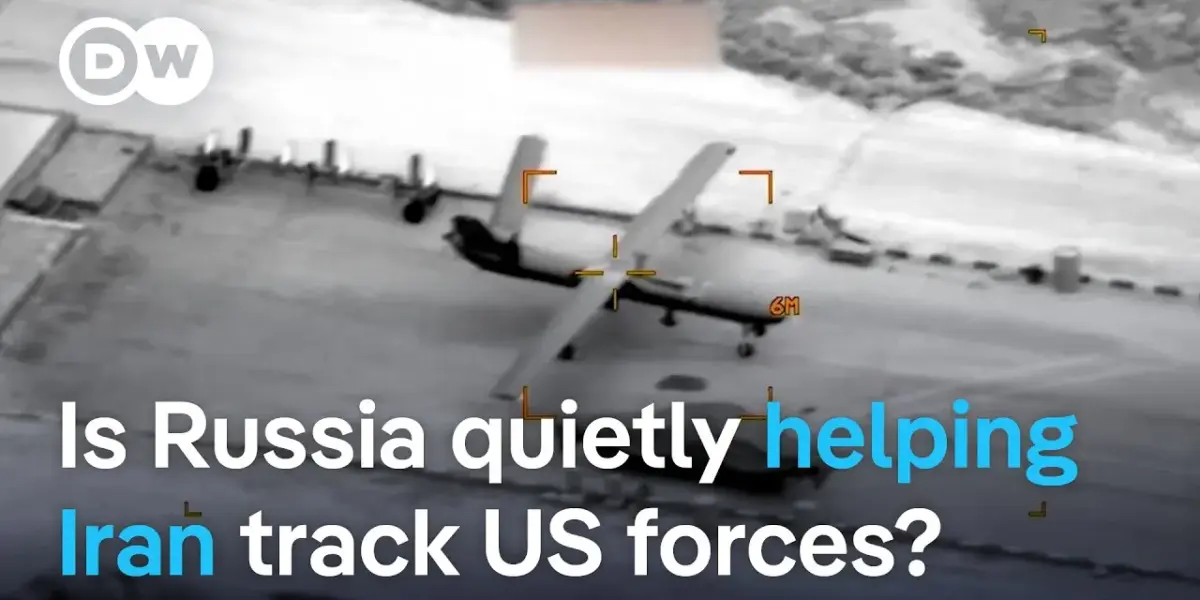
Russia Allegedly Shares US Military Intelligence with Iran
Recent reports from U.S. media indicate that Russia may be providing Iran with sensitive intelligence concerning the location and movements of American military assets, including troops, aircraft, and ships. While Russia is not an official participant in the ongoing conflict, the Kremlin and Tehran formalized a strategic partnership last year, which includes provisions for military cooperation, though not a mutual defense pact.
Strategic Implications of Intelligence Sharing
Marina Miron, a military analyst at the Defense Studies Department at King’s College London, highlighted the significant implications of such intelligence sharing for Iran’s military capabilities. “Iran doesn’t have its own advanced space capabilities compared to other actors in the region,” Miron explained. “The Russians helped to launch the Iranian Cayam satellites, so the satellite imagery could help improve Iran’s targeting and strike accuracy.”
This enhanced intelligence could provide Iran with high-resolution imagery of potential targets, such as U.S. bases, and crucial geolocation data. Given Iran’s limited missile and drone resources, precise targeting is paramount to ensure maximum impact from each strike. Furthermore, the intelligence could enable Iran to conduct surveillance on logistical hubs and troop movements, and monitor the Persian Gulf, potentially allowing them to anticipate and preempt any attacks.
“It’s important then to make sure that if Iran strikes from the Iranian perspective that the strikes are accurate and can lead to maximum damage.” – Marina Miron
Miron also suggested that China might be another source of intelligence for Iran, filling a critical gap in Iran’s own intelligence-gathering capabilities.
Potential for Escalation and Deniability
The potential for Russia to supply intelligence to Iran raises concerns about the escalation of regional conflicts and the involvement of major global powers. However, Miron noted that such support could be deniable, making it difficult to definitively prove Russian or other nations’ involvement in supplying specific targeting data to Iran. The exact degree of support also remains unknown.
“Russia and Iran have signed a treaty last January, which came into effect in October 2023, and that treaty does foresee military cooperation including the likes of intelligence sharing,” Miron stated, referencing a formal agreement that predates the current conflict. A similar, though more ambitious, treaty exists between Iran and China.
Both Russia and China have a vested interest in the survival of the Iranian state in its current form. Miron elaborated, “they would lose both in geopolitical terms in the Middle East and certainly for Russia, it would be very unfortunate to have another Venezuelan scenario here.” The collapse of Iran could create a significant geopolitical vacuum and shift the balance of power in the region unfavorably for Moscow and Beijing.
Beyond Intelligence: Future Russian Support?
When asked about the possibility of Russian support extending beyond intelligence sharing, Miron acknowledged the difficulty in assessing the extent of Moscow’s willingness to engage. While Russian diplomats publicly condemn U.S. and Israeli actions, President Putin has reportedly offered assistance to Iran, such as air defense systems, which Iran has not accepted.
Miron anticipates that any further assistance would likely involve military technology transfers and intelligence sharing – actions that require less direct commitment from Russia. “Russia will help as long as it doesn’t limit its own capabilities in the war in Ukraine,” she asserted. The Russian government and intelligence services are likely to have established a clear threshold for support that is both politically tolerable and militarily feasible.
A Quid Pro Quo: Drones for Intelligence?
The question arises whether Russia’s alleged intelligence sharing is a reciprocal gesture for Iran’s provision of drones for Russia’s war in Ukraine. Miron confirmed that Russia and Iran have a strategic agreement, and some Russian commentators believe it is time to reciprocate Iran’s support, particularly in the drone domain.
“The Russians could share their technology of the present evolution of Iranian drones with the Iranians,” Miron suggested, implying a potential exchange of advanced drone technology. “But as I said for Russia even leaving the drones aside in geostrategic terms Iran is a very important ally.” The stability of Iran is crucial for Russia’s long-term Middle East strategy. The loss of Iran as an ally could be catastrophic, potentially allowing Russian adversaries to gain influence closer to Russia’s borders.
U.S. Response and Strategic Considerations
U.S. Secretary of Defense Lloyd Austin has stated that he is not concerned about the reports of Russian intelligence sharing with Iran. Miron suggests this stance might stem from a desire to avoid further escalation and manage U.S. resources.
“Probably there is a way to possibly the United States is looking for a way to not escalate into another direction because the United States is now quite busy in Iran. The United States has domestic problems. The United States hasn’t resolved the Venezuela matter. Now there is an operation in Ecuador,” Miron observed. The U.S. may be seeking to avoid overstretching its capabilities.
Miron also drew a parallel to Russia’s argument regarding U.S. intelligence support for Ukraine, where the U.S. acts as a neutral mediator. “That could be kind of another quid pro quo where the United States says well we’re essentially doing the same so let’s just leave Russia out of it,” she proposed. From a grand strategic perspective, a confrontation with Russia while attempting to counter China through influence in Iran might not be beneficial for the United States.
Looking Ahead
The evolving relationship between Russia and Iran, particularly concerning intelligence sharing and military cooperation, warrants close observation. Future developments will likely be shaped by the ongoing conflicts in Ukraine and the Middle East, as well as the broader geopolitical strategies of major global powers. The extent to which these partnerships influence regional stability and the potential for further escalation remains a critical question.
Source: Reports: Russia sharing US military intelligence with Iran | DW News (YouTube)

Related Articles

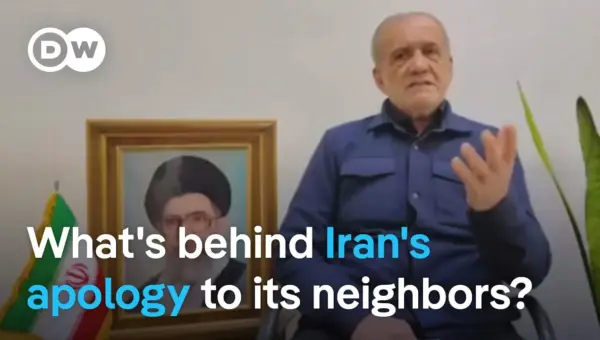
Iran Apologizes to Neighbors Amid Escalating Regional Conflict
Iran's President Masoud Pezeshkian has apologized to Gulf neighbors for recent attacks amid escalating conflict with the US and Israel. Despite the apology, questions linger about Iran's internal command structure and the reliability of its assurances as the region faces heightened instability.


Oil Prices Surge as Strait of Hormuz Blockade Hits China
Disruptions in the Strait of Hormuz have sent oil prices soaring, with traffic down 70% and over 150 ships stalled. Analysts link the blockade to a U.S. strategy to curb China's economic rise, potentially pushing oil prices above $100 per barrel.


US Mideast War Fuels Putin’s European Energy Chokehold
A US-led conflict in the Middle East has closed the Strait of Hormuz, creating an energy crisis that empowers Vladimir Putin to put Europe in a chokehold. Despite claims of decoupling, Europe's continued reliance on Russian LNG, coupled with limited alternatives, leaves it vulnerable to escalating prices and potential de-industrialization.