Russia Scales Back Victory Day Amid Shifting Global Alliances
Russia appears to be downplaying its Victory Day celebrations amid global shifts where Israel and the U.S. are seen as key beneficiaries of Middle East conflicts. Meanwhile, Ukraine faces mixed economic impacts from regional instability, while U.S. political figures engage in international endorsements.

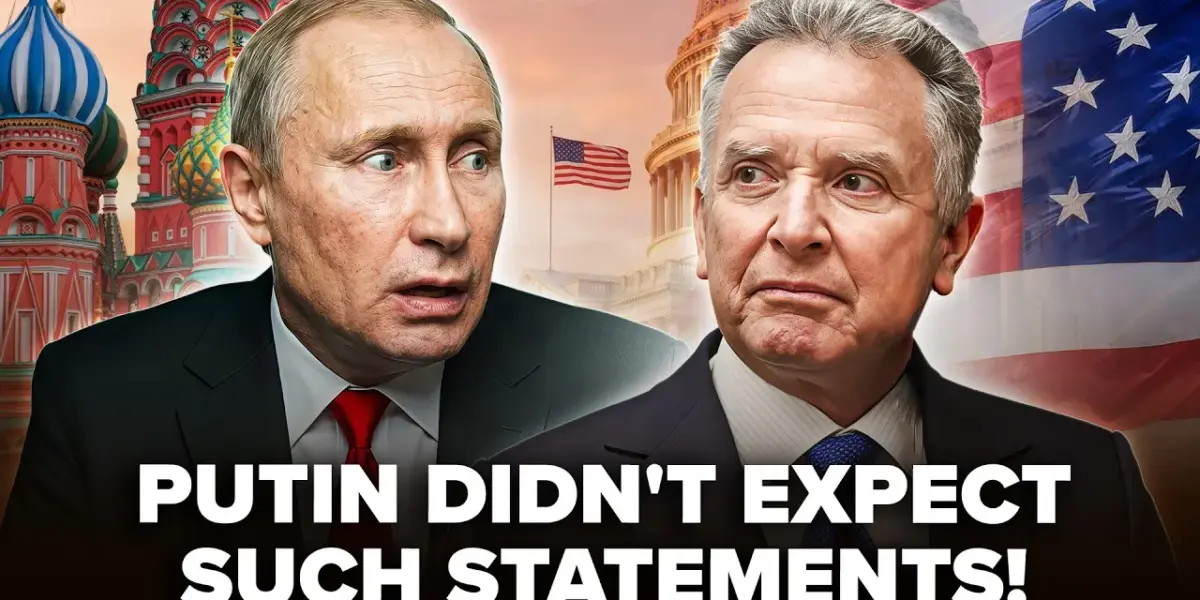
Russia Scales Back Victory Day Amid Shifting Global Alliances
Recent signals suggest Russia may be reducing the scale of its traditional Victory Day celebrations, a move analysts link to domestic pressures and a desire to avoid drawing attention to perceived strategic setbacks. This comes as global dynamics shift, with the United States and Israel emerging as primary beneficiaries of recent regional conflicts, while Iran faces significant military degradation.
Middle East Conflict Dynamics Favor U.S. and Israel
While the United States conducted strikes against numerous strategic sites in the Middle East, the lasting impact appears to favor Israel and the U.S. over Iran. According to observations, Iran’s military manufacturing capabilities, rocket systems, and naval assets have been significantly damaged during the conflict. This assessment suggests Iran gained no discernible advantages from the five-and-a-half-week engagement.
The resolution of the conflict mirrored predictions, with a swift cessation of hostilities. This approach aligns with a pattern of de-escalation that avoids broad regime change or territorial objectives, focusing instead on immediate conflict termination. Both Iran and Israel declared victory, though the nature of these claims differs. Iran’s assertion of victory is seen as a political declaration, while Israel’s government proclaimed success to its public. However, internal divisions within Israel highlight a debate between those who view the outcome as a clear win and those who believe the conflict should have led to a more decisive removal of the current Iranian leadership.
A distinction is drawn between a ‘win’ and a ‘victory.’ A win is akin to a single game in sports, where success is temporary and future contests are inevitable. A victory, like the Allied triumph over Nazi Germany, is a definitive, once-and-for-all event. The recent conflict is characterized as a ‘win or loss’ scenario, implying that future confrontations between Iran and Israel remain likely.
Russia’s Victory Day Under Scrutiny
Rumors circulating about the potential cancellation or scaling down of Russia’s main Victory Day event are gaining traction, despite a lack of concrete evidence. These rumors appear credible due to Russia’s earlier decision to forgo its annual celebration of the Crimean annexation in March. This event, typically a significant national observance involving President Putin, was conspicuously absent this year.
Security forces had reportedly begun preparations for the Crimean annexation commemoration in Moscow, only for it to be canceled at the last moment. Similar, albeit halted, preparations are now reportedly underway for the Victory Day parade. Historically, large-scale Victory Day parades were not an annual Soviet tradition, occurring only once a decade. The Russian Federation, as a state, has a limited history of independent achievements to celebrate. Many observed successes during the Soviet era, such as space exploration or military victories, are now attributed to the previous regime.
The decision to skip the Crimean annexation celebration, and potentially Victory Day, could be framed as a return to Soviet-era traditions of less frequent observances. This narrative offers a potential explanation for scaling back large public displays.
Ukraine’s Strategic Position and Economic Impacts
The cessation of hostilities involving Iran has had mixed consequences for Ukraine and Russia. On one hand, the pause disrupted vital high-tech weapons and drone supplies from Iran to Russia. Iran had been a significant supplier, providing advanced technology that Russia, described as technologically primitive, lacked. The conflict also disrupted supply chains through the Caspian Sea, as Israeli actions reportedly targeted Iranian naval assets and harbors, further hindering weapon transfers to Russia. This disruption is viewed as positive news for Ukraine.
Conversely, the conflict led to a surge in oil prices. This price increase benefited Russia, providing substantial additional revenue in March. However, Ukrainian air strikes on key Russian oil harbors in the Baltic and Black Seas, including Primorsk, Ust-Luga, and Novorossiysk, have significantly reduced Russia’s oil export capacity. While oil prices initially doubled, the reduced capacity has led to a net revenue similar to pre-war levels. Reconstructing these damaged port facilities is expected to take months, potentially limiting Russia’s ability to capitalize on future oil price increases.
The narrative surrounding Ukraine’s influence on global events is presented with a degree of irony, highlighting claims of Ukraine influencing U.S. and Hungarian elections, and even operating military bases in Libya. These assertions are juxtaposed with the reality of Ukraine’s ongoing struggle for survival and reliance on international support.
U.S. Political Landscape and Hungary’s Elections
The endorsement of Hungarian Prime Minister Viktor Orbán by U.S. Senator JD Vance has sparked discussion regarding U.S. political alignments and Hungarian elections. Orbán, a right-wing politician, received support from Vance, who shares similar political views. This support is seen as a normal political interaction between figures of the far-right, rather than an endorsement of Orbán’s pro-Putin stance. Vance’s visit and support for Orbán reportedly had a negative impact on Orbán’s standing in opinion polls, suggesting a potential backlash.
The article touches on the rise of alternative political movements, including the Alternative for Germany party, described as a ‘new Nazi party.’ JD Vance’s perceived support for such groups raises questions about his broader political affiliations and influence.
Meanwhile, discussions continue regarding potential future U.S. presidential candidates, with Donald Trump Jr. reportedly gaining significant traction within the Republican party, positioning him as a potential contender alongside or even ahead of Donald Trump himself in some polls. This suggests a potential dynastic succession within the Trump political sphere.
Direct Iran-U.S. Negotiations and Ceasefire Dynamics
The timing of potential visits by figures like Jared Kushner and Ronen Witkov to Ukraine is questioned, especially given their involvement in sensitive negotiations. A proposed two-week ceasefire between Iran and the United States, beginning around April 10th, is seen as strategically significant. This period aligns with Israel’s Independence Day, a date when former President Trump is expected to receive a prestigious Israeli award. This suggests that U.S. diplomatic efforts may be prioritizing these negotiations over other international engagements.
The author predicts that the current ceasefire between Iran and the U.S. will extend beyond its initial two-week duration. This projection is based on Trump’s tendency to view such agreements as permanent, subject to ongoing negotiation. Potential events like Trump’s visit to China in mid-May and his upcoming birthday, followed by U.S. Independence Day, further suggest a period of de-escalation in U.S.-Iran relations until at least the summer.
Source: 😱Panic in Kremlin! Putin is canceling the event. Urgent visit to Kyiv: everyone is on edge (YouTube)

Related Articles

Hungary Votes: Orban’s Russia Ties vs. EU Future
Hungary is at a critical juncture as voters decide between Prime Minister Viktor Orban's Russia-aligned policies and opposition leader Peter Márki-Zay's pro-EU platform. The election highlights deep societal divisions and carries significant implications for the future of Hungary and the European Union.
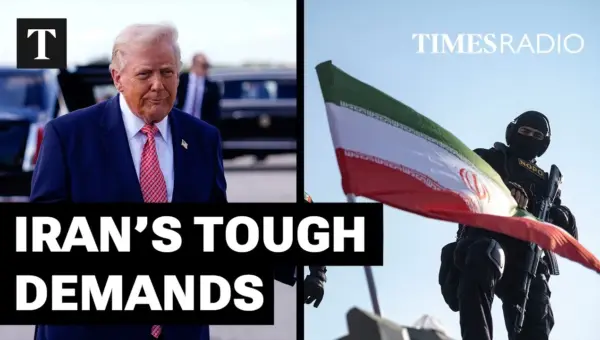
Iran Demands Full Control Over Strait of Hormuz
Iran is pushing for maximum control over the Strait of Hormuz, presenting a maximalist demand in ongoing negotiations. Deep disagreements persist between key global players, particularly concerning Iran's nuclear ambitions and the stability of a potential ceasefire. The clarity and unity of negotiating teams remain uncertain, adding further complexity to the delicate geopolitical situation.


WTO Crumbles, Ushering In Global Trade Wars
The World Trade Organization is collapsing, signaling a return to global trade wars and regional economic blocs. This shift is driven by changing U.S. priorities and the WTO's own structural flaws, forcing countries to find new economic and political models.