Russia Faces Internal Revolt Risk Amid Ukraine War Strain
US Army veteran and analyst Ryan Mugbat warns that Russia's protracted war in Ukraine could trigger internal rebellion due to economic strain and returning, disgruntled veterans. He details how military corruption and battlefield realities might lead to widespread unrest against Putin's regime. The analysis also covers evolving warfare tactics and geopolitical shifts.

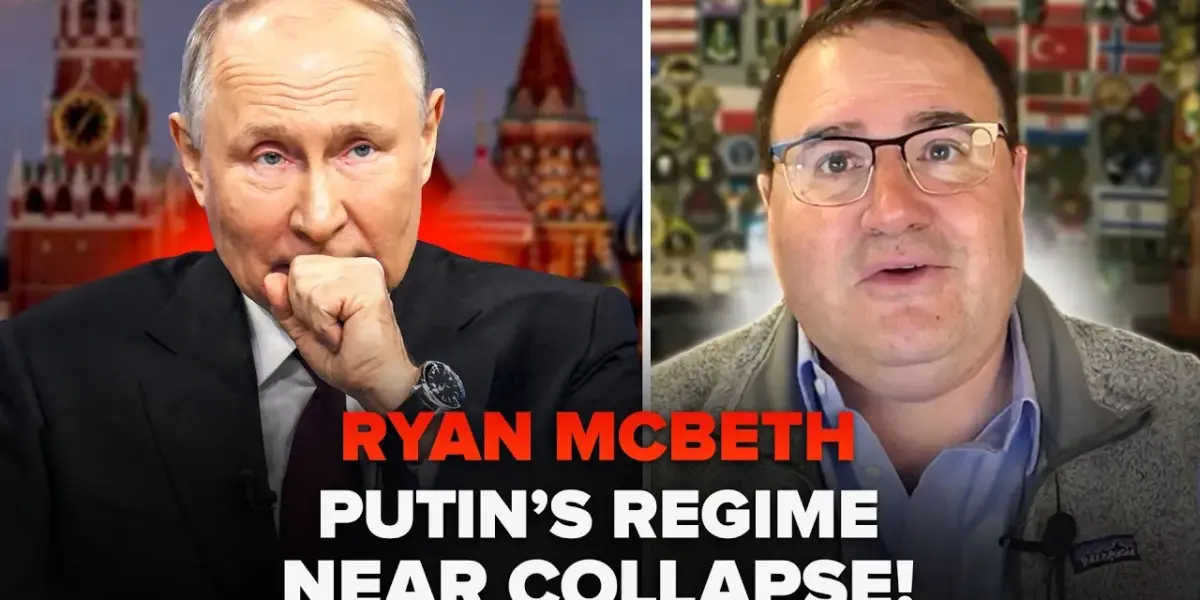
Russia’s War in Ukraine Fuels Internal Unrest Fears
The protracted conflict in Ukraine is increasingly raising concerns about the potential for internal instability within Russia, according to US Army veteran and analyst Ryan Mugbat. Speaking on a recent program, Mugbat outlined scenarios where the war’s economic and social pressures could lead to widespread discontent and even a popular rebellion against Vladimir Putin’s regime.
‘Losing More’ Than Winning: The Grim Reality of the Conflict
Mugbat expressed skepticism about framing the Ukraine war in terms of traditional victory or defeat. “This isn’t a question of win and lose. This is a question of who loses and who loses more,” he stated. He highlighted the long-term devastation for Ukraine, including the need for psychological care for wounded veterans and the decades-long challenge of demining areas like Donbas, drawing a parallel to unexploded ordnance from World War I still found in France.
The analyst suggested that while Ukraine might “lose less than Russia,” the ultimate goal is for Russia to suffer greater losses. The prospects for peace, however, appear dim. Mugbat posited that Putin sees no “off-ramp” for the conflict and that Ukraine’s participation in negotiations is largely to appease international allies, such as a potential President Trump.
Economic Strain and a Powder Keg of Discontent
The Russian economy, while currently appearing robust due to military spending and arms manufacturing, is built on a fragile foundation, according to Mugbat. He explained that an end to the war would lead to mass unemployment for those in the military and defense industries. Compounding this is Russia’s limited ability to sell oil globally, relying heavily on China and India.
A significant concern is the return of hundreds of thousands of veterans who will face unemployment. “People who know how to use firearms. They are angry at how they were treated by the government. Perhaps their pension payments or their disability payments are late or non-existent because Russia doesn’t have the money. And that’s how you end up with a revolution like you saw in 1917,” Mugbat warned.
The ‘Hollow Force’ and the Specter of Rebellion
Drawing parallels to the Syrian civil war, Mugbat described a potential breakdown in military discipline within Russia. He explained how soldiers might bribe commanders to remain on official rolls while working elsewhere, leading to a “hollow force” where only those who cannot afford the bribe are sent to the front lines.
“I can easily see some Russian commanders accepting money from soldiers. So that soldier gets to be a drone operator or stay in the command post. Uh and soldiers who can’t afford that bribe, they get get sent out to go fight,” Mugbat said. This system, he predicts, could breed popular rebellion, particularly if commanders are forced to send paying soldiers to the front due to manpower shortages. “If that starts happening on a very wide basis, then I think you could certainly see at least isolated pockets of rebellion,” he added.
Shifting Tactics and Technological Leaps in Warfare
The war in Ukraine has seen significant shifts in military tactics and technological adoption. Mugbat noted Russia’s adaptation, including increased use of drones for artillery spotting and the adoption of tactics observed from Ukrainian forces. Russia has also increasingly relied on Iranian drones due to a depletion of its strategic cruise missile stocks.
He compared the current rapid pace of technological change to World War I, but with a significantly accelerated timeline. “Things are changing about every 6 to 8 weeks on the ground. The tech is changing every 6 to 8 weeks, which is really an incredible rate of advancement,” Mugbat observed. He also pointed to Ukraine’s use of ground-based autonomous vehicles as a development not even conceived of in 2022.
The Evolving Role of Drones and Counter-Drone Systems
Mugbat anticipates a significant evolution in drone warfare. He emphasized that the entire battlefield is now exposed, necessitating new approaches to “masking”—hiding vehicles not just visually but also from thermal and radio emissions. The days of large, centralized command centers are likely over, as they are easily targeted.
While Ukraine has leveraged drones due to insufficient artillery support, Mugbat cautioned that future conflicts might not solely revolve around drones. “Drones are going to be a component, but that doesn’t mean every single soldier needs a drone and and uh drones are going to be the only game in town. No, tanks still have purpose and value. Aircraft still have value. The average infantry man still has value,” he asserted. He predicts that within five years, advanced counter-drone systems will integrate drones as just another component of warfare.
Air Dominance: The Key to Modern Warfare Success
The effectiveness of advanced Western equipment, such as Abrams tanks, is heavily dependent on achieving air dominance, Mugbat explained. He contrasted the U.S. military’s doctrine of establishing air superiority before engaging with the realities of the Ukraine conflict, where Russia’s air defenses posed a significant challenge.
“The big issue is that when the United States fights, we tend to fight with complete air dominance,” he stated. “And I think the Abrams and the Leopard, they didn’t really work in Ukraine because in order to make that happen, you need to have total air dominance over the adversary.” The presence of Russian helicopters launching anti-tank missiles at advancing armor, without effective air cover, underscored this point.
Mugbat expressed confidence in NATO’s ability to establish air dominance over Russia, citing specialized U.S. Air Force units dedicated to suppressing enemy air defenses. He described the U.S. military’s advanced capabilities in joint all-domain operations (JADO), which integrate air, land, sea, space, and cyber warfare simultaneously. This overwhelming capacity, he believes, is something Russia has never had to confront.
Middle East Tensions and the Iran Factor
The discussion also touched upon the volatile situation in the Middle East, with Mugbat identifying Iran as a long-standing destabilizing force in the region. He characterized Iran’s actions over decades—including support for militant groups and attacks on shipping—as consistent with a “bad neighbor” behavior.
Mugbat suggested that a potential shift in U.S. policy, possibly under a Trump administration, could present an opportunity to address the “Iran problem.” He theorized that increased pressure on Iran’s military and paramilitary wings, like the IRGC, could empower the regular Iranian Army (Artesh) to instigate internal change, thereby avoiding direct U.S. ground troop deployment.
The analyst also considered the geopolitical implications, noting that weakening Iran could hinder China’s strategic ambitions, particularly concerning Taiwan, by reducing China’s access to oil supplies.
The Future of Warfare and Nuclear Proliferation
Regarding the sustainability of air campaigns, Mugbat noted that while high-end munitions are reserved for significant threats, the U.S. possesses ample stocks of laser-guided bombs and JDAM kits for ongoing operations. He stressed the importance of targeting missile launchers and command-and-control systems rather than solely relying on defensive missiles.
On the question of Iran’s nuclear ambitions, Mugbat stated that while the technology for building a nuclear weapon is not overly complex, the challenge lies in enriching uranium, a step he believes Iran may have already taken. He concluded that if Iran remains under its current leadership, the pursuit of nuclear weapons is likely, but a change in regime could alter this trajectory.
The ongoing conflict in Ukraine, coupled with the complex geopolitical landscape, continues to be a critical focus, with potential repercussions reaching far beyond the immediate battlefields.
Source: 😱REVOLT against Putin! Russians would DESTROY the regime. Kremlin under THREAT @WorldatStake24 (YouTube)

Related Articles
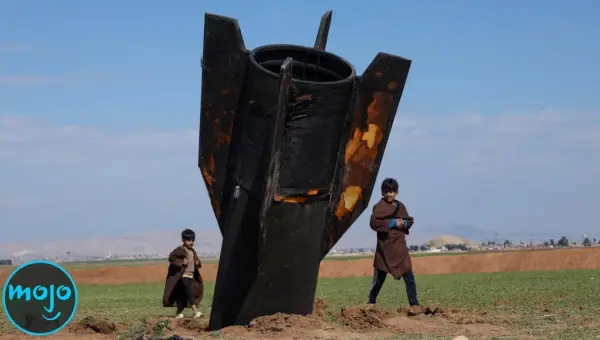
Is World War 3 Already Underway? Major Events Spark Debate
A recent analysis argues that major global events, from the Ukraine invasion to the COVID-19 pandemic, may have already set the stage for World War III. The discussion prompts a re-evaluation of recent history and raises unsettling questions about the current state of global conflict.
Moscow Shifts Blame, Eyes Global Order as Ukraine Talks Stall
Moscow casts doubt on upcoming Ukraine peace talks, shifting focus to global order discussions. Meanwhile, Italy links current crises to the Ukraine war, and Europe explores enhanced defense strategies amid rising tensions.

IOC Under Fire: Ukraine Accuses Olympic Committee of Bias
Ukraine has accused the International Olympic Committee (IOC) of exhibiting double standards, alleging a shift towards a more Russia-friendly stance. The committee faces criticism for permitting Russian and Soviet symbols while reportedly penalizing Ukrainian athletes for less controversial displays.