Russia Faces Black Market Oil Woes, War Economy Strains
Russia's reliance on black market oil sales creates long-term economic risks, while battlefield vulnerabilities and strained finances persist. Analysts discuss the strategic messaging from Moscow and the growing threat of drone warfare.


Russia’s Black Market Oil Reliance Creates Long-Term Economic Risk
Russia is increasingly relying on the black market to sell its oil, a strategy that analysts warn could jeopardize its long-term financial stability. While these illicit sales provide immediate, albeit lower, revenue, they risk alienating crucial long-term clients. Moscow’s current approach prioritizes short-term gains over the sustained liquidity needed to fund its ongoing military operations.
Political analyst Jason Smart discussed the complex situation surrounding Russia’s war economy and its international messaging. He highlighted that statements from Russian officials like Sergey Lavrov and Dmitry Peskov often serve multiple purposes, including signaling to domestic audiences and attempting to influence Western perceptions. However, the core reality is that Russia’s economic situation is precarious.
Lavrov’s Statements Signal No Rush to Peace
When Foreign Minister Sergey Lavrov stated there were no deadlines for a peace deal, it was interpreted as a signal that Russia is not in a hurry to end the conflict. This message aims to project an image of confidence, despite battlefield setbacks and economic pressures. Analysts suggest this indicates a belief within the Kremlin that delaying tactics could eventually weaken Western support for Ukraine.
Similarly, statements from Dmitry Peskov, the Kremlin’s spokesperson, about readiness for talks without concrete proposals are seen as disingenuous. The overarching Russian strategy appears to be delaying the war’s end, hoping that Western resolve will falter. This approach acknowledges that immediate territorial gains, like capturing Kyiv, are unlikely.
Economic Strain and Vulnerability Exposed
Rising global oil prices do not significantly bolster Russia’s war effort. The European Union’s oil price cap, set around $41 per barrel, and Russia’s own budget needs, which require prices closer to $59, mean that even increased black market sales offer limited relief. These sales occur outside official channels, meaning buyers are unlikely to pay premium market rates.
Putin cannot afford to alienate these black market clients by demanding higher prices. Losing them would mean losing a vital, albeit illicit, revenue stream when formal export options may diminish. The Kremlin’s focus must remain on long-term financial liquidity, not just immediate, unstable gains.
The United States’ partial easing of pressure on Russian oil markets is seen as unfortunate but unlikely to alter the war’s trajectory significantly. Russia faces massive budget deficits, having already surpassed its annual target. The banking sector, in particular, is under severe strain, with a potential cascading collapse predicted by year’s end.
Furthermore, increased costs for international shipping insurance and the risks associated with the “shadow fleet” of tankers used for illicit sales further reduce Russia’s net revenue. The prosecution of those involved in this shadow fleet raises the stakes for crew members, demanding higher pay and increasing per-shipment costs.
Vulnerability to Attacks and Infrastructure Threats
Russia’s vast territory, spanning 11 time zones, presents a significant challenge for air defense. This inherent weakness, recognized even during the Soviet era, leaves the country vulnerable to aerial attacks. Sabotage efforts by groups like “Kesh” further highlight Russia’s limited capacity to protect its critical infrastructure.
Rail transport, which accounts for approximately 78% of Russia’s military logistics, is a prime target. Attacks on railroad junctions and communication lines disrupt supply chains, impacting the military’s ability to operate effectively. The Kremlin’s labeling of Ukrainian strikes as “terrorism” is a consistent rhetorical tactic, used for domestic and legal framing, rather than an indicator of genuine external terrorism.
Ukraine’s Growing Influence in Drone Warfare
Ukraine is emerging as a leader in drone warfare expertise, a development that could translate into significant geopolitical influence. The country’s front-line experience provides it with invaluable knowledge in planning, executing, and countering drone operations. This battlefield-tested expertise is becoming a marketable skill, particularly in the Middle East.
President Zelenskyy’s warnings about drone-based terrorism in Europe are credible. Russia has repeatedly violated European airspace, and drone strikes have caused environmental damage, such as oil contamination in the Nistru River near Moldova. The West’s response to these incursions has been notably weak, raising concerns about preparedness for further escalation.
Geopolitical Shifts and Transatlantic Cooperation
Developments around the Strait of Hormuz indirectly impact the war in Ukraine. The potential for increased Russian oil sales due to eased U.S. sanctions offers a temporary financial boost. More critically, conflict in the Middle East could divert U.S. arms supplies, which historically flow to Europe and then to Ukraine. This diversion could exacerbate existing shortages in air defense systems, a critical need for both Ukraine and European allies.
Transatlantic unity faces challenges as priorities diverge, particularly concerning the Middle East. The U.S. engagement in Iran, lacking a clear strategy, could lead to increased instability, including the use of proxies by Iran, which also maintain ties with Russia. This dynamic allows Russia to potentially share intelligence, aiding Iran and its proxies in attacks on U.S. and allied facilities globally. This shift in global focus is a significant concern.
French Nuclear Umbrella and Russian Reactions
The discussion around France extending its nuclear deterrence to European allies, potentially including Ukraine, is gaining traction. While unlikely in the short term, such an arrangement could become more probable in the long run, offering security benefits to France and solidifying its role in European security architecture.
The U.S. response to such a French initiative remains unclear, with current policy lacking definition. Russia is expected to protest any concrete guarantees of nuclear protection, framing it as escalation. However, analysts argue that Russia is not in a position to dictate the security choices of sovereign nations. Its current military and economic standing limits its ability to effectively counter such strategic moves by Western powers.
Hungary’s Political Maneuvering
Hungary’s decision to resume repairs on the Druzhba pipeline under EU pressure is interpreted as a move driven by domestic politics. Prime Minister Viktor Orbán’s actions are seen as posturing for upcoming elections, aiming to present himself as a defender of Hungarian interests against Ukraine and the EU. These statements and actions are largely discounted as politically motivated rhetoric.
Source: 😱What Lavrov said shocked everyone! Putin is demanding unthinkable. Kremlin regime is shaking (YouTube)

Related Articles


G7 Allies Clash Over Iran War Strategy, Urge Focus on Russia
G7 foreign ministers met in Paris, revealing deep divisions over the U.S. war with Iran. European allies urged the U.S. to pressure Russia, linking its actions to the conflict and fearing support for Ukraine will wane.
Ukraine’s New Strategy Cripples Russian Oil Exports
Ukraine's new multi-layered strategy is rapidly disabling Russia's oil export capabilities. By attacking loading facilities and working with allies to intercept the "shadow fleet," Ukraine is significantly reducing Russia's oil revenues, even amidst rising global energy prices.
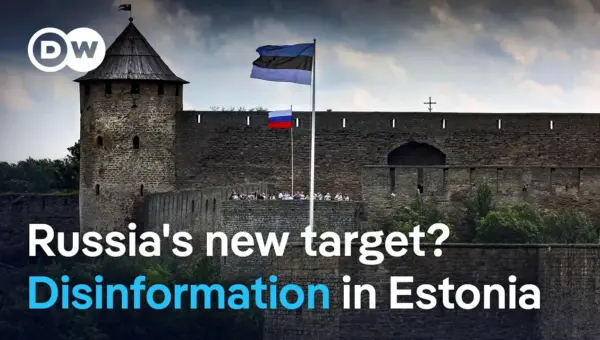
Russia Targets Estonia With Disinformation in Border City
Russia is reportedly conducting a disinformation campaign targeting Estonia's border city of Narva, aiming to sow discord among its Russian-speaking population. The online operation promotes separatist ideas, though residents largely dismiss the claims as fake. Estonian authorities view the campaign as a low-cost effort to undermine trust, with no concrete evidence of direct Russian government involvement.