Russia Escalates Nuclear Threats, Rejects Peace Talks Amid Global Tensions
Russia has escalated its nuclear threats and declared peace talks with Ukraine are off the table, demanding military victory instead. As Moscow ramps up its aggressive rhetoric, Europe is preparing for potential conflict, with Poland and France discussing enhanced nuclear deterrence. Meanwhile, the U.S. is engaged in significant military operations in Iran, adding to a landscape of heightened global tensions.

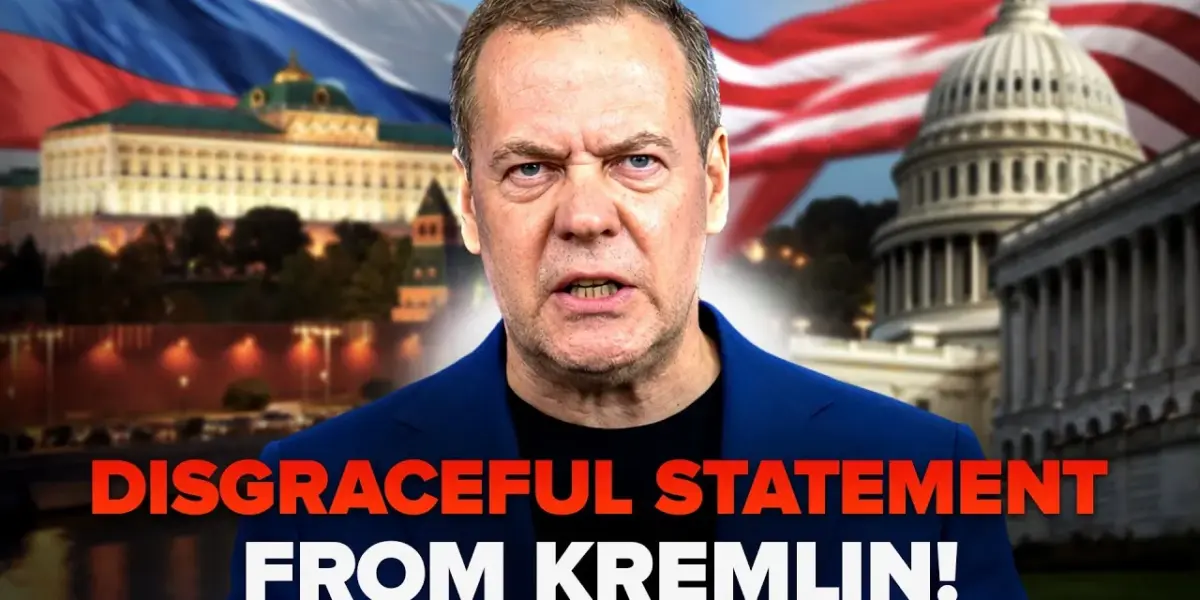
Russia Issues Stark Nuclear Warnings, Halts Peace Diplomacy
Moscow has once again amplified its nuclear rhetoric, this time directly targeting the United States and unequivocally stating that peace talks with Ukraine are off the table. Senior Russian officials insist that all objectives set by the Kremlin for the ongoing “special military operation” must be achieved through military victory, signaling a hardening stance that chills international diplomacy. The pronouncements come as Europe braces for potential prolonged confrontation with Russia and the U.S. engages in significant military operations in Iran.
Kremlin’s “Victory First” Stance on Ukraine
Dmitry Medvedev, Deputy Chairman of Russia’s Security Council and a figure known for his hawkish pronouncements, has openly dismissed the value of peace negotiations with Ukraine. Speaking to pro-Kremlin media outlets, Medvedev declared that diplomacy is not currently on Moscow’s agenda, asserting that Russia has no interest in talks until it secures a definitive “victory.” He framed negotiations not as a path to de-escalation, but as an obstacle to achieving Russia’s military ambitions on the battlefield. “Negotiations are not the main thing at all. The main thing is victory in the special military operation achieving all the goals set by our supreme commander-in-chief and such a victory can be won without any negotiations,” Medvedev stated, reinforcing fears among Ukraine’s allies that Moscow is relying on intimidation, including nuclear threats, rather than genuine diplomatic engagement.
Nuclear Brinkmanship and U.S. Fears
Medvedev’s rhetoric also included a direct nuclear threat aimed at the West, suggesting a catastrophic conflict would make the atomic bombings of Hiroshima and Nagasaki seem insignificant. He claimed that the United States fears Russia, a conclusion he drew following a U.S. strike on Iran, described as a key Russian ally, which reportedly resulted in the death of Iran’s supreme leader. Medvedev posited that the international community’s push for talks is not to foster peace, but to provide Ukraine with time to bolster its defenses. “There is only one guarantee. The US fears Russia and understands the cost of a nuclear conflict. If such a conflict occurs, Hiroshima and Nagasaki will be child’s play in a sandbox,” he warned.
Europe Bolsters Defense, Fears Russian Aggression
In parallel, European nations are increasing their readiness for a potential major confrontation with Russia. Officials in the Czech Republic have issued a stark warning: a significant armed conflict in Europe could erupt within the next three to six years if Western allies do not demonstrate a robust commitment to self-defense. According to Czech news outlet Octal, the Chief of the General Staff of the Czech Army, Karel Řehka, cited intelligence from allied nations suggesting that Russian President Vladimir Putin could initiate further aggression in Europe within this timeframe. Řehka emphasized that Russia’s strategic goals are fundamentally at odds with the interests of European citizens, and that an armed conflict is a distinct possibility, with its likelihood inversely proportional to the West’s determination and investment in defense and unity.
Poland and France Enhance Nuclear Deterrence
Responding to these perceived threats, Poland has initiated discussions with France and other close European allies regarding the expansion of nuclear deterrence capabilities. Polish Prime Minister Donald Tusk announced that Warsaw is consulting on an advanced nuclear deterrence program, stating, “We are arming up together with our friends, so that our enemies will never dare to attack us.” French President Emmanuel Macron confirmed an expansion of France’s nuclear arsenal on March 2nd, underscoring the nation’s commitment to maintaining effective deterrence in a volatile world. Macron also announced that specific figures regarding France’s nuclear arsenal would no longer be publicly disclosed. “To be free, one must command respect and to command respect, one must be strong, and the increase in our arsenal attests to that,” he remarked. France is prepared to offer strategic nuclear deterrence resources to European allies, including Germany, the United Kingdom, the Netherlands, and Poland, though final decision-making authority will remain with the French president.
U.S. Military Operations and Ammunition Concerns
Meanwhile, the United States is reportedly conducting a significant military operation in Iran, with Secretary of State Marco Rubio indicating that the most impactful strikes are yet to come. The operation aims to dismantle Iran’s ballistic missile facilities and production capabilities, as well as neutralize threats posed by the Iranian Navy to international shipping. Washington is also preparing for potential disruptions to energy markets and tanker traffic around the Strait of Hormuz. In a separate development, former U.S. President Donald Trump criticized the Biden administration’s handling of military stockpiles. He claimed that while the U.S. possesses substantial high-grade weaponry stored overseas, significant amounts have been sent to Ukraine, leaving domestic supplies short of his expectations. Trump asserted that he had rebuilt the U.S. military during his first term and that the nation is now well-stocked and ready.
Iran’s Nuclear Ambitions and Stalled Talks
Adding another layer of complexity, reports suggest Iran has claimed it possesses enough enriched uranium to produce multiple nuclear bombs. Steve Vitkov, a former special envoy for the Trump administration, stated that Iran made this assertion during early nuclear negotiations this year, boasting about having 460 kg of 60% enriched uranium. The Trump administration had sought to negotiate an agreement to halt Iran’s missile program, limit its navy, and curb its uranium enrichment, but these efforts reportedly stalled by the second round of talks, with a third round proving to be the final attempt.
Future Outlook: Diplomacy or Escalation?
As diplomatic channels remain strained and nuclear rhetoric escalates, the planned next round of talks between Ukraine and Russia, tentatively scheduled between March 5th and 9th, faces an uncertain future. Ukrainian President Volodymyr Zelenskyy has indicated readiness to meet in various locations, including Switzerland and Turkey, should the original venue in Abu Dhabi become untenable due to rising Middle East tensions. However, with Russia firmly rejecting negotiations in favor of military objectives and Europe actively bolstering its defenses against a perceived long-term threat, the question remains whether diplomacy can avert a wider catastrophe or if the world is heading towards further escalation.
Source: Kremlin exploded with statement on war! Nobody expected this from Putin.World froze at this decision (YouTube)

Related Articles

Middle East Conflict Sparks Highest Oil Prices in Two Years
Heightened conflict in the Middle East has propelled oil prices to a two-year high, impacting consumers globally. From Germany's double-digit fuel cost increases to renewed debates on energy policy in the US, the surge is reshaping economic landscapes and forcing nations to confront energy security.

Trump’s Global Gambit Ignites Fury, Allies Flee
Donald Trump's recent military actions have triggered widespread condemnation from U.S. allies, who decry the disregard for international law and the erosion of global order. As tensions escalate, traditional partnerships fray, raising concerns about future stability and the United States' role on the world stage.
Russia Stretched Thin, Allies Falter: Expert Sees Putin’s Regime at Risk
Former U.S. Army General Ben Hodges believes Russia's inability to aid Iran signals significant strain, potentially pushing Putin's regime towards collapse. He notes rising oil prices benefit Russia indirectly, while a global demand for precision weapons could impact Ukraine's military aid. Hodges also discusses geopolitical shifts, the interconnectedness of global conflicts, and potential 'black swan' events affecting Russia.