Russia, China Pursue New Armor-Piercing Rounds
Russia and China are reportedly developing new 6.02x41 mm and 6.8x50 mm armor-piercing rifle cartridges, respectively. These initiatives aim to defeat modern body armor and lightly armored vehicles, mirroring U.S. Army efforts and signaling a potential global small arms race.

Russia, China Develop New Armor-Piercing Ammunition
Russia and China are reportedly developing new high-velocity, armor-piercing rifle cartridges, mirroring efforts by the U.S. Army. These new rounds, designed to defeat modern body armor and lightly armored vehicles, signal a potential shift in global small arms development.
Russia’s New Caliber and Weapons
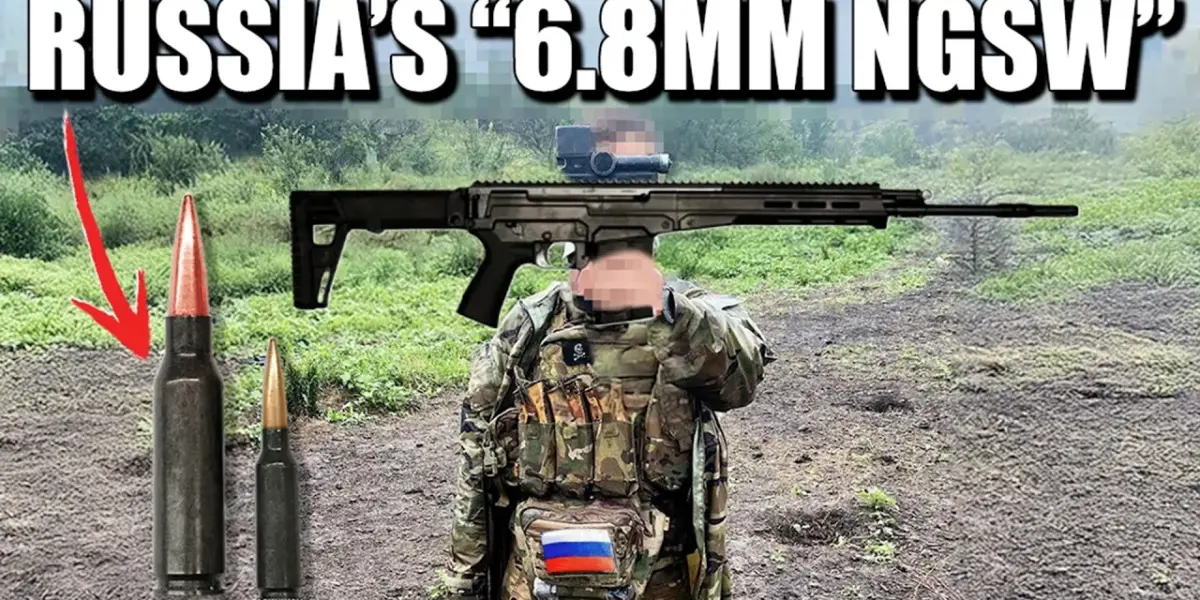
Russia’s Kalashnikov concern, in partnership with the Tula Cartridge Works, has patented a new 6.02×41 mm cartridge. This collaboration between two major Russian arms companies highlights the significance of this development within their military-industrial complex. Marketing materials for the new round prominently feature a tungsten carbide penetrator, indicating its primary purpose is to pierce NATO-standard body armor and vehicles.
The Russian patent claims the new cartridge can penetrate 10 mm of armor at 300 meters. While this offers significantly more power than older Russian rounds, it is expected to deliver about 20% less muzzle energy than the U.S. Army’s new 6.8 mm round. Russia appears to be prioritizing lower recoil while still achieving better armor penetration. This focus on defeating body armor is likely driven by observations from the conflict in Ukraine, where soldiers on both sides are equipped with advanced protective gear.
Ballistic charts suggest the heavier 6.02 mm bullet starts slower than Russia’s current 5.45 mm round but maintains its speed over distance. This sustained velocity helps preserve its armor-piercing capability and allows for easier aiming with a flatter trajectory. Compared to the older 7.62×39 mm caliber, the new round offers superior performance and range. It is estimated to have about 40% more muzzle energy than the legacy 5.45 mm round. The primary drawback could be ammunition capacity, as troops often carry older, lighter rounds.
The new caliber is intended for use with new firearms, including the AK-22, an enlarged AK design, and the SVCH, a semi-automatic marksman rifle. Early reports suggest these could become the new standard issue weapons for Russian troops, similar to the U.S. Army’s Next Generation Squad Weapon (NGSW) program.
China’s Parallel Development
China is also reportedly working on a new intermediate caliber, the 6.8×50 mm cartridge, which shares similarities with the American 6.8 mm round. Information about China’s program is less official, emerging from social media and leaked documents. Photos have emerged showing China’s newest infantry rifle, the QBZ-191, chambered in this rumored 6.8 mm caliber.
Like the Russian design, the Chinese bullet is believed to use a tungsten carbide core for enhanced armor-piercing performance. Leaked research papers from 2025 reportedly examined the armor-piercing capabilities of 6.8 mm tungsten carbide rounds. These studies not only tested penetration against armor plates but also measured the effect on ballistic gel behind the plates, suggesting a focus on defeating foreign body armor standards, such as the U.S. NIJ Level 4 standard.
With a reported muzzle velocity of 740 m/s, China’s round is slower than the U.S. Army’s 6.8 mm common cartridge, which travels at 925 m/s. However, China’s People’s Liberation Army (PLA) regularly trains with magnified optics, potentially allowing them to effectively use a round with enhanced range and accuracy, even if it has less muzzle energy than the U.S. counterpart.
Market Impact and Investor Considerations
The development of these new calibers by Russia and China suggests a global arms race focused on overcoming advancements in body armor. For investors, this trend could impact defense contractors and materials suppliers.
- Defense Industry: Companies involved in small arms manufacturing, advanced materials (like tungsten carbide and advanced ceramics for armor), and optics could see increased demand.
- Materials Science: The push for better armor penetration highlights the ongoing importance of high-strength, lightweight materials.
- Geopolitical Risk: Increased military spending and the development of new weapon systems can reflect or exacerbate geopolitical tensions, potentially affecting broader market sentiment.
While both Russia and China appear committed to developing these new rounds, historical performance of their defense industries suggests potential challenges in mass production and widespread adoption. Skepticism is warranted regarding ambitious claims until proven through consistent deployment and effectiveness in real-world scenarios. The convergence of similar ideas across major military powers underscores a shared strategic challenge: how to effectively counter modern protective equipment on the battlefield.
Source: Russian Army Switches to a “XM7 6.8mm NGSW” (YouTube)

Related Articles


U.S. Iran Tensions Rise Amid Shifting Alliances
Rising tensions between the U.S. and Iran are creating a volatile geopolitical situation. With conflicting signals on de-escalation and potential shifts in alliances like NATO and U.S.-Israel relations, the path forward remains uncertain. The global economy and regional stability hang in the balance.


Iran Targets US With Cyberattacks, Escalating Digital Warfare
Iran is increasingly using cyberattacks to challenge the U.S., as seen in a recent hack of the FBI director's account. Experts say this is a strategic shift due to Iran's limitations in conventional warfare. The U.S. needs to strengthen its digital defenses, focusing on encryption and cloud computing, rather than solely relying on traditional security measures.


Ukraine Strikes Russian Oil Refinery, Eyes Iran Threat
Ukrainian forces struck a key Russian oil refinery, disrupting Moscow's war capabilities. Meanwhile, Finland's president urged continued U.S. support for Ukraine, as Kyiv shares its air defense expertise globally amid growing geopolitical complexities involving Iran and potential sanctions against Hungary.