Russia Benefits as Iran Conflict Fuels Oil Spikes
The conflict in Iran is proving to be a significant financial advantage for Russia, enabling easier funding for the war in Ukraine due to soaring oil prices. Analyst Charles Hecker notes this reduces Russia's incentive for peace talks, while conflicting US messaging and domestic political pressures complicate de-escalation efforts.

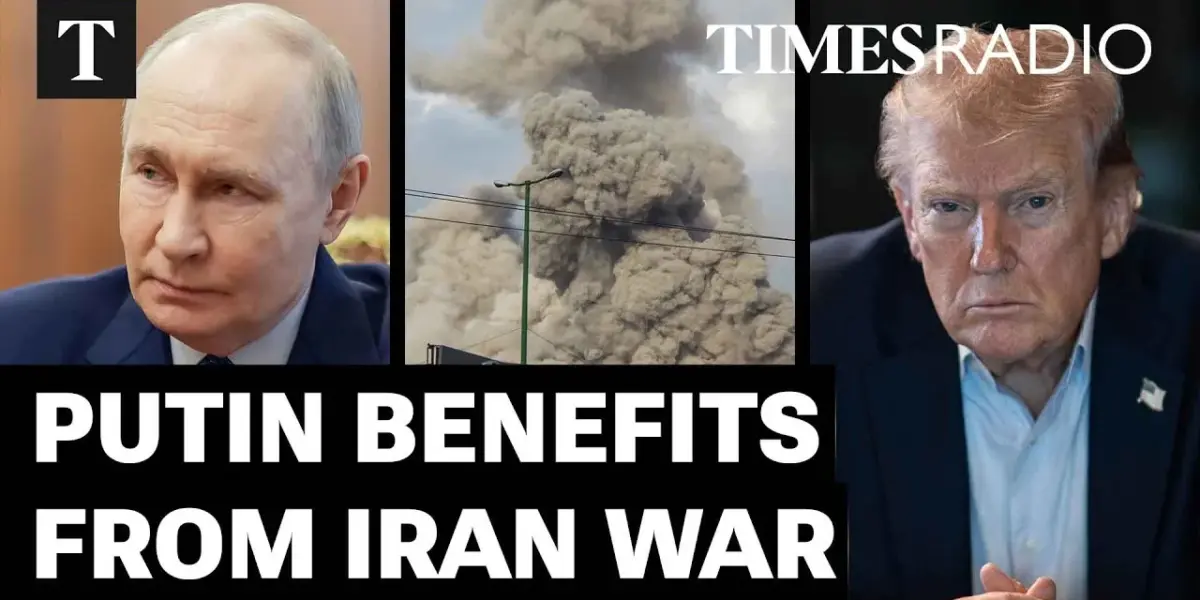
Russia Gains from Iran Conflict Amidst Oil Price Surge
The escalating conflict involving Iran has inadvertently become a significant financial boon for Russia, according to geopolitical risk analyst Charles Hecker. The substantial spike in global oil prices directly benefits Russia’s treasury, making it easier and faster for the nation to finance its ongoing war against Ukraine. This economic advantage, Hecker explains, significantly diminishes Russia’s incentive to return to the negotiating table, effectively prolonging the conflict.
Conflicting Signals on US Strikes and War’s End
The situation is further complicated by conflicting messages from the US administration. Despite suggestions from President Trump that the fighting might end soon, the Pentagon announced plans for its most intense strikes on Iran to date. “Today will be yet again our most intense day of strikes inside Iran. The most fighters, the most bombers, the most strikes, intelligence more refined and better than ever,” a representative stated, underscoring the continued military escalation.
This is juxtaposed with President Trump’s own statements following a call with Vladimir Putin. Trump described the conversation as “very good” and indicated that they discussed Ukraine, a conflict he characterized as a “never-ending fight” marked by “tremendous hatred” between the leaders. Trump suggested that Putin could be “more helpful by getting the Ukraine Russia war over with,” implying a desire for de-escalation.
Oil Prices and Political Priorities
The global energy market is highly sensitive to these geopolitical developments. Saudi Aramco, the world’s largest oil exporter, has warned of “catastrophic consequences for markets if the war continues.” In an attempt to mitigate rising prices, the White House has reportedly eased some sanctions on Russian oil. However, Hecker points out the complex political calculus at play, particularly in the United States.
“The price of gasoline at the pump in the United States is one of the US consumers most painful metrics. This is what hurts Americans in their wallets more than almost anything else,” Hecker noted. With midterm elections looming, the Democratic party is expected to leverage rising energy costs against the Trump administration. “President Trump’s number one priority is not to derail the elections for the Republicans in November,” Hecker stated, suggesting that domestic political considerations might outweigh foreign policy objectives.
“The war in Iran largely has been nothing but a net positive for Russia. The price of oil has now spiked significantly, and that means that Russia’s treasury once again will start to fill up and that means it will be easier and faster for Russia to fund the war against Ukraine. What this does is it deincentivizes any likelihood. It deincentivizes Russia from returning to the bargaining table.”
– Charles Hecker, Geopolitical Risk Analyst
Unclear Objectives in Iran
A significant point of contention highlighted by Hecker is the lack of clarity regarding the US objectives in Iran. “There’s been very little clarity and very little consistency in the messaging coming out of Washington,” he observed. The stated goals have shifted, ranging from dismantling the Iranian regime and its nuclear capabilities to supporting the Iranian public. This ambiguity makes it difficult to assess the potential impact of US actions.
Hecker expressed skepticism about the rapid achievement of these goals, especially given the fluctuating rhetoric. “None of that is going to happen, you know, overnight, and it’s not going to happen in the time frame that President Trump is is forecasting,” he said. The risk, he warned, is that the conflict could end without achieving any of its stated objectives.
Market Reactions and Inconsistent Messaging
The market’s reaction to President Trump’s pronouncements underscores the volatility. “What the president did I think quite deliberately is he literally talked down the markets. He talked up the share price index and he talked down the price of petrol, the price of of oil and the price of natural gas,” Hecker explained. However, this calming effect was temporary, as military rhetoric soon resumed.
Hecker also commented on the situation in Venezuela, noting that while its oil production may be improving under cooperation with the Trump administration, it is insufficient to offset the impact of blocked Iranian oil shipments through the Strait of Hormuz. “Venezuela, as much oil as it has, is not in a position to replace or substitute the blockage of Iranian oil,” he stated.
Challenges in the Strait of Hormuz
The Strait of Hormuz remains a critical chokepoint, with shipping currently facing high risks and prohibitive insurance costs. Despite proposals for military escorts or taking control of the strait, the immediate pressure on oil prices is expected to continue until it reopens.
Global Uncertainty and the “Trump Factor”
Looking ahead, Hecker expressed a sense of resignation regarding the unpredictability emanating from the Oval Office. “It’s very very hard to be surprised anymore by what’s coming out of the Oval Office,” he remarked. The inconsistency in messaging, not just on Iran but on broader geopolitical issues, creates a sense of global instability. “One of the reasons why the world feels so dangerous, so disrupted, and so uncomfortable right now is that we can’t count on the White House and the Oval Office anymore to give us a message that we can rely on,” Hecker concluded.
The ongoing conflict and the resultant volatility in global energy markets present a complex challenge. As the situation evolves, markets and policymakers will continue to scrutinize the motivations behind US actions in Iran and the broader implications for international stability and energy security. The unpredictable nature of communication from the US administration adds another layer of uncertainty to an already precarious global landscape.
Source: Iran War Is A ‘Net Positive’ for Russia | Charles Hecker (YouTube)

Related Articles
China’s Iran War Stance: Strategic Restraint Amid Global Rivalry
China's subdued response to the Iran war, despite significant economic ties, highlights a strategic approach prioritizing self-interest over alliance obligations. This calculated restraint, analysts suggest, is part of Beijing's long-term strategy to gain global influence by allowing geopolitical rivals to expend resources.


Trump’s Iran Standoff Could Trigger U.S. Recession
Economists warn that Donald Trump's actions in Iran could be the catalyst that officially pushes the U.S. into a recession. This concern arises as many believe the nation is already experiencing recessionary conditions, masked by potentially misleading GDP figures and exacerbated by surging oil prices.


US Escalates Iran Strikes Amid Casualty Surge, Oil Price Volatility
The U.S. has intensified its military strikes in Iran amidst rising U.S. service member casualties and significant oil price volatility. Conflicting messages from the administration on the war's endgame and timeline are fueling uncertainty, while regional tensions and market reactions to the conflict in the Strait of Hormuz remain critical.